
Annual Symposium
14th Annual Surgery, Intervention, and Engineering Symposium
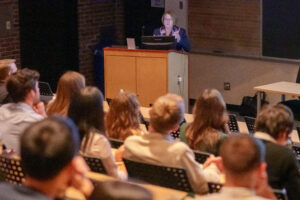
The VISE seminar series culminates with a winter Annual Surgery, Intervention, and Engineering Symposium which highlights panel sessions on cutting-edge topics of the day within procedural medicine research, a poster presentation showcase of translational projects at Vanderbilt, and finally a keynote seminar and reception.
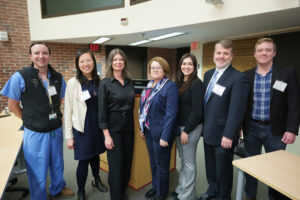
Similar to the academic series, the symposium also serves a dual role within VISE. To begin, it provides our trainees with an invaluable experience in a conference presentation. More specifically, trainees have the following opportunities: (1) scientific poster creation and presentation, (2) experience in video-recorded shorts about their research, (3) exposure to what a panel discussion debates, and (4) important perspectives from a keynote speaker who is an experienced seasoned leader in the field. The second role is more directed at the faculty and is designed to cross-pollinate research across ESI domains. More specifically, the symposium is designed to have faculty and trainees interact and learn each other’s core competencies to foster new collaborative efforts.
2025 Surgery, Intervention, and Engineering Symposium
View the digital program here
2025 Keynote Speaker:
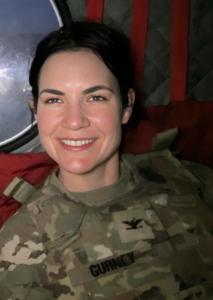
Jennifer M. Gurney, MD FACS
COL, MC, US Army
Chief, Joint Trauma System
Date: Wednesday, December 10, 2025
Title:
Care on the Battlefield: Crossroads of Military and Civilian Trauma Systems – Yesterday’s Medicine meets Tomorrow’s War
Abstract:
Modern combat casualty care stands at a pivotal intersection where lessons from past conflicts must inform the challenges of future battlefields. The Military’s Battlefield Trauma System is a tiered approach to combat casualty care with increasing capabilities and challenges along the continuum. Understanding the challenges of the battlefield help us improve civilian trauma care and improve the readiness for future conflicts. This presentation will discuss the evolution and enduring relevance of the battlefield trauma system from its structure, principles, challenges, and lessons learned from point of injury to definitive treatment. Drawing parallels between military and civilian trauma systems, we will examine how innovation often arises from necessity and how hard-won lessons must be continually relearned and applied. Topics include mass casualty (MASCAL) management, host-nation integration, transfusion and resuscitation strategies, and the implementation of trauma systems in austere and complex environments. By understanding yesterday’s medicine and applying it with tomorrow’s technology and insight, we ensure that the next generation of warfighters, and all trauma patients, receive the best chance at survival.
Short bio:
COL Jennifer Gurney is the Chief of the U.S. Department of Defense Joint Trauma System, which is the DoD’s Cetner of Excellence for Trauma. Prior to assuming this position, she was a surgeon at the US Army Institute of Surgical Research Burn Center. She also works at Brook Army Medical Center as a trauma surgeon. COL Gurney was the first chair of Defense Committee on Trauma and was the Chair of the Committee on
Surgical Combat Casualty Care for five years. COL Gurney joined the Army while at Boston University Medical School on a Health Professions Service Program Scholarship and did her surgical training at Walter Reed Army Medical Center. She did a Surgical Critical Care Fellowship at Stanford Hospital and spent a year at the University of California San Francisco at San Francisco General Hospital focusing on trauma care and trauma research.
She has deployed 8 times in support of military operations and has received a Legion of Merit with a ‘C’ (combat) device, three Bronze Star Medals, a Combat Action Badge, and the Defense Meritorious Service Medal for wartime service. She is Governor in the American College of Surgeons, was the Chair of the American Association for the Surgery of Trauma Miliary Committee from 2020 to 2024 and was President of Excelsior Surgical Society from 2023-2024. She has focused her surgical career on improving combat casualty care.