Vanderbilt Trainees Bring Evolution Education to Classrooms Across Tennessee
By: Andy Flick, Evolutionary Studies scientific coordinator
From rural high schools to elementary classrooms, trainees of the Evolutionary Studies Initiative (ESI) are bringing evolutionary science directly to the next generation.
On May 9, a team of graduate students and postdoctoral researchers visited McGavock Elementary School in Nashville to lead a series of hands-on science activities with students from kindergarten through fifth grade. The team ran short, rotating lessons in a festival-style format, including a dice-based phylogeny game, an interactive lab using hominid skull replicas, and paleontology-themed activities developed in collaboration with Dr. Neil Kelley. Each session invited students to engage directly with the concepts of evolution, biodiversity, and extinction in age-appropriate, accessible ways.
“The vibes were definitely chaotic, but so much fun!” said graduate student Brynn Wooten. “There were so many moments that stood out—one student kept asking how I became a paleontologist, and another asked, ‘If we evolved from monkeys, why are they still here?’ I explained it, and I could see in her eyes the moment it clicked.”
Wooten emphasized how early access to scientific role models can make a lasting impression. “I personally was bitten by the evolution and paleontology bug at around eight years old, so I know how it feels to be that inspired. I hope to instill that spark in these kids—whether or not they pursue science, a passion for learning is just as important.”
This elementary outreach builds on ESI’s growing commitment to science education and engagement across Tennessee. The Computational Biology Rural High School Research Program was launched by Vanderbilt graduate students Ximena Leon and Olivia Riedling to bridge the opportunity gap for rural students interested in STEM. Over the past year, they mentored six students from Marshall County High School, guiding them through professional development and original research in evolutionary biology. Projects included computational analyses of birdsong evolution and comparative fungal genomics. Each student presented their findings at a public showcase and will be named co-authors on a forthcoming peer-reviewed publication—an extraordinary milestone for high school students.
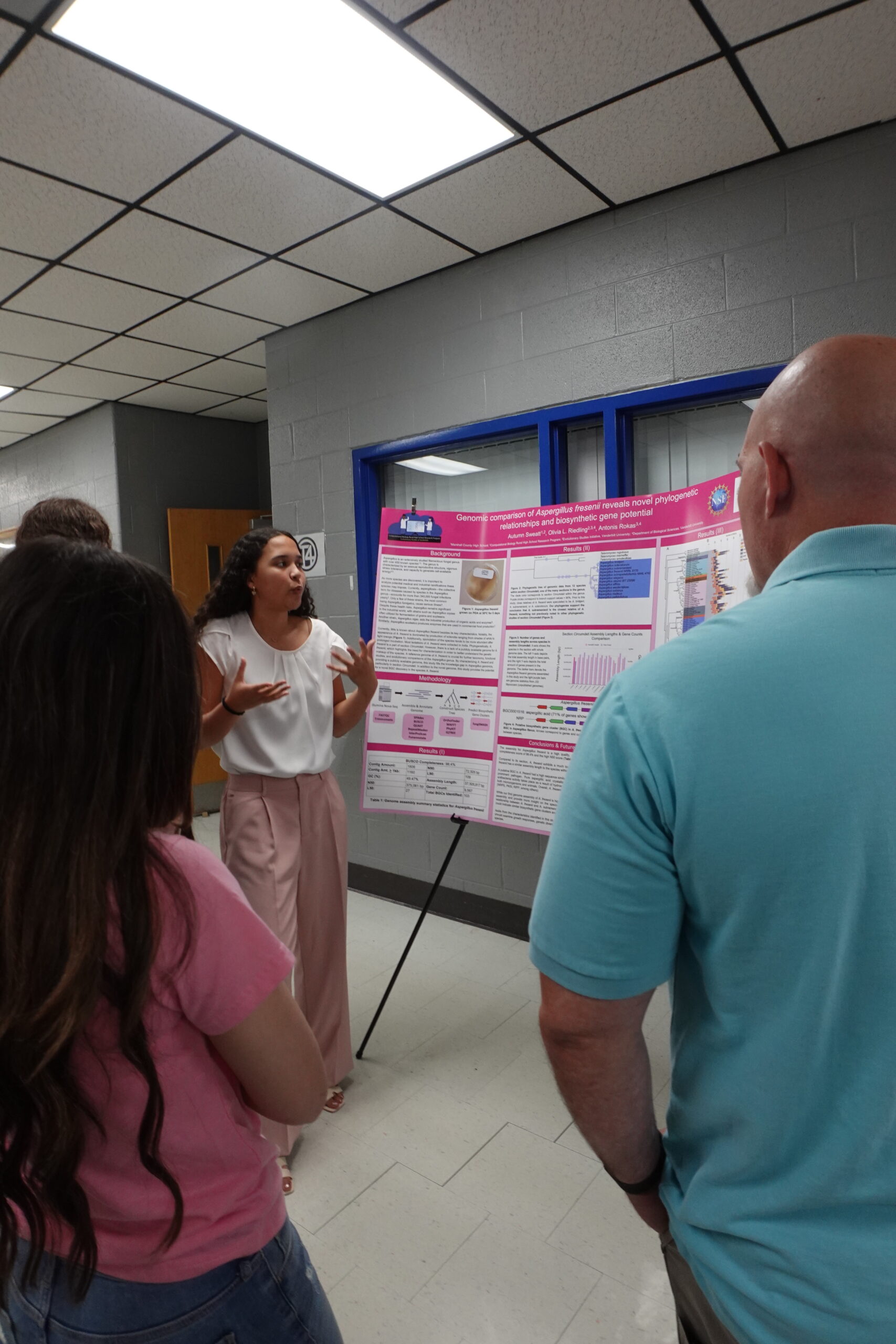
“Seeing the students’ confidence grow throughout the program was the most rewarding part of mentoring,” said Leon. “They became more independent, found excitement in presenting their findings, and realized their contributions to science truly matter.”
Riedling echoed that sentiment: “They really tackled a lot—computational skills, writing, presenting. Watching them step out of their comfort zones and take charge of their projects was incredible. Some even continued their work outside the program and are now volunteering in our lab.”
The impact of this program has already rippled into students’ future plans. “One of my students told me, ‘I didn’t think I would ever like biology,’ and now wants to minor in it alongside pre-med,” Riedling said. “These experiences can completely change a student’s outlook.”
“These programs aren’t just about science content,” said Antonis Rokas, director of the ESI. “They’re about building scientific identity and making sure students, especially in rural and underserved communities, see themselves as part of the future of science.”
For the graduate students and postdocs involved, the experience has been equally transformative. “My view of mentorship has shifted,” said Riedling. “We tailored the program to fit students’ needs, and that required learning how each student absorbs information and how best to support them. It’s something I’ll carry forward.”
Leon agreed, adding, “This experience significantly changed how I think about mentorship in scientific research. We had to be flexible, resourceful, and inclusive in how we structured our support—and the results were more than worth it.”
The Evolutionary Studies Initiative continues to support a wide range of outreach programs in 2025, including educator workshops, museum collaborations, and student-led public engagement efforts, all focused on making science more inclusive, meaningful, and connected to real-world discovery.