department of biological sciences
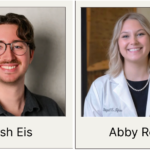
Evolutionary Studies Initiative Receives NIH Training Grant for Computational Evolutionary Approaches to Disease
Dec. 5, 2025—By Andy Flick, Evolutionary Studies scientific coordinator In July 2025, the Evolutionary Studies Initiative at Vanderbilt University secured its first initiative-wide grant to train the next generation of biomedical scientists. The grant funded through the National Institutes of Health, National Institute of General Medical Sciences T32 Training Program, provides funding for two graduate students annually...

Giant Ground Sloth Extinction Led to Loss of Ecological Services
Oct. 22, 2025—By Andy Flick, Evolutionary Studies scientific coordinator Giant ground sloths were more than just Ice Age oddities. They were ecosystem engineers whose disappearance reshaped the landscapes they once roamed. A new study from Vanderbilt University’s DREAM Lab reveals just how diverse these megaherbivores’ diets were, highlighting the ecological roles that vanished when they went extinct....

Partnership with Turkana Community Helps Scientists Discover Genes Involved in Adaptation to Desert Living
Sep. 18, 2025—Originally posted by UC-Berkeley team, edits by Andy Flick Evolutionary Studies scientific coordinator Scientists Discover Key Genetic Adaptations in Partnership with Turkana Pastoralists of Northern Kenya Groundbreaking study reveals how thousands of years of natural selection shaped remarkable adaptations to an extreme environment. Through a collaboration between US and Kenyan researchers and Turkana communities of...
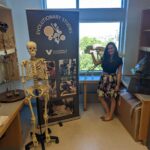
Annie Hatmaker Explores the Global Diversity of a Pathogenic Fungus
Aug. 18, 2025—By Andy Flick, Evolutionary Studies scientific coordinator Annie Hatmaker, Ph.D., has spent the better part of a decade studying fungi and their secondary metabolites – small molecules they use to communicate, defend, and thrive. Her new publication, “Population structure in a fungal human pathogen is potentially linked to pathogenicity,” closes her dissertation work and opens...
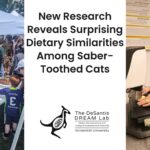
New Research Reveals Surprising Dietary Similarities Among Saber-Toothed Cats—Plus, Join Us for a Special Kids’ Day Event at Bridgestone Arena!
Apr. 4, 2025—Nashville, TN – April 4, 2025 – A innovative study led by researchers from Vanderbilt University sheds new light on the dietary ecology of the iconic saber-toothed cat, Smilodon. The study, published in a special issue on sabertoothed organisms in The Anatomical Record, reveals that Smilodon fatalis and Smilodon gracilis—two species that lived thousands to...
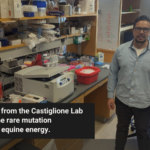
Castiglione Lab Discover Horses Run Faster by Ignoring an Ancient Mutation that Says ‘Stop’
Mar. 27, 2025—By Andy Flick, Evolutionary Studies scientific coordinator Evolution often makes a deal with the devil, creating challenges for treating human disease. By mass, the muscles of thoroughbred racehorses consume more than twice the oxygen of elite human athletes. Yet, oxygen produces free radicals, which damage organ tissues. Balancing energy production with oxidative stress is also...
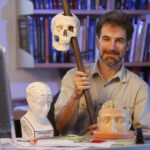
Vanderbilt Researcher Finds Jewel Wasp Cocoons Can Withstand Cannibalism
Nov. 15, 2024—By Andy Flick, Evolutionary Studies scientific coordinator New research from Ken Catania, Stevenson Professor of Biological Sciences, shows another incredible result. The “Cocoon of the Developing Emerald Jewel Wasp (Ampulex compressa) Resists Cannibalistic Predation of the Zombified Host” was published in Brain, Behavior, and Evolution. Catania’s research program focuses on the weird in nature. His...
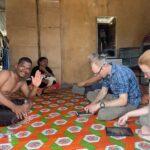
Beyond the Thrifty Genotype: Examining Evolutionary Hypotheses for Modern Metabolic Health
Nov. 12, 2024—By: Andy Flick, Evolutionary Studies Scientific Coordinator A new review co-led by graduate students Layla Brassington and Audrey Arner of the Lea Lab discusses the formulation of the popular and impactful Thrifty Genotype Hypothesis. This hypothesis, proposed by James Neel in 1962, suggests that fat deposition and energy conservation were once useful traits in times...
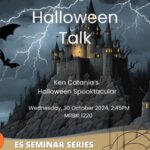
Ken Catania to Present Evolution-focused, Spooky Halloween Talk
Oct. 1, 2024—By Danielle Bowden, Evolutionary Studies administrative specialist Nashville, TN –– Vanderbilt University’s Evolutionary Studies Initiative is thrilled to announce that distinguished evolutionary biologist Kenneth Catania will be delivering the Halloween Spooktacular Lecture as part of the ESI seminar series. Catania is a professor of Biological Sciences at Vanderbilt University. The lecture, titled “Science Lessons from...
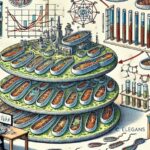
Mitochondrial DNA Evolution: New Study Reveals How Selfish mtDNA Evolve and Thrive
Sep. 20, 2024—By Andy Flick, Evolutionary Studies scientific coordinator Vanderbilt University researchers, led by alumnus Bryan Gitschlag, have uncovered groundbreaking insights into the evolution of mitochondrial DNA (mtDNA). In their paper in Nature Communications titled “Multiple distinct evolutionary mechanisms govern the dynamics of selfish mitochondrial genomes in Caenorhabditis elegans,” the team reveals how selfish mtDNA, which can...