Evolutionary Studies Initiative Receives NIH Training Grant for Computational Evolutionary Approaches to Disease
By Andy Flick, Evolutionary Studies scientific coordinator
In July 2025, the Evolutionary Studies Initiative at Vanderbilt University secured its first initiative-wide grant to train the next generation of biomedical scientists. The grant funded through the National Institutes of Health, National Institute of General Medical Sciences T32 Training Program, provides funding for two graduate students annually studying computational evolutionary approaches to disease – colloquially known as the CoEvoD fellows.
From the grant’s public health relevance statement, “computational evolutionary principles and methods are essential to the understanding and treatment of genetic and infectious disease, but formal training for these approaches is lacking in many universities, including Vanderbilt University. Our new training program aims to provide a highly enriching environment for educating graduate students in computational and bioinformatic-based evolutionary approaches so that they can be applied to the most critical questions in biomedicine.”
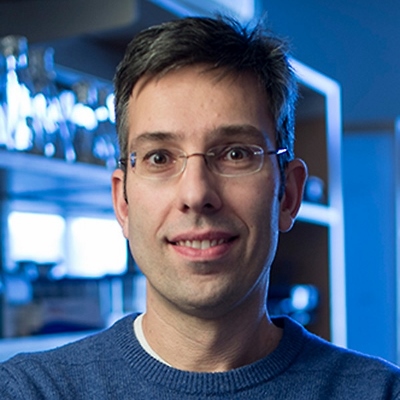
The students in the T32 training program will engage in two new courses. The first course, developed by ESI and CoEvoD director Antonis Rokas, is Computational Evolutionary Methods for Studying the Biology of Disease. This course will expose students to new methods in the lecture hall and allow them to practice those methods in the lab. The second course, Evolutionary Medicine, is offered by assistant professor of biological sciences Amanda Lea and will cover topics such as cancer, immune function, and cardiometabolic diseases. These courses are open to any interested graduate students with appropriate backgrounds.
The first two students funded by this training program are second-year graduate student Joshua Eis of the Castiglione Lab (Biological Sciences & Ophthalmology) and third-year graduate student Layla Brassington of the Lea Lab (Biological Sciences).
Eis uses machine learning and other computational tools to reverse-engineer the molecular mechanisms by which birds evolved their long lifespans. Preliminary data shows extensive variations in metabolic genes that are unique to the avian clade. Joshua will infer the evolutionary timing of avian-specific mutations at key phylogenetic nodes (e.g. the evolution of flight), searching for coevolving mutations in deep time that may be compensatory, followed by ‘fine-tuned’ adaptive variation in derived lineages hypothesized to diverge between clades due to ecological and physiological variables.
Brassington tackles a central question in evolutionary medicine: why do humans remain vulnerable to chronic disease, despite strong selective pressures on survival and reproduction? A leading explanation is the evolutionary mismatch hypothesis—the idea that rapid lifestyle change has created a gap between the environments our genomes evolved in and the ones we inhabit today. Brassington’s research addresses this question directly by integrating computational genomics with evolutionary frameworks to study how market-integration shapes immune gene regulation in the Orang Asli of Malaysia, a population undergoing a profound lifestyle transition in Kenya.
Along with the NIH T32 grant-funded trainees, the Initiative supports two additional students receiving this training, Abigail Rose of the Zhu Lab (Pathology, Microbiology and Immunology) and Ashlynn Bruder of the Behringer Lab (Biological Sciences & Pathology, Microbiology and Immunology).
Rose’s work takes a computationally informed, systems-level approach to this problem. By integrating chemoproteomics, metabolomics, and transcriptomics into a genome-scale metabolic model, coupled with experimental evolution and genetic engineering, Rose is dissecting how oxygen perturbs key metabolic pathways in the gut symbiont Bacteroides thetaiotaomicron. She has mined the outlined multi-omics dataset, identified candidate oxygen vulnerabilities in key metabolic pathways, and subsequently engineered B. thetaiotaomicron with restored central metabolism that exhibits remarkable oxygen resilience, including mutants capable of tolerating oxygen levels more than 300-fold higher than those of the wild type.
Bruder combines computational and experimental approaches to investigate fundamental questions in microbial evolution. She has thus examined two Escherichia coli genes (acrB and ompF) that repeatedly acquire mutations under repeated resource limitation and, in turn, alter antimicrobial susceptibility. Fitness assays revealed a reciprocal-sign epistatic interaction: only the double mutant gained benefits across both growth and survival phases.
According to Rokas, “these four students exemplify the kind of trainees our CoEvoD program is designed to support. Their projects span the full arc of evolutionary inquiry—from probing deep time for the origins of health-related trade-offs to uncovering genetic mechanisms that shape microbial resilience. Together, they demonstrate how evolutionary thinking can clarify why vulnerabilities persist, how biological systems adapt, and where new opportunities may lie for improving human health.”
Funding Statement: The CoEvoD program is funded through the NIH NIGMS project number: GM150407-01A1