
ON THE HILL is a report produced by the Division of Government and Community Relations summarizing activity at all three levels of government, as outlined by the Vanderbilt Federal Relations, State Government Relations and Local Government Relations teams.

Local Update
In this local update:
Vanderbilt collaborates for Nashville’s growth and innovation

Vanderbilt and Metro Nashville Public Schools celebrate first cohort of Nashville Vanderbilt Scholars Program
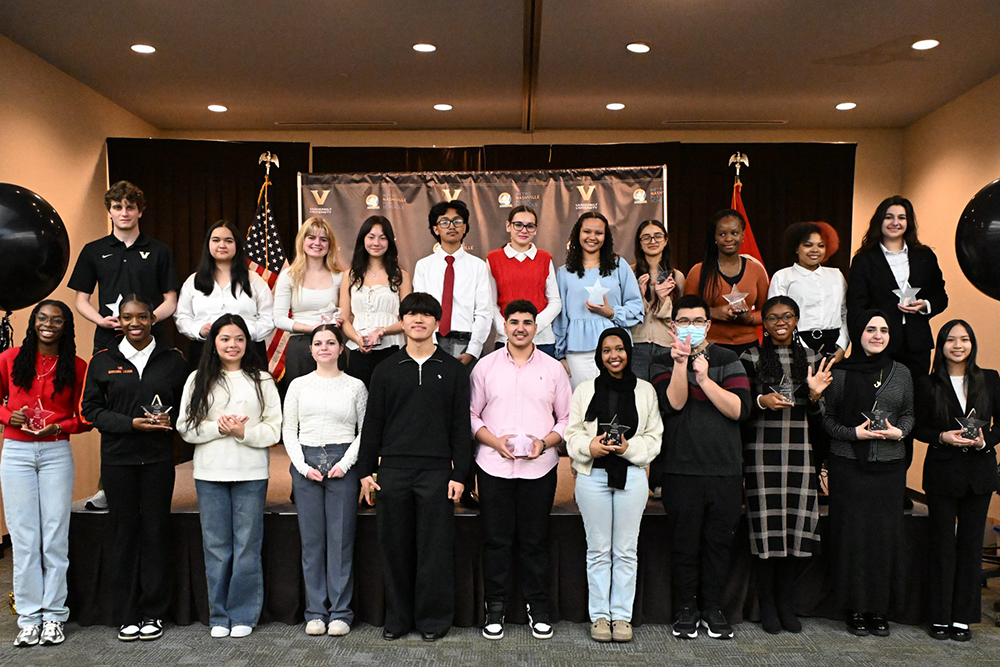
In February, 30 seniors from Metro Nashville Public Schools celebrated their admission into Vanderbilt University as part of the inaugural Nashville Vanderbilt Scholars Program. This partnership, launched in May 2024 between Vanderbilt and MNPS, aims to improve access for high-performing students to top universities. The program covers tuition and direct costs for eligible students and includes a summer internship stipend. Learn More
Nashville Innovation Alliance awards first Tech Studio grant
Vanderbilt continues to play a pivotal role in Nashville's transformation into a hub for innovation, actively engaging in initiatives that bolster the city's growth and economic development.
In March, the Nashville Innovation Alliance, a partnership between Vanderbilt and Mayor Freddie O’Connell, awarded its first Nashville Tech Studio grant to Vanderbilt researchers. Vanderbilt, leveraging its expertise in AI and data analytics, is collaborating closely with the Nashville Fire Department and other Metro agencies to develop cutting-edge tools that enhance emergency response efficiency and strategic planning.
This initiative displays Vanderbilt's ability to address real-world challenges by using data-driven solutions to improve public safety and resource allocation, ultimately elevating the quality of life for Nashville residents through proactive and informed city planning. Additionally, Vanderbilt’s Local Government Relations team is facilitating conversations on creating further data-driven solutions in city departments to optimize urban management and drive efficiency.
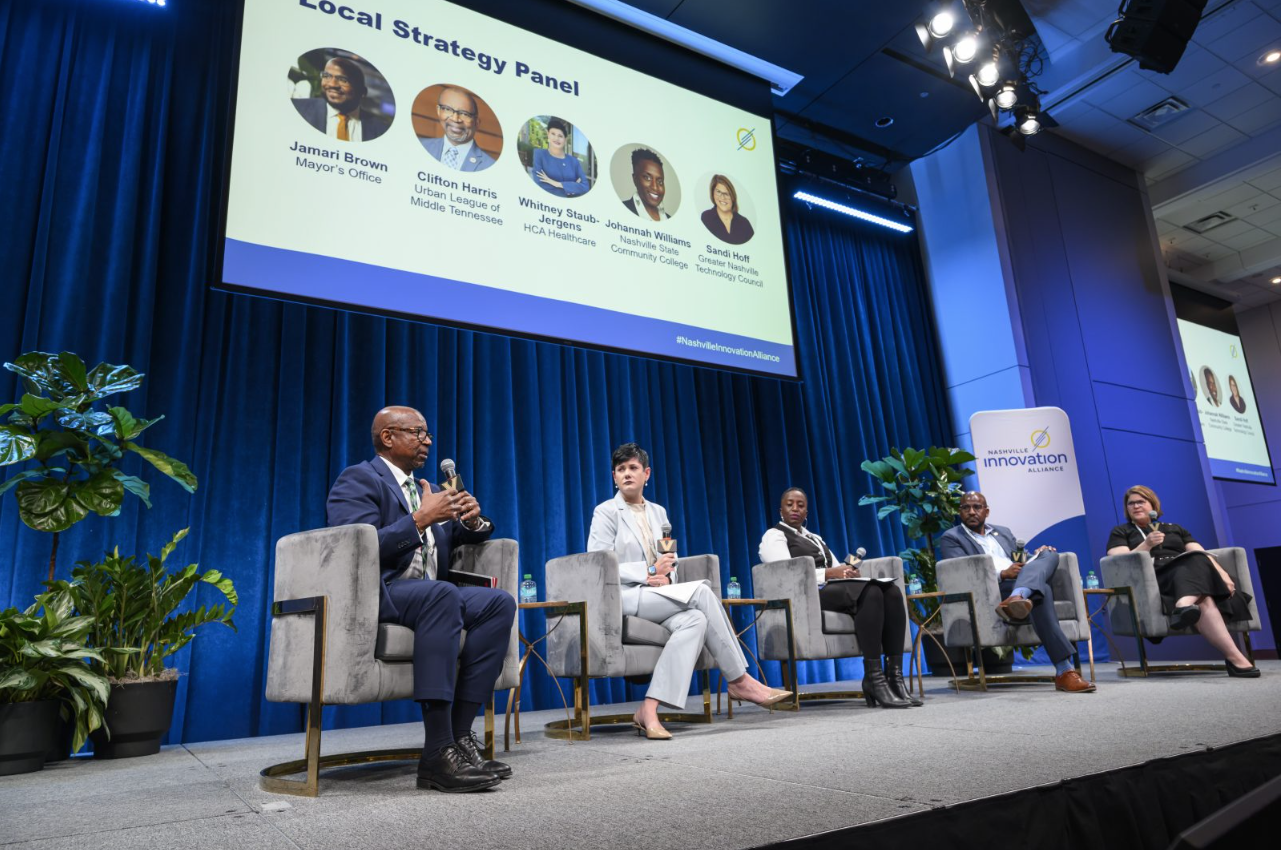
“Tech Talent” workforce development event hosted on campus
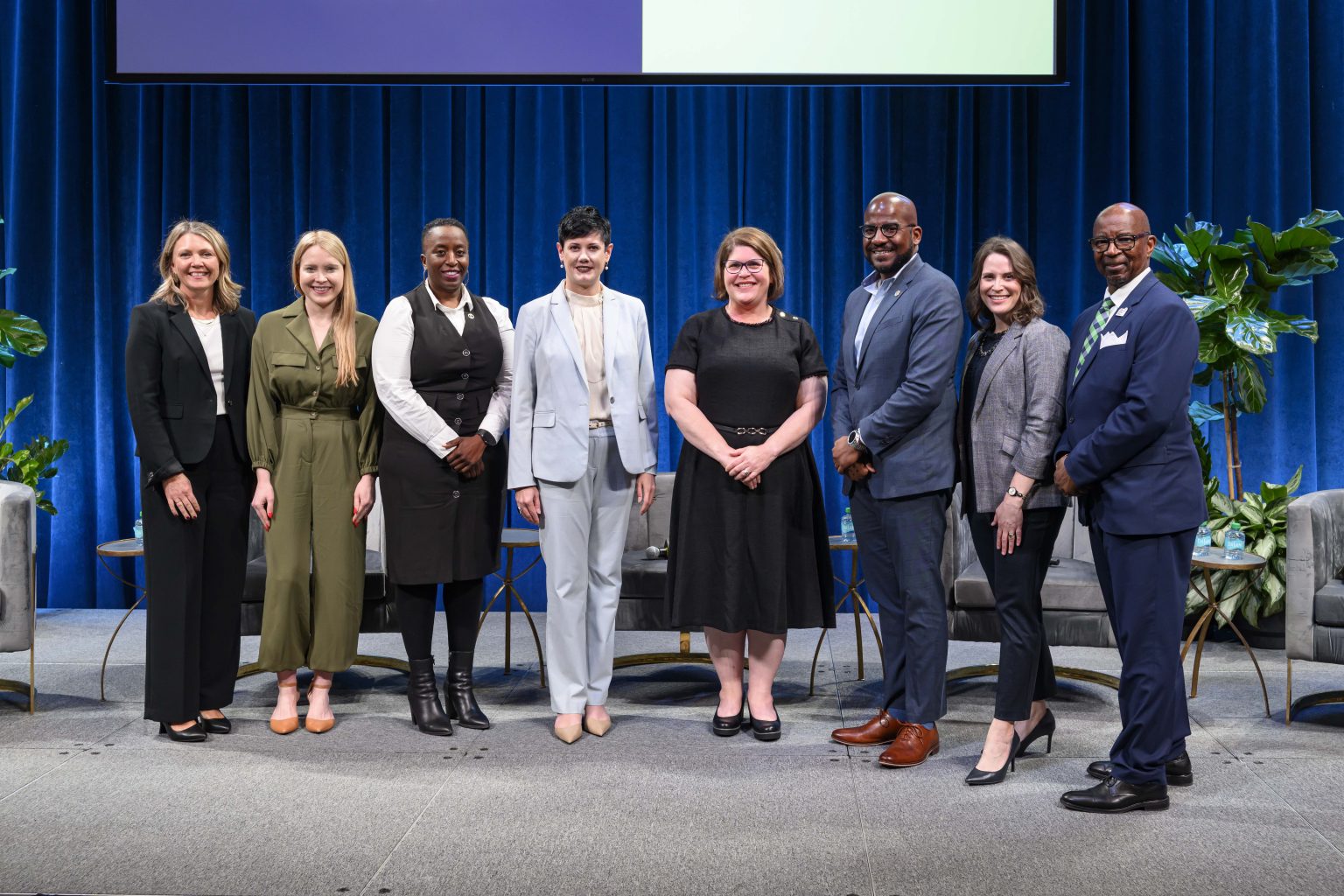
In April, Vanderbilt’s campus served as host for the Nashville Innovation Alliance’s "Tech Talent at Scale" event focused on the expansion of the technology workforce and preparation of local talent for current and future tech jobs. These efforts collectively demonstrate Vanderbilt's commitment to supporting Nashville's economic development and positioning the city as a leading center for innovation. Learn More
What we’re watching: Metropolitan Government of Nashville and Davidson County
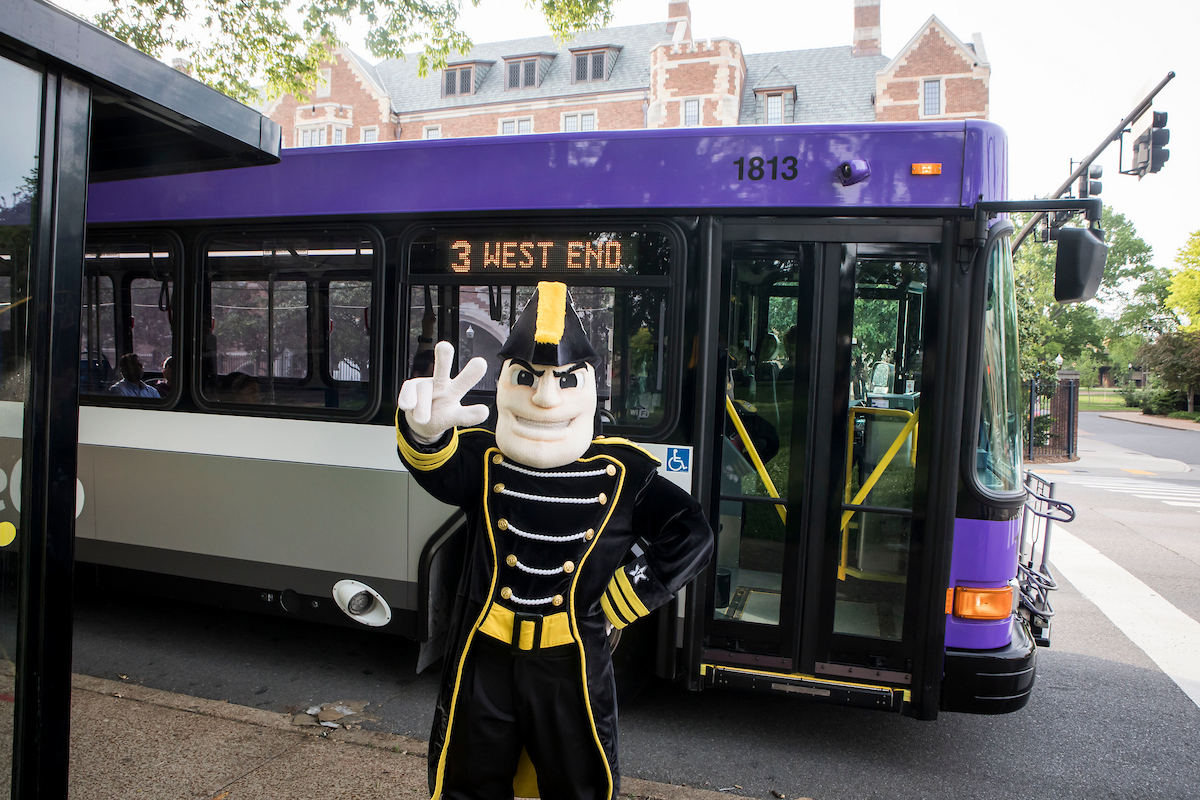
Choose How You Move implementation: In 2024, Nashvillians approved a half-penny (0.5%) sales tax surcharge to fund a $3.1 billion plan to address the city’s transportation and mobility needs. Last March, Mayor Freddie O’Connell announced 11 foundation projects signifying the beginning of the plan’s implementation. Sabrina Sussman was appointed as Nashville's first Chief Program Officer for the Choose How You Move initiative and Michael Briggs will serve as Deputy Chief Program Officer.
Release of Unified Housing Strategy: In April, Mayor Freddie O’Connell released the Unified Housing Strategy marking a crucial step in addressing the city’s housing needs. This initiative is supported by dedicated funding, with a $45 million investment planned to help provide and preserve affordable housing options for residents. The plan focuses on rapid rehousing, anti-displacement and affordable home construction incentives.
Property tax increase for FY26: In June, Metro Council approved a $3.8 billion budget which includes a property tax rate of 2.814 per $100 of assessed value. Although this rate is the lowest since the founding of the Metro Nashville and Davidson County government and among Tennessee's largest cities, it is primarily driven by a recent reappraisal that significantly increased property values. Over the past 4 years, median home value has increased 45%. As a result, many homeowners will see a higher tax bill despite the downward adjustment of the tax rate.
Engage with Us
Follow Us
Follow Vanderbilt Local on Twitter (X) and Facebook for updates on community events, opportunities, construction impacting neighborhoods, and more.
Subscribe to the GCR Newsletter
This monthly newsletter highlights Vanderbilt’s impact in the local community, the state of Tennessee, and beyond through stories about our work in government and community relations.
Subscribe to the Community Events Newsletter
Want to know what’s happening on and around campus? We bring you a monthly roundup of upcoming public events—concerts, lectures, exhibits, family activities and more—designed to connect you with our campus and community.
Vanderbilt Local Government Relations Team
-
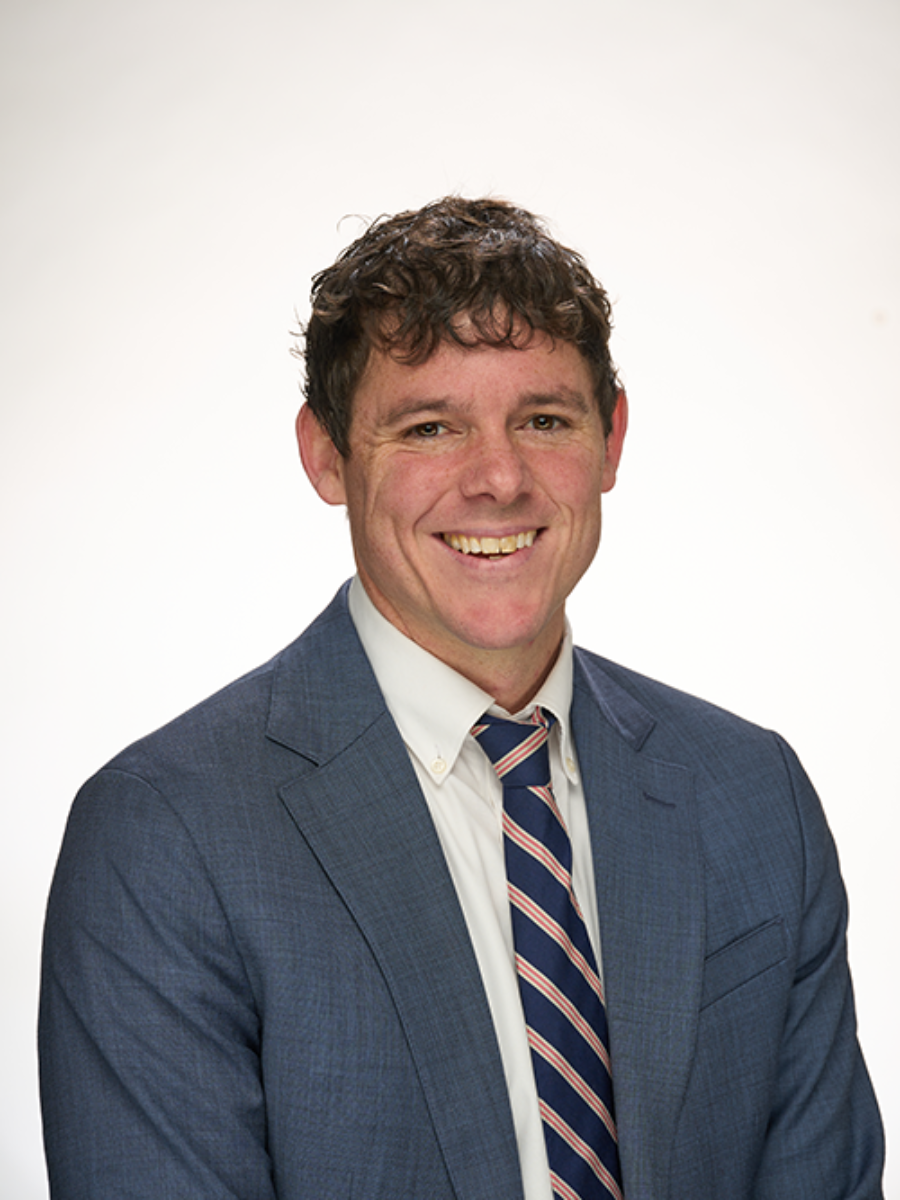
Eben Cathey
Senior Director, Local Government Relations
-

Lynn Maddox
Neighborhood and County Liaison
-
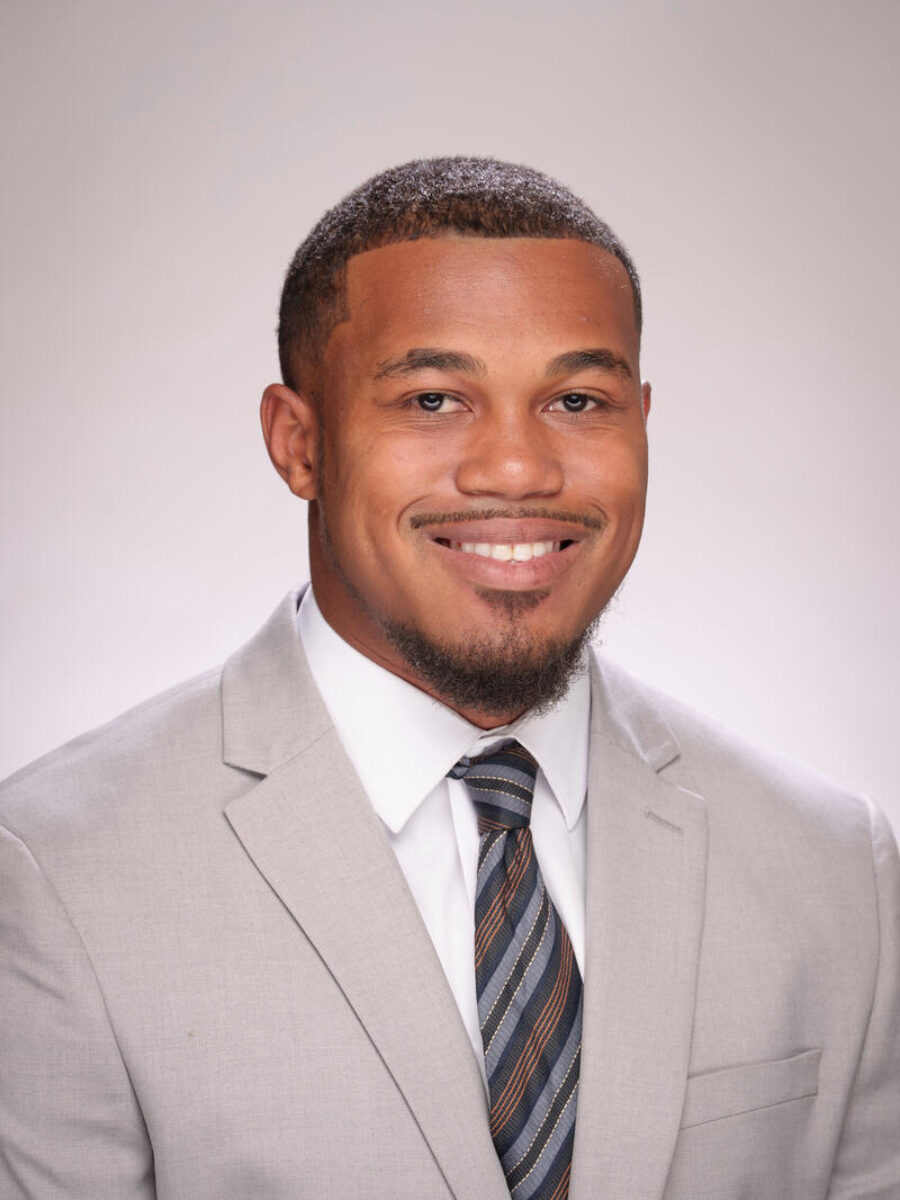
Donovan Sheffield
Local Government Relations Coordinator
State Update
Vanderbilt in Tennessee
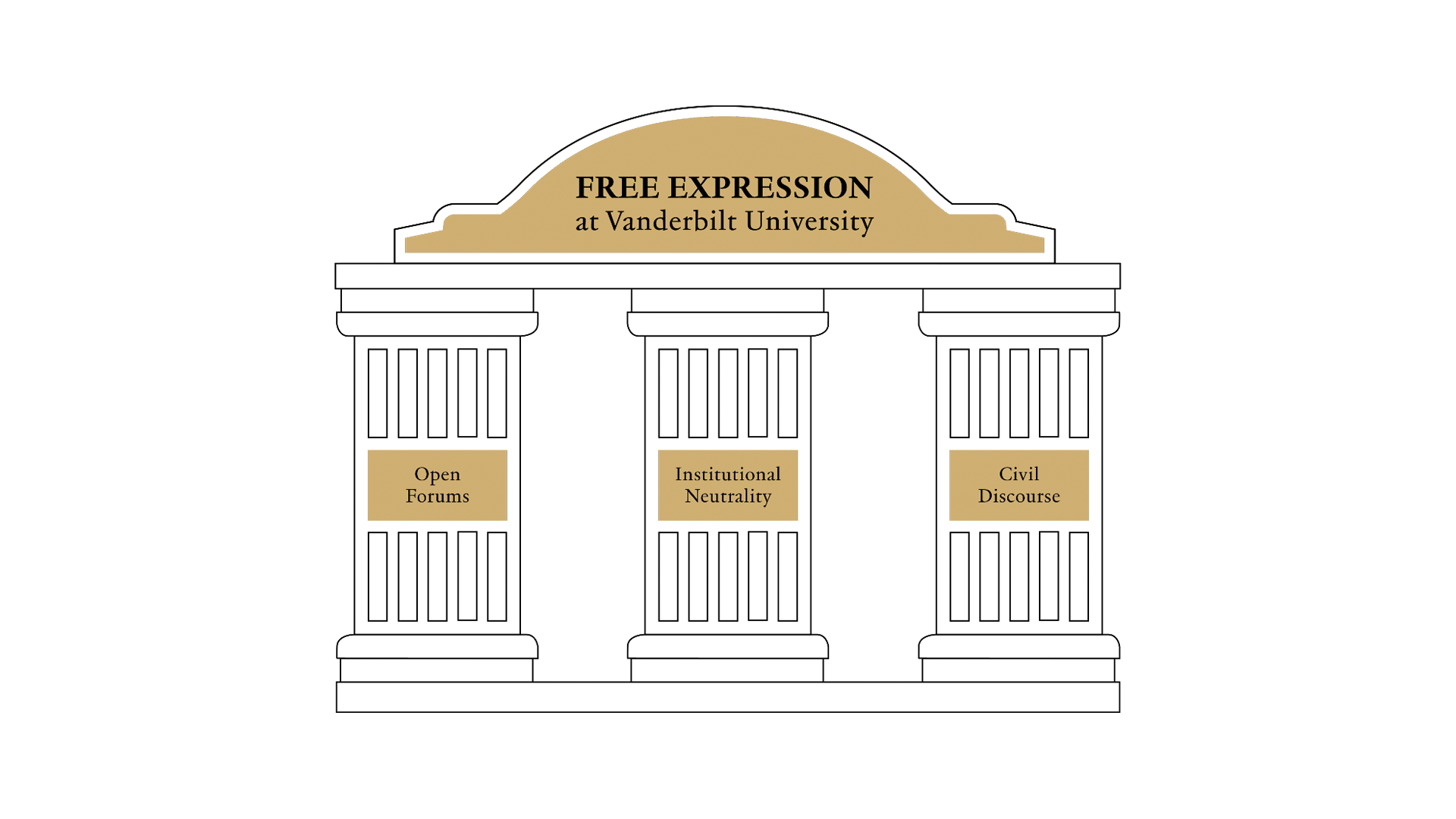
Tennessee General Assembly recognizes Vanderbilt’s commitment to free expression and civil discourse
In the wake of nationwide conversations about speech, safety and protest on college campuses, Vanderbilt University has earned state recognition for its steadfast commitment to free expression and civil discourse.
In April, Tennessee state legislators passed House Joint Resolution 175, a measure encouraging Tennessee’s public and private higher education institutions to adopt and uphold the principles of institutional neutrality, free expression and civil discourse. The bipartisan resolution commends Vanderbilt University for incorporating these values into its governing documents and campus culture, reinforcing the university’s long-standing commitment to protecting open dialogue and the respectful exchange of diverse ideas. Read More
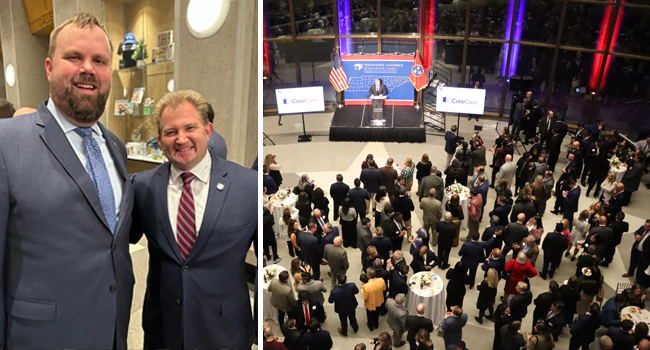
Vanderbilt joins state leaders to launch 114th General Assembly at Tennessee Chamber event
As the 114th Tennessee General Assembly convened in January, Vanderbilt University joined state leaders at the Annual Opening Night Legislative Reception, an event that brings together lawmakers and business leaders to discuss policy priorities for the year ahead.
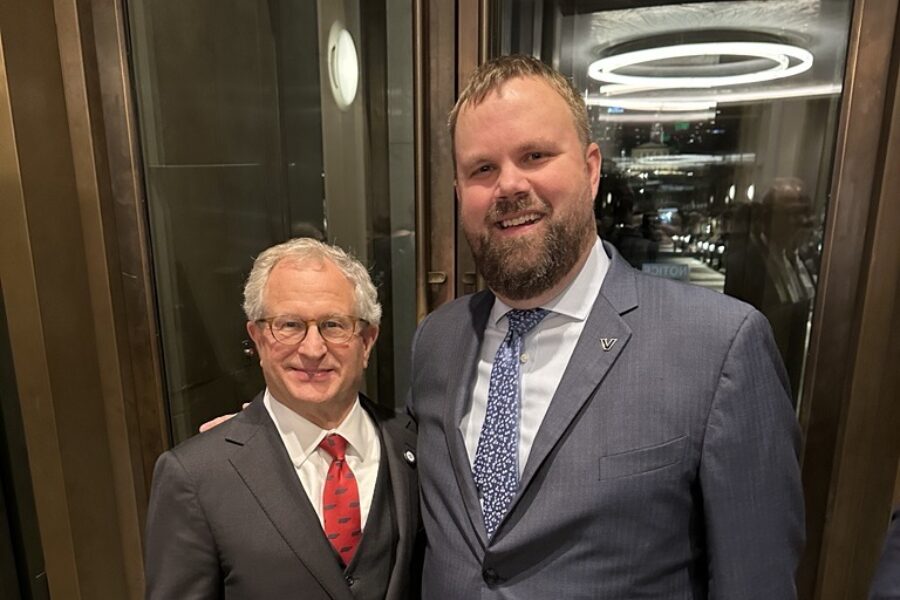
Hosted by the Tennessee Chamber, this reception is one of the most widely attended legislative events of the year, and Vanderbilt is a key sponsor. Representing Vanderbilt, Nathan Green, vice chancellor for government and community relations, and Daniel Culbreath, assistant vice chancellor for state government relations, engaged with legislators to highlight the university’s impact on Tennessee. Read More
Coach Clark Lea speaks at Tennessee Chamber annual meeting
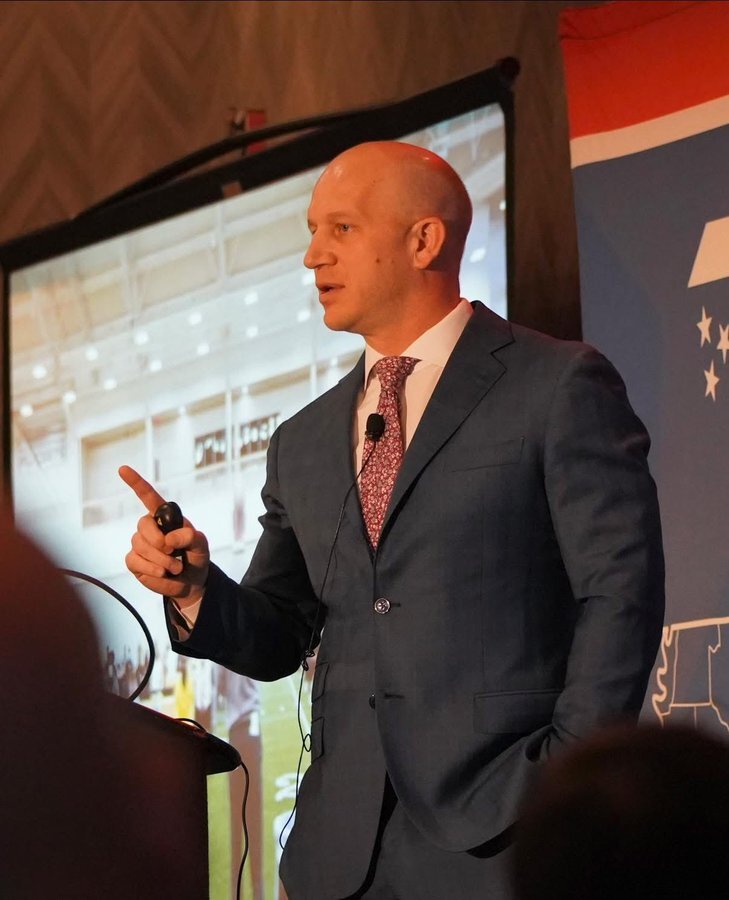
Vanderbilt Football Coach Clark Lea was the keynote speaker at the Tennessee Chamber of Commerce’s Annual Meeting. This event draws over 500 business leaders, local chamber and economic development professionals as well as numerous state policymakers. Coach Lea’s presentation discussing key leadership principles and the value of teamwork was well received by the crowd, as was any reference to Vanderbilt’s historic win over #1 ranked Alabama last season. Vanderbilt’s State Government Relations team partners closely with the TN Chamber on a variety of issues throughout legislative session.
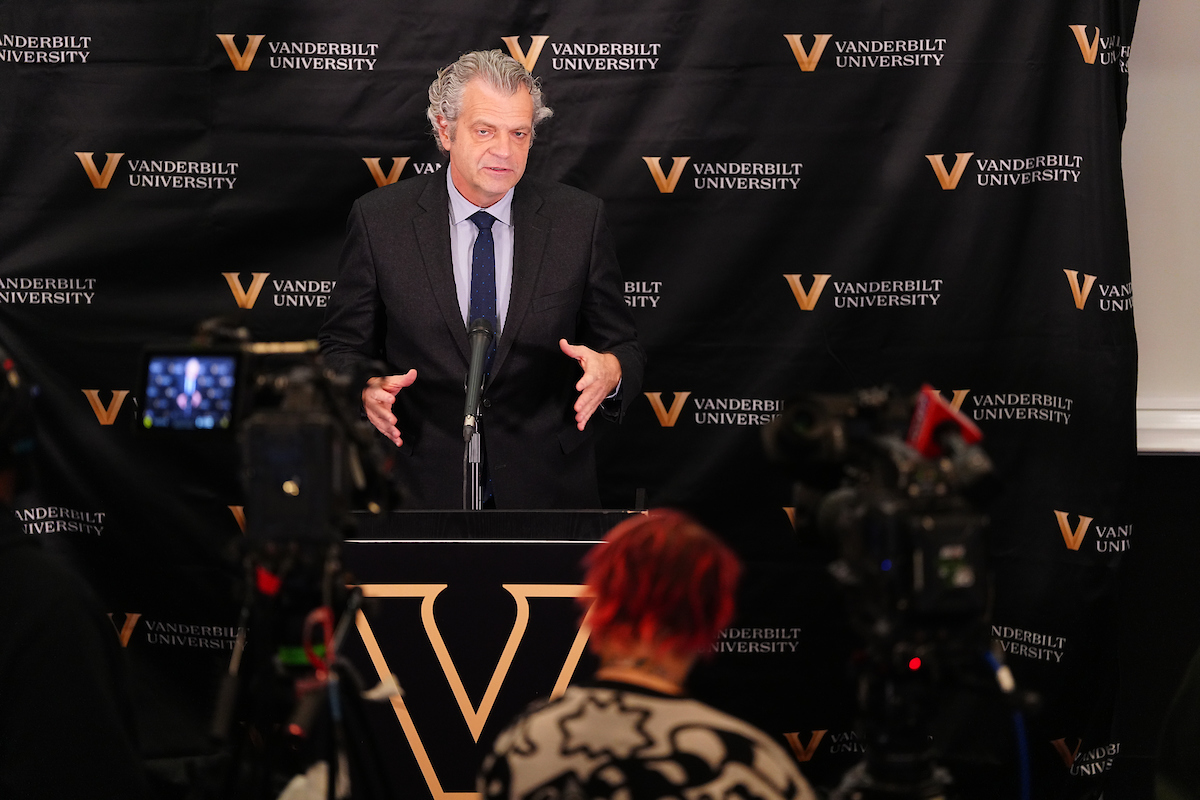
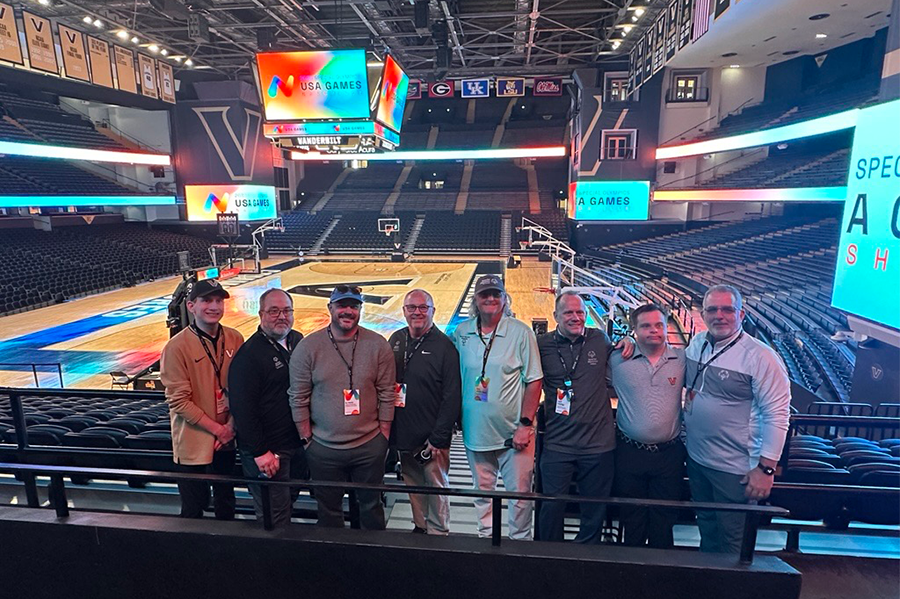
Nashville, Vanderbilt recommended to host 2034 Special Olympics USA Games
In partnership with Special Olympics Tennessee, Vanderbilt supported Nashville’s formal bid to host the Special Olympics USA Games. Chancellor Daniel Diermeier joined state and city leaders at a press conference in February launching the proposal. Now, for the first time ever, Special Olympics North America has recommended host cities for the next two USA Games: Cleveland for 2030 and Nashville for 2034. This incredible achievement was made possible by the passion and teamwork of so many at Vanderbilt University. Read More
Vanderbilt’s Jesse Spencer-Smith appointed to Tennessee AI Advisory Council
Gov. Bill Lee appointed Vanderbilt University’s Jesse Spencer-Smith to the Tennessee Artificial Intelligence Advisory Council, which was established last year to guide the ethical and effective use of AI in the state.
The council includes representatives from state departments, legislators and gubernatorial appointees, along with external experts such as Spencer-Smith, who is associate dean for partnerships and innovation for the new College of Connected Computing, chief data scientist for the Data Science Institute and professor of the practice of computer science. He was appointed in March to fill a vacancy on the council. Read More
Commissioner McWhorter visits campus
Tennessee Economic and Community Development Commissioner Stuart McWhorter visited Vanderbilt’s campus in February as part of his statewide tour. During his visit, he explored groundbreaking research in surgery, engineering, and software development taking place at Vanderbilt.
Vanderbilt in your district

Vanderbilt University’s Division of Government and Community Relations, in partnership with the Office of Data and Strategic Analytics, has released the FY 2024 District Impact Report—an interactive dashboard that illustrates the university’s contributions to each of Tennessee’s 99 state House districts and 33 state Senate districts. Read More
Recent State Policy Highlights
The 114th General Assembly
The 114th General Assembly convened in January to begin the first year of its two-year term and adjourned in April. Lawmakers quickly took up a range of high-profile issues following a special session called by Governor Bill Lee.
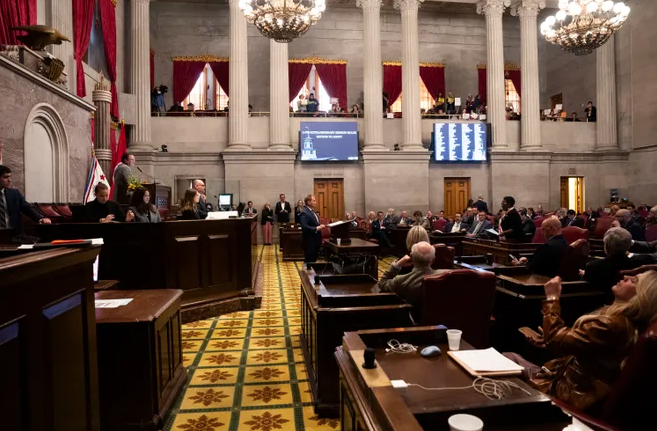
Special session recap
The one-week special session in January was primarily focused on Governor Lee’s school choice legislation.
Main items considered:
- Education Freedom Act: Established Tennessee’s first universal school choice program through Education Freedom Scholarships.
- Disaster Relief Package: Established funds for recovery from Hurricane Helene and future emergencies, with flexibility for unemployment claims and increased support for local infrastructure.
- Public Safety and Immigration Enforcement: Formed a Centralized Immigration Enforcement Division to coordinate with federal immigration policies, impose stricter state ID requirements, set penalties for sanctuary policies, and incentivize local law enforcement participation.
State budget
The Tennessee General Assembly approved a $59.8 billion budget for FY25–26, This includes nearly $30 billion in state revenue and $20 billion in federal funds supporting disaster relief, education, health care and infrastructure.
Major moves from the session
As the 2025 legislative session wrapped up, several key issues dominated the attention of the General Assembly. Vanderbilt’s State Government Relations team closely monitored these topics, engaging with lawmakers and stakeholders to advocate for policies aligned with the university’s priorities.
Firearm legislation
Vanderbilt consistently opposes legislation that would change the ability of private entities to restrict firearms on their property. Vanderbilt’s SGR team worked with our advocacy partners in the law enforcement and business communities to share concerns about these proposals directly with legislators.
- Open carry bill defeated: A bill that would have allowed Tennesseans with a handgun permit to openly carry loaded long guns, including rifles and shotguns, in most public spaces failed to advance in the Senate Judiciary Committee. The committee deadlocked in a 4–4 vote, with two Republicans voting no, effectively halting the bill.
- Posted areas exception withdrawn: Legislation that would have shielded individuals from criminal charges if they carried a firearm into a business or property with posted gun restrictions so long as they left immediately or secured the firearm in their vehicle was withdrawn in the Senate. The House companion advanced from subcommittee but did not reach a final vote. Current law makes it a Class B misdemeanor to bring a firearm into a posted location, punishable by up to six months in jail and a $500 fine. A related measure seeking similar exemptions for concealed carry also failed in the Senate Judiciary Committee.
English-only driver’s license bill defeated
A bill that would have required all Tennessee driver’s license written exams to be administered in English only and prohibited the use of translation aids or interpreters failed in the House Transportation Subcommittee by a 5–3 vote. The Tennessee Chamber of Commerce and Department of Economic and Community Development opposed the measure, citing its potential impact on international workforce recruitment and business operations.
Vanderbilt’s SGR team worked with our advocacy partners across the state to share opposition to this legislation directly with members of the House Transportation Subcommittee. Vanderbilt opposed the bill due to its potential to create unnecessary barriers for international students, faculty and researchers who contribute significantly to the university’s academic and research mission, and to Tennessee’s innovation economy.
Issues pushed to 2026
While many important bills advanced or were enacted this year, several significant measures were pushed into the 2026 session for further consideration and negotiation:
- K–12 student documentation: A bill allowing Tennessee school districts to charge tuition to noncitizen students was shelved after growing concerns about potential risks to federal education funding.
- Oversight of high school athletics: The potential state oversight or dissolution of the Tennessee Secondary School Athletic Association was tabled amid accountability concerns, as bills aimed at easing transfer rules were not advanced.
- State oversight of Memphis schools: A proposed state-appointed advisory board for Memphis-Shelby County Schools was put on hold after significant constitutional concerns and opposition, which critics labeled as an unconstitutional state takeover undermining local control.
Tennessee governor race
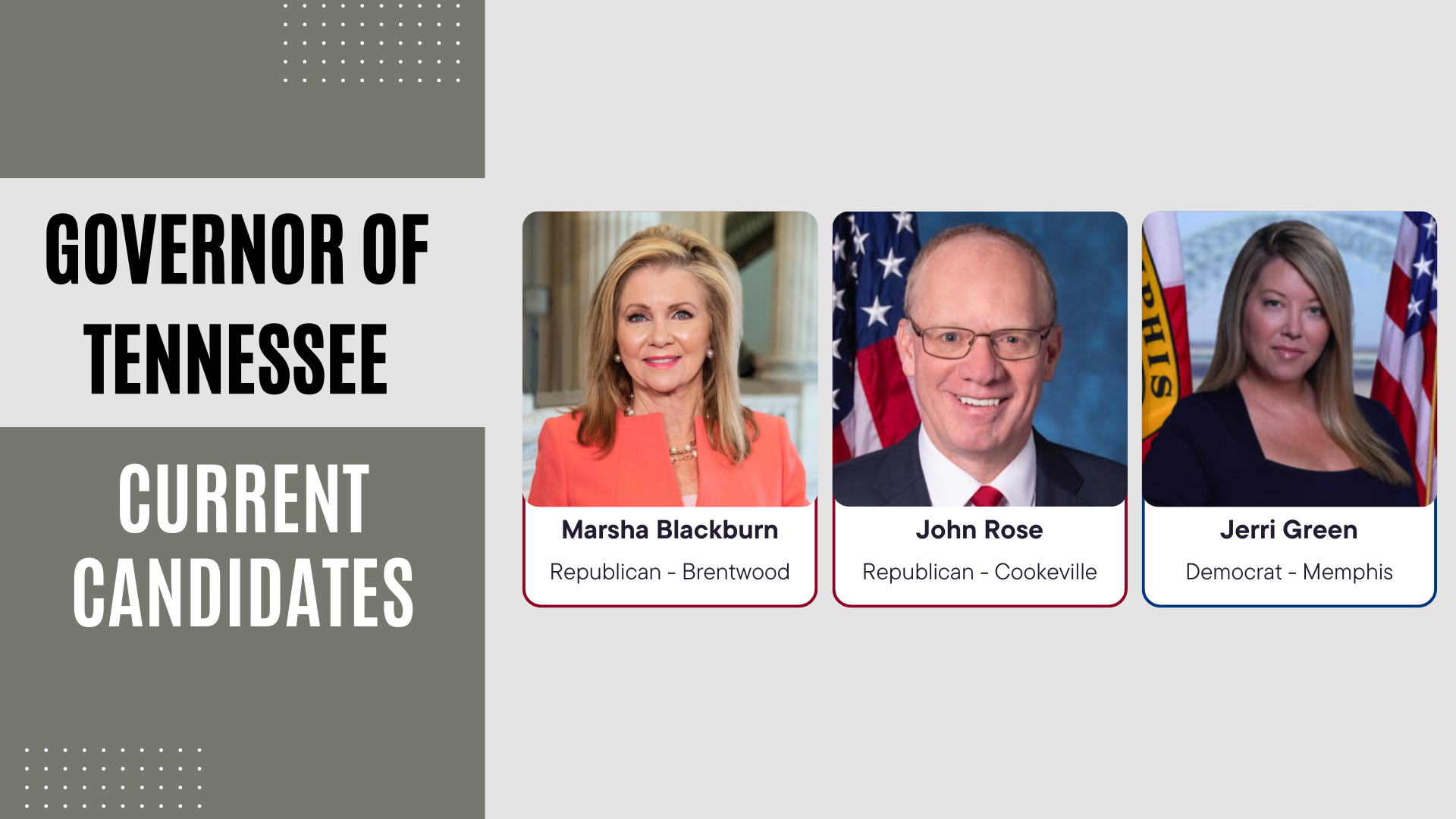
Governor Bill Lee will leave office in January 2027, opening the door for a competitive race to succeed him in a heavily Republican state. The 2026 GOP primary, scheduled for August, is widely seen as the decisive contest in determining Tennessee’s next governor.
Candidates include:
- U.S. Sen. Marsha Blackburn, R-Tenn.: Blackburn announced her campaign in early August and is considered the clear frontrunner, boasting strong statewide name recognition, a conservative record and national political influence. She seeks to become Tennessee’s first female governor and, if successful, could appoint her own successor to the U.S. Senate.
- U.S. Rep. John Rose, R-Tenn.: The first major candidate to officially enter the race, Rose launched his campaign in March emphasizing conservative values, rural economic development, improved infrastructure, expanded healthcare access, and nuclear energy leadership. A farmer and businessman, Rose positions himself as a fresh outsider with strong ties to Tennessee’s agricultural communities. Rose is a Vanderbilt Law alumnus.
- Jerri Green, D-Tenn.: Green is the first Democrat to enter the race and also seeking to become Tennessee's first female governor. A former public defender who now works in the Shelby County mayor’s office, Green is in her first term on the Memphis City Council. In her campaign announcement, she emphasized listening over shouting, solving problems instead of chasing headlines and leading with courage, compassion and common sense.
Other contenders have yet to formally announce their intent to run.
Engage with Us
Follow Us
Follow us on Twitter (X) and LinkedIn to stay informed on public policy issues, access resources and opportunities and engage with the higher education landscape.
Vanderbilt State Government Relations Team
-

Daniel Culbreath
Assistant Vice Chancellor for State Government Relations
-

Julie Harding
Government Relations Program Coordinator
Federal Update
In this federal update:
Advancing Vanderbilt’s voice in Washington
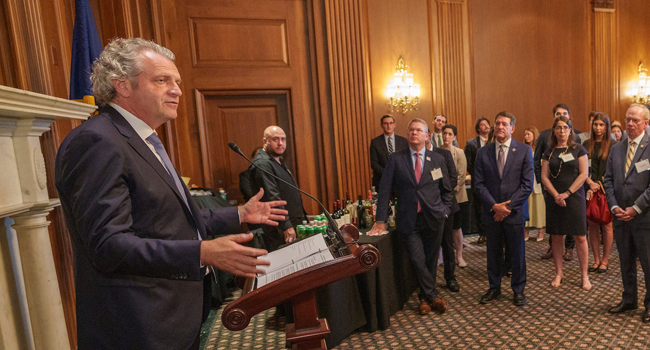
Engaging Congress on key issues
Reconciliation: Congressional leaders used the reconciliation process to enact much of the President’s domestic agenda. At stake for Vanderbilt were changes to tax policy and federal student aid programs. The OFR team led targeted advocacy to oppose the most harmful of these provisions, particularly those related to the endowment tax and federal student loans, to ensure that Vanderbilt’s voice was part of the national policy conversation. These efforts include:
- Endowment tax: Associate Vice Chancellor Christina West, Vice Chancellor Nathan Green and senior campus leaders, including Chancellor Diermeier met with strategic congressional offices throughout winter and spring to mitigate the impact of potential changes to the endowment tax and to emphasize the critical role the endowment plays in supporting mission-driven activities such as institutional student aid and research. Ultimately, we avoided a more severe increase in the tax rate, as proposed by numerous policymakers.
- Federal student aid: OFR opposed provisions that would have had the effect of limiting access to federal aid for low- and moderate-income students, highlighting the impact of such proposals on Vanderbilt students and alumni who serve their communities as nurses, teachers, lawyers, doctors, scientists and clergy. Through our collective efforts, we blocked several measures originally included in the House bill that would have had a particularly negative impact on our students. More details on provisions included in the final legislation are available from the National Association of Student Financial Aid Administrators.
Facilities & Administrative costs:
The National Institutes of Health, National Science Foundation and Departments of Defense and Energy announced new caps on Facilities & Administrative costs reimbursements that would result in a significant cut in research funding at Vanderbilt.
Following agency announcements, OFR worked closely with the Office of the Chancellor, Office of the General Counsel, Division of Finance, the Office of the Provost, including Office of the Vice Provost for Research and Innovation, and Marketing and Communications, as well as colleagues at the Association of American Universities, American Council on Education, COGR and others, to understand the full impact of the policy and develop a rapid-response legislative strategy to oppose this approach to cutting research funding. This included:
- Chancellor Diermeier, with his counterparts at Vanderbilt University Medical Center, the University of Tennessee, Meharry Medical College and St. Jude Children’s Research Hospital sent a letter to the Tennessee congressional delegation expressing the negative impact this new policy would have on the state.
- Chancellor Diermeier met with Members of Congress, including strategic appropriations leaders, to communicate the negative impacts of the policy at Vanderbilt University and discuss possible paths forward.
- OFR met continually with staff in key congressional offices in the Tennessee delegation to educate them on these essential research costs and explain the harmful effects of capping research reimbursements.
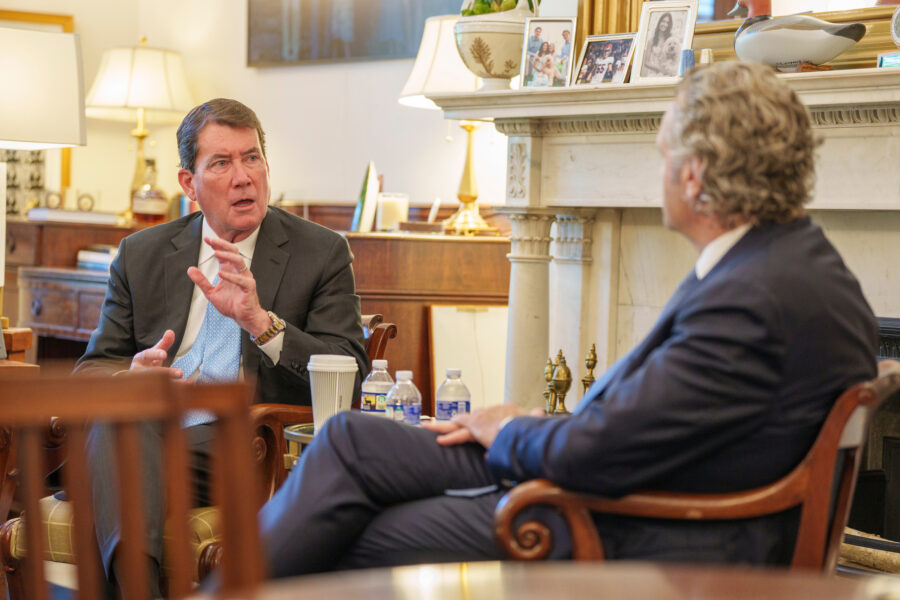
- In particular, OFR’s efforts with staff from the office of Sen. Bill Hagerty, R-Tenn., BA'81, JD'84, paid off when Russ Vought, the director of the Office of Management and Budget, appeared before the Senate Appropriations Committee and Sen. Hagerty spoke about the importance of indirect costs to conducting “safe and high-quality research that gives America a competitive advantage.” Director Vought pointed to the community effort to improve the research funding model.
As these issues continue to evolve, OFR remains actively engaged with key policymakers and partner organizations to monitor developments and advocate for policies that support Vanderbilt’s mission.
Vanderbilt champions advocate on Capitol Hill
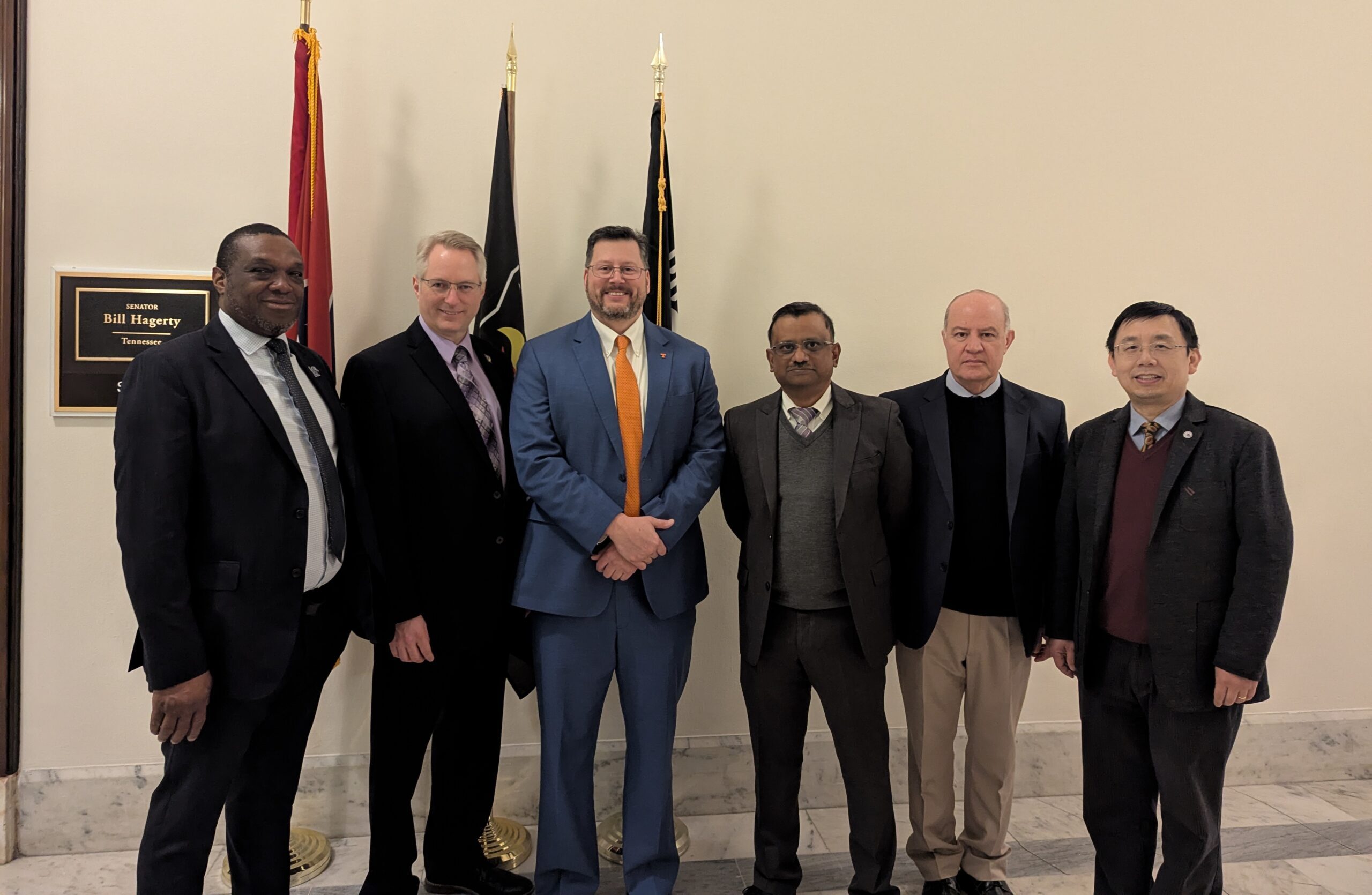
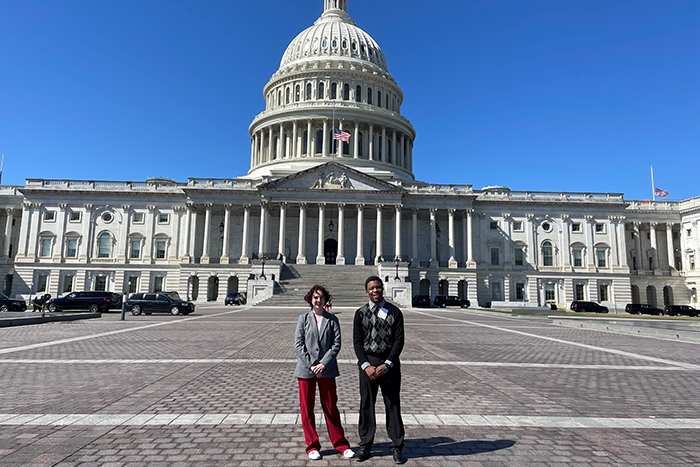
The Office of Federal Relations regularly engages Vanderbilt leaders, faculty, staff and students to advocate for university funding priorities on Capitol Hill. Highlights include:
- Engineering research funding: Krish Roy, Bruce and Bridgitt Evans Dean of the School of Engineering, again led his Tennessee engineering dean colleagues on Capitol Hill in meetings organized by Director Heather Bloemhard to advocate for federal support of engineering education and research. Learn More
- Funding for federal student aid: Associate Vice Chancellor Christina West helped lead colleagues from the Tennessee Independent Colleges and Universities Association to advocate for federal student aid funding and brief the Tennessee congressional delegation on issues facing private institutions in the state. Following this, leaders from VU’s financial aid office, Brent Tener and Heather Boutell, joined AVC West in meeting with delegation offices to reiterate those points.
- Humanities funding: Two students from the Robert Penn Warren Center’s Humanities in the Real World Fellowship traveled to Washington, D.C., in March to participate in the National Humanities Alliance’s Humanities Advocacy Day. Sponsored by OFR and led by Program Coordinator Julie Harding, they joined scholars and advocates nationwide to highlight the importance of federal investment in the humanities through the National Endowment for the Humanities. Read More
- Graduate students and NSF and NIH funding: In partnership with the Graduate School and Office of Biomedical Research Education and Training, OFR sponsored four students to participate in the 2025 Catalyzing Advocacy in Science and Engineering Workshop hosted by the American Association for the Advancement of Science. As part of the workshop, Director Bloemhard arranged Hill meetings during which the students spoke about the importance of NIH and NSF to their careers.
Members of Congress participate in signature Vanderbilt events
OFR continues to collaborate with campus partners to welcome members of Congress to Vanderbilt’s signature events. These events provide members of Congress and their staff the opportunity to engage with our community.
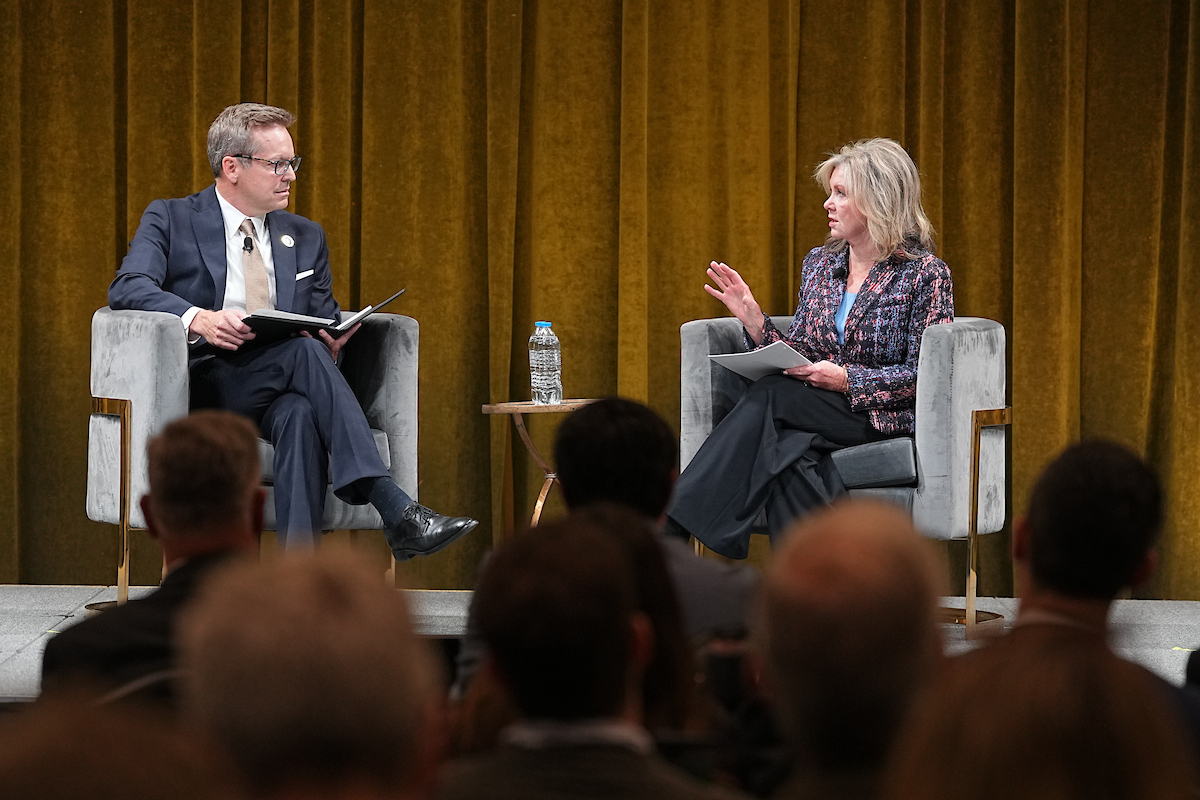
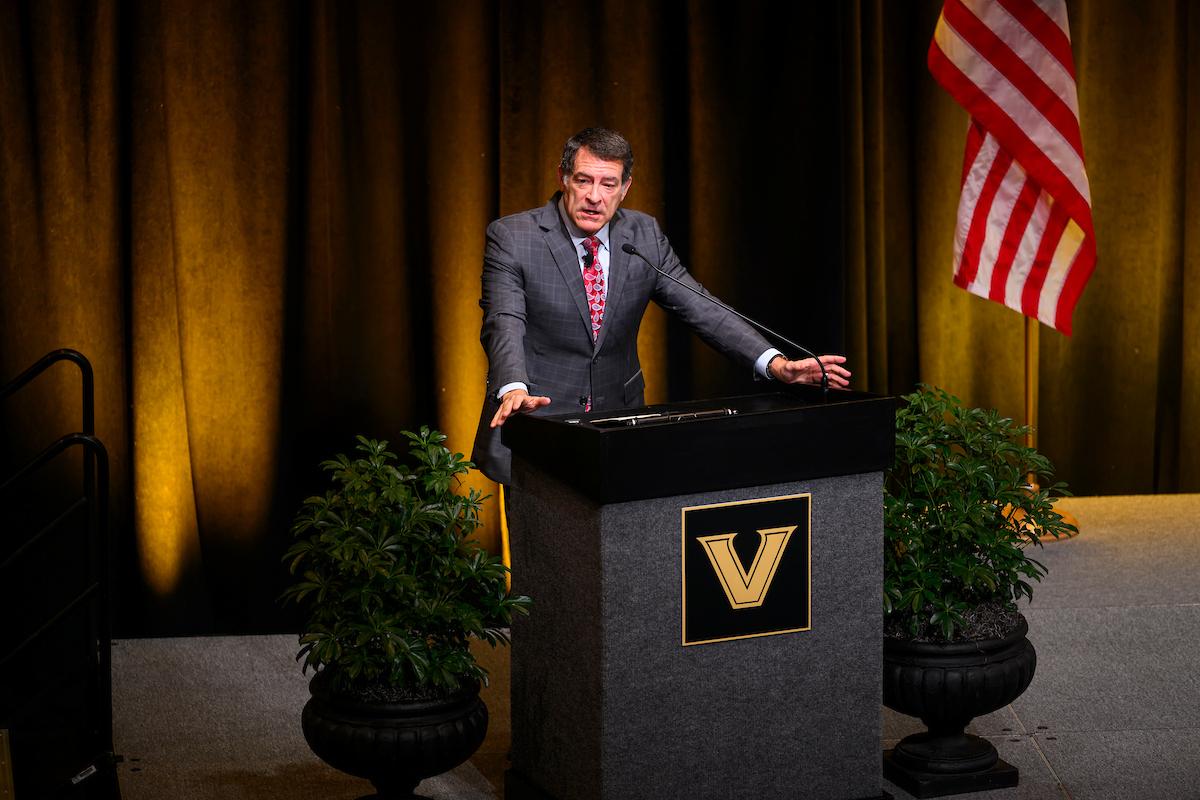
Summit on Modern Conflict and Emerging Threats: OFR facilitated sessions featuring Sen. Marsha Blackburn, R-Tenn., and former Rep. Mark Green , R- Tenn., at the 2025 Vanderbilt Summit on Modern Conflict and Emerging Threats.
- Sen. Blackburn participated in a fireside chat that explored the risks and opportunities emerging technologies pose for national security. Learn More
- Former Rep. Green provided a keynote address about AI and its implications for the future of national security. During the fireside chat that followed, he talked about the important role of academic institutions. Learn More
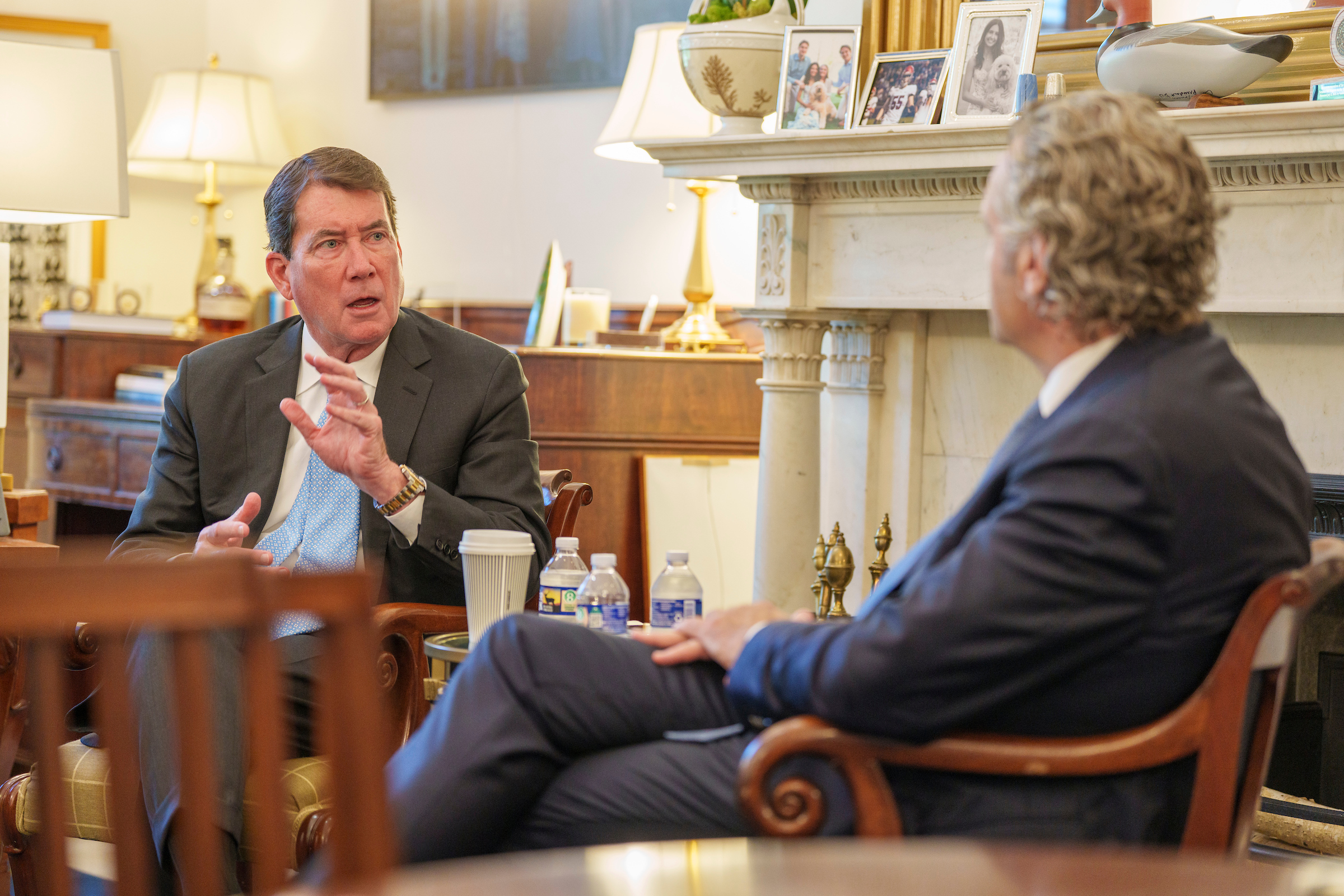
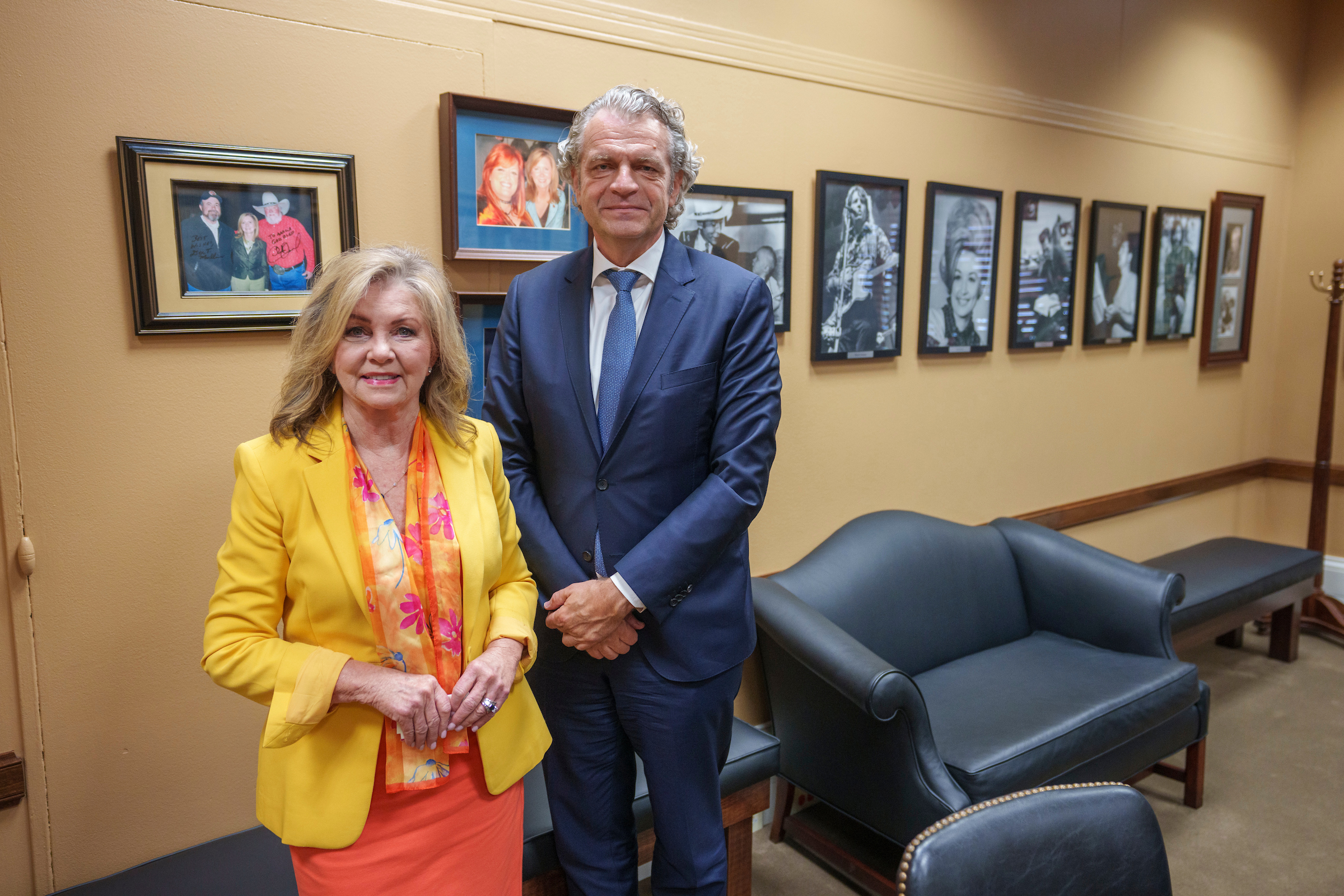
Chancellor Diermeier meets with members of Congress, highlights federal partnerships at Vanderbilt’s D.C. reception: In late June, Chancellor Diermeier traveled to Washington, D.C., for a day of congressional meetings and to headline Vanderbilt University’s congressional reception. His visit, organized by Vanderbilt’s Office of Federal Relations, came at a pivotal moment as Congress considered sweeping budget and tax legislation. Learn More
Blackburn staff visit: Five members of Sen. Blackburn’s national security staff visited campus in August to learn about the university’s Department of Defense research and partnerships. The visit covered the Institute of National Security, which includes as part of its innovation pillar the Pathfinder-Air Assault partnership, the Vanderbilt Institute for Software and Integrated Systems, including the Dependable AI for National Security (DAINS) project, Vanderbilt’s ROTC programs and the Vanderbilt Institute of Nanoscale Science and Engineering.
Vanderbilt’s district impact
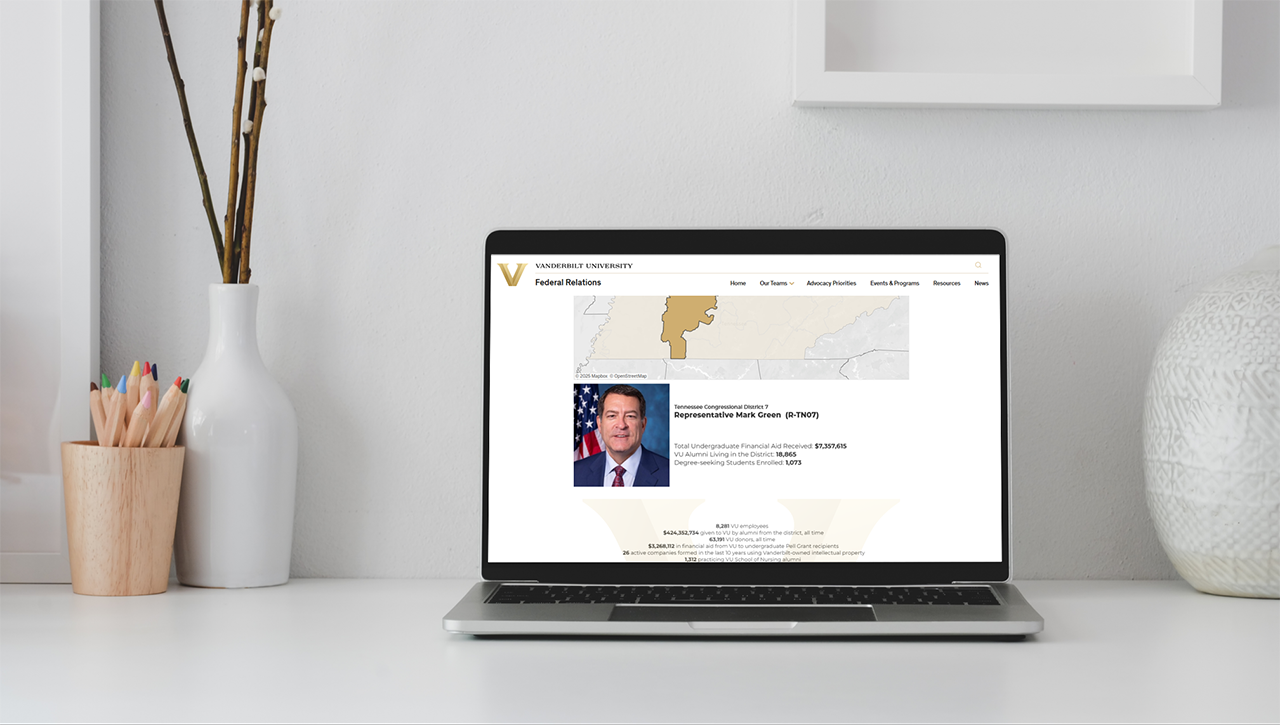
The Division of Government and Community Relations, in partnership with the Office of Data and Strategic Analytics, released the FY 2024 District Impact Report—an interactive dashboard that illustrates the university’s contributions to each of Tennessee’s nine congressional districts and 95 counties. Read More
What else we’re watching: Other federal policy developments
Funding for research, student aid and higher education
Separate from reconciliation, Congress had to complete its work on the FY 2025 spending bills and begin consideration of the FY 2026 spending bills.
Fiscal Year 2025 appropriations
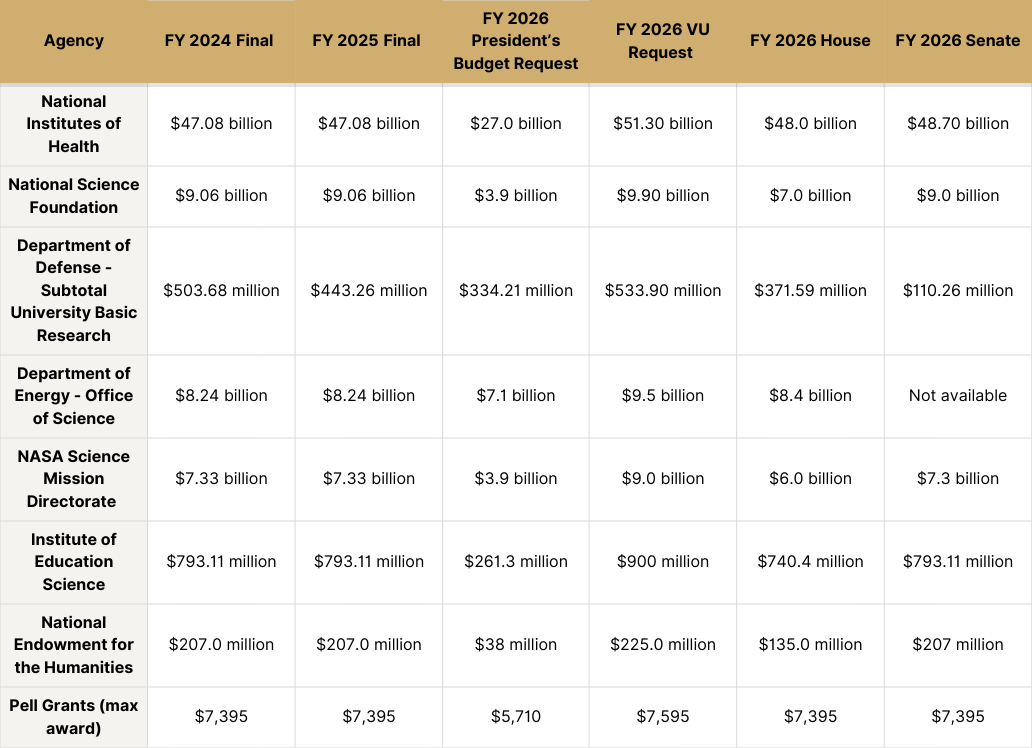
OFR continued its advocacy work to support robust funding for our research and student aid priorities in the final FY 2025 spending package which was signed into law March 15, 2025. The full-year, all-of-government continuing resolution holds funding flat from the FY 2024 spending level for most of our priorities. However, the nature of the CR meant that the agencies did not receive the same level of direction on how to spend their funds as they usually would, providing agencies with unprecedented discretion as to how to spend their funds. More details are in the table below and on the American Association for the Advancement of Science website.
Fiscal Year 2026 appropriations
The standard appropriations process begins with the release of the President's Budget Request which typically happens in early February but is often delayed in a president’s first year or when work on the previous fiscal year has not yet been completed. OFR coordinated the development of Vanderbilt University’s appropriations priorities and submitted these to the Tennessee congressional delegation and have been advocating for these research and higher education priorities since.
What we know of the FY 2026 funding levels are summarized in the table below.
7th district special election
U.S. Rep. Mark Green, R-Tenn., announced his resignation from Congress after voting on the reconciliation bill, creating a vacancy in this safely Republican district, which covers parts of Middle Tennessee and Nashville, including the Vanderbilt campus. The primary election will take place on October 7, 2025, with the special election scheduled for December 2, 2025.
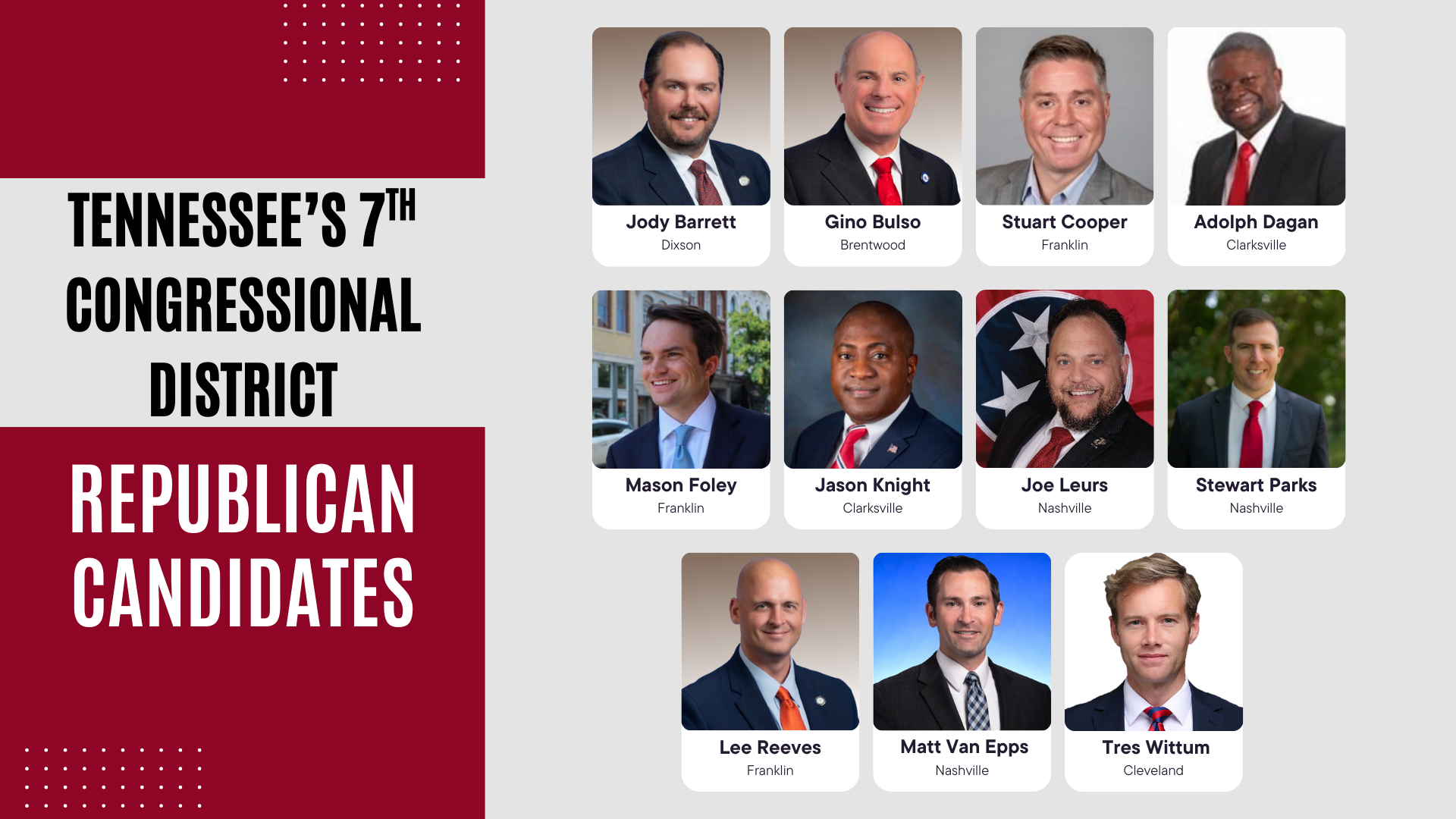
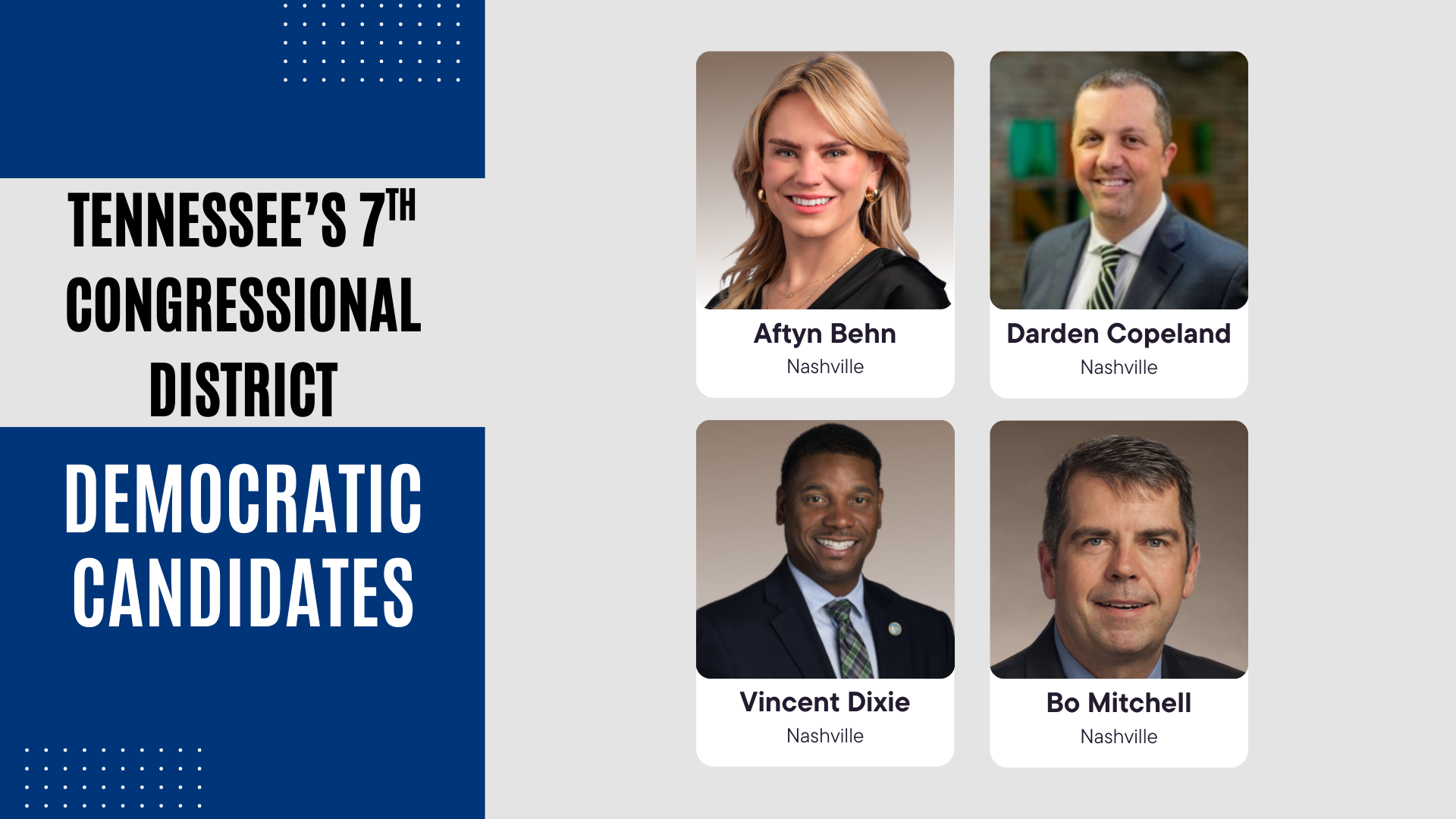
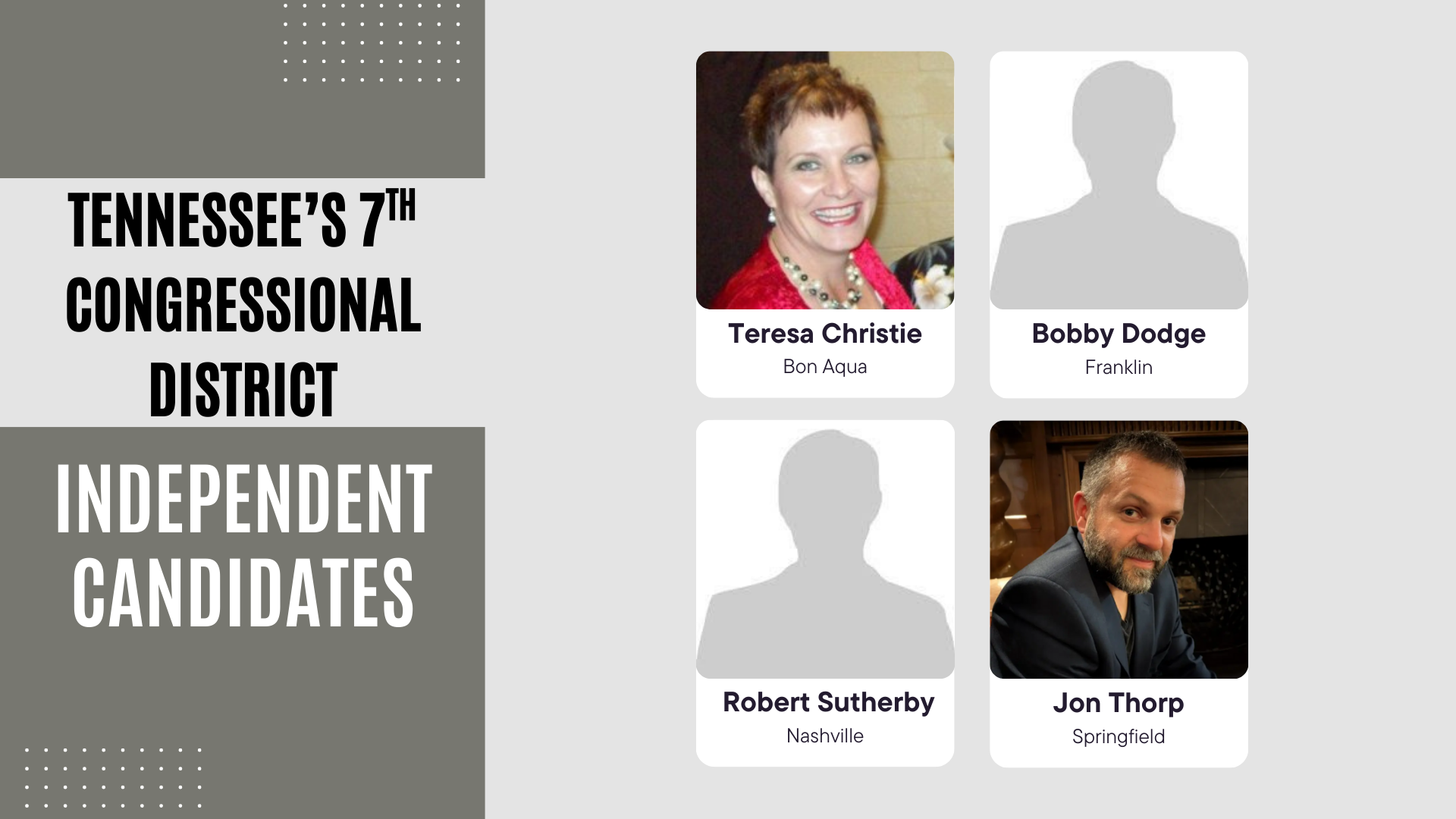
Given that this district includes the Vanderbilt campus, OFR will continue to monitor the race closely and will work to engage the new member of Congress once elected.
Engage with Us
Subscribe to DCbrief
DCbrief is the Office of Federal Relations’ e-newsletter that provides timely, concise summaries of news items to inform Vanderbilt faculty and staff of federal policy developments that impact the university and the higher education community. DCbrief is a near-daily publication when Congress is in session.
Subscribe by filling out the sign-up form with a vanderbilt.edu email address. Please note that this is an opt-in newsletter; you must subscribe to receive it.
Follow Us
Follow us on Twitter (X) and LinkedIn to stay informed on public policy issues, access resources and opportunities and engage with the higher education landscape.
Vanderbilt Federal Relations Team
-

Christina West
Associate Vice Chancellor for Federal Relations
-

Heather Bloemhard
Director of Federal Relations
-
Julie Harding
Government Relations Program Coordinator
-

Gwen Zwirko
Office Manager