Biomolecular NMR Facility
Overview
Nuclear Magnetic Resonance spectroscopy (NMR) is a powerful technique that can provide information on molecular structure and dynamics at the atomic level. The naturally-occuring 1H isotope is the most sensitive NMR reporter. However, the very large number of 1H nuclei in macromolecules, can make the 1H-NMR spectrum intractable. Fortunately, with the advent of multi-dimensional techniques and methods in molecular biology to incorporate 13C, 15N and 2H in biological macromolecules, it has become possible to probe the structure, dynamics and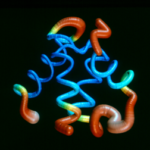 biochemistry of proteins, RNA, DNA, and carbohydrates with NMR. The Vanderbilt Biomolecular NMR center was created as a part of a transinstitutional initiative to develop structural biology on campus.
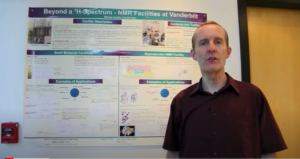
Click on the picture to see our 12min introductory video:
Mission Statement
The principal mission of the Biomolecular NMR Facility is to provide instrumentation for, and aid in obtaining data on the structure and dynamics of biological macromolecules. The Facility offers state-of-the-art instrumentation, training, software and assistance in designing experiments. We strive to help the Vanderbilt community realize the potential of biomolecular NMR and to work with NMR spectroscopists to stay current with the most recent experimental approaches.
Equipment
900 MHz NMR Spectrometer with CPTCI probe
800 MHz NMR Spectrometer with CPTCI probe
600 MHz NMR Spectrometer with CPTCI probe and SampleJet
600 MHz NMR Spectrometer with BBI probe and SampleJet
The Biomolecular NMR Facility at Vanderbilt received their 900MHz NMR spectrometer on May 7th 2011.
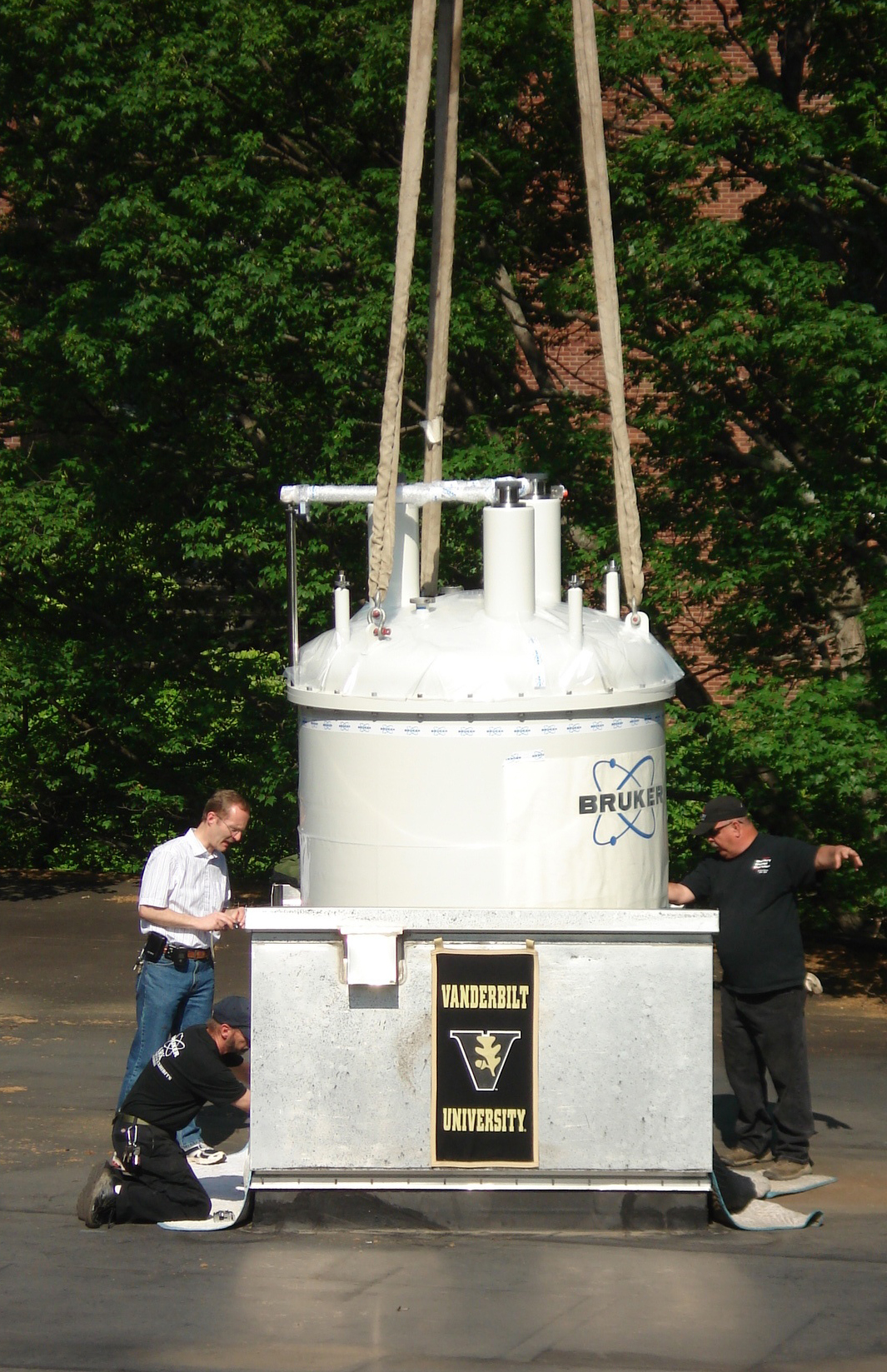
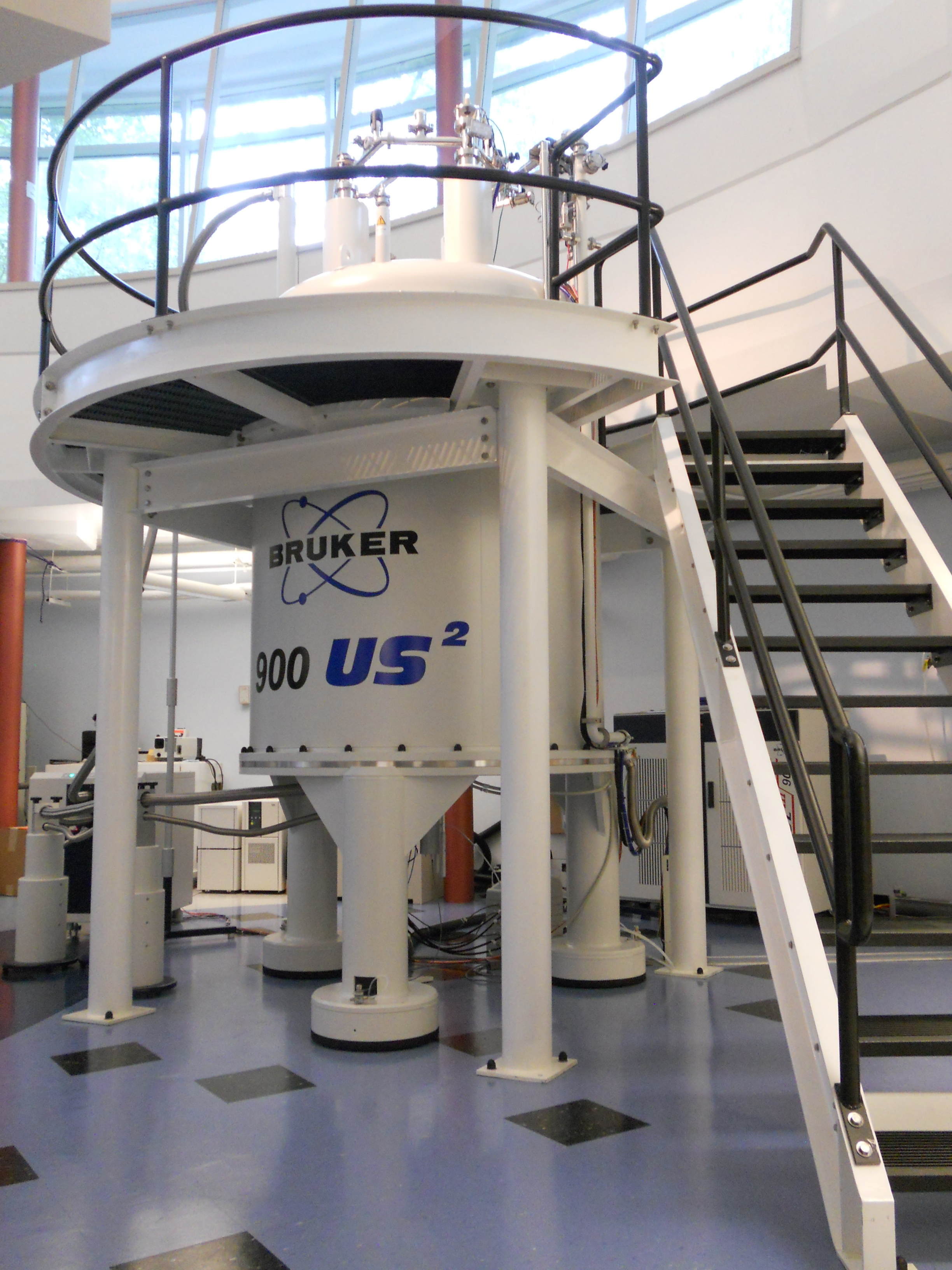
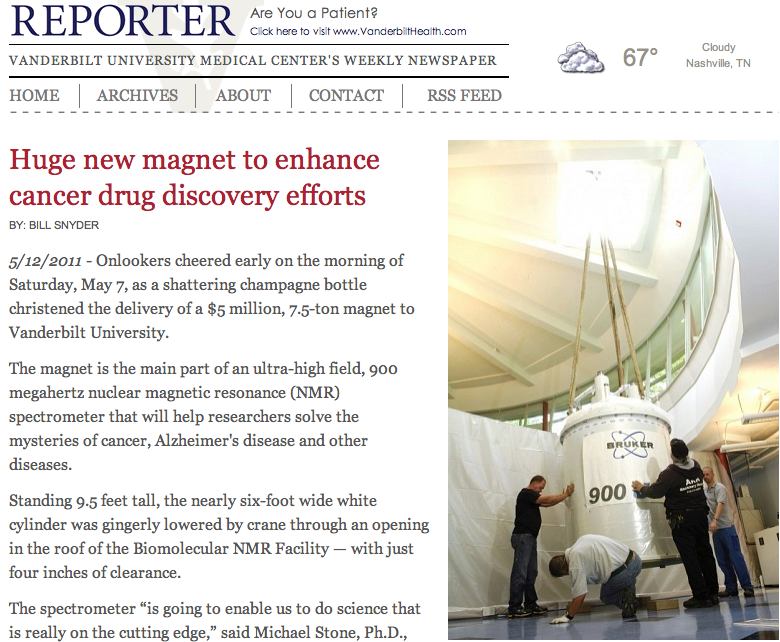
For more information see the article in the VU Reporter
(click on picture)
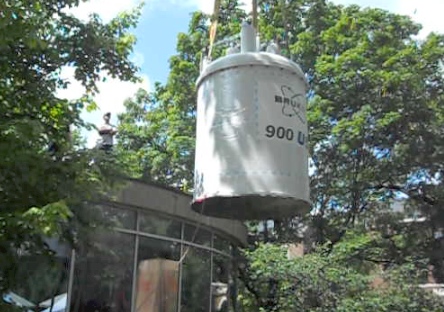
Watch a video of the magnet delivery
(click on picture, 15min)
Acknowledgements
Each user of the Biomolecular NMR Facility is required to include the following citation in any publication that has data acquired at the facility: “Supported in part by MRI grant #0922862 from NSF (Acuisition of a 900 MHz Ultra-High Field NMR Spectrometer), SIG grant #1S-10RR025677-01 from NIH (Console upgrades for biological NMR spectrometers) and Vanderbilt University matching funds”.
Questions or concerns may be addressed directly to:
Michael P. Stone, Scientific Director, or Markus Voehler, Director of Operations
You must be logged in to post a comment.