Morse, Brad; Reale, Carrie; Nguyen, An T.; Latella, Erin; Bauguess, Hannah D.; Anders, Shilo H.; Roberts, Pamela S.; SooHoo, Spencer L.; El-Kareh, Robert E.; Soares, Andrey; & Schilling, Lisa M. (2025). Clinician needs and requirements for a decision aid navigator: Qualitative study. JMIR Human Factors, 12, e69756. https://doi.org/10.2196/69756
Decision aids are tools that help patients and clinicians make healthcare decisions together, improving patient knowledge, reducing regret, and encouraging meaningful discussion. However, many clinicians do not use these tools because of time limits, difficulty matching aids to patient needs, leaving the electronic health record (EHR) to access them, and manual data entry.
This study explored clinician needs to design an EHR-integrated app called DEAN (Decision Aid Navigator), built on the SMART on FHIR platform. DEAN identifies decision aids relevant to a patient’s conditions, current treatments, and demographics, and helps document shared decision-making discussions.
Researchers interviewed 13 clinicians from four academic medical centers while showing a prototype of DEAN. Analysis of the interviews revealed three key needs: (1) streamlined functionality to reduce workflow burden, (2) clinician skills to use the app and decision aids effectively, and (3) trust that the app suggests pre-vetted decision aids. Clinicians agreed that EHR integration was essential for adoption.
The study concludes that improving tools like DEAN and integrating them into the EHR can help clinicians use decision aids more efficiently, supporting shared decision-making and potentially increasing patient-centered care.
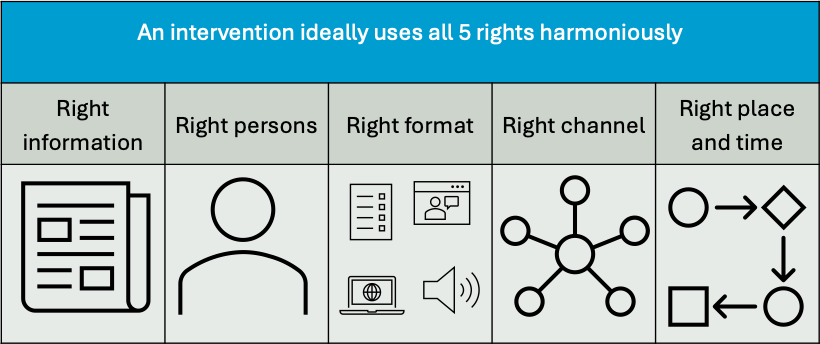
Figure 1. The 5 rights of clinical decision support (adapted from [23]) .