Snyder, E. J., Thiel, C. L., Struk, O., Vigil-Garcia, M., Meijer, C., Gehrels, J., Omary, R. A., Scheel, J. R., & Carver, D. E. (2025). The Hidden Impact of Radiography and Fluoroscopy—An Environmental Life Cycle Assessment. Journal of the American College of Radiology. https://www.jacr.org/article/S1546-1440(25)00566-6/fulltext
Medical imaging techniques like radiography and fluoroscopy have a measurable environmental impact, primarily due to energy use and associated emissions. This study assessed the carbon footprint of these imaging services at a large academic medical center over one year using life cycle assessment (LCA) methods, collecting data through observations, records, staff interviews, and energy metering.
The analysis estimated that radiography and fluoroscopy generated about 55,100 kilograms of CO₂ equivalent annually. Energy use was the largest contributor, responsible for 47% of emissions. Per-scan emissions were higher for fluoroscopy (4.8–9.6 kg CO₂e per scan) compared to radiography (0.8 kg CO₂e per scan). Medical linens contributed 24% of total emissions, and additional environmental effects included ozone depletion, smog, acidification, and eutrophication.
The study highlights that reducing energy consumption—through decarbonized electricity and optimized equipment use—can significantly cut greenhouse gas emissions. Sustainable management of linens, responsible procurement, and minimizing unnecessary imaging are also important strategies for lowering the environmental footprint of radiography and fluoroscopy.
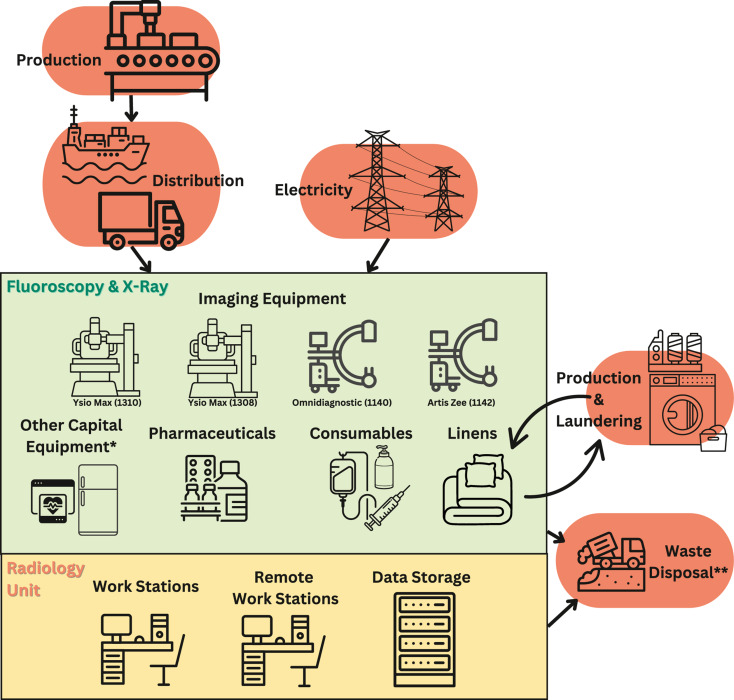
Fig. 1 Flow diagram of components included in the study. ∗This study could not account for the production of all additional capital equipment. See e-only supplemental files here and in the previous publication [4] for more information. ∗∗The environmental footprint of waste disposal was not included in this study.