Frederick-Dyer, K. C., Thiel, C. L., Leschied, J. R., Struk, O., Vigil-Garcia, M., Meijer, C., Gehrels, J., Omary, R. A., Scheel, J. R., & Carver, D. E. (2025). Harmonizing Diagnostic Ultrasound Practice with Environmental Sustainability: A Life Cycle Assessment of Diagnostic Ultrasound in a Single Adult University Hospital. Journal of the American College of Radiology. https://doi.org/10.1016/j.jacr.2025.09.031
This study evaluated the environmental impact of ultrasound imaging in a large academic hospital to identify areas where sustainability efforts could be most effective. Using life cycle assessment, the analysis considered not only the energy use of ultrasound machines but also their production, disposal, examination supplies (like ultrasound gel and linens), and data storage and interpretation equipment.
The results revealed that, unlike other imaging modalities, most greenhouse gas emissions from ultrasound come from disposable supplies and linens rather than the machines themselves. Linens accounted for 35% (5.5 out of 17 metric tons CO₂e) and disposable supplies for 34% (5.5 out of 17 metric tons CO₂e) of the carbon footprint, while machine production (7%) and energy use (3%) contributed relatively little. Among single-use items, gloves and ultrasound gel were the largest contributors.
These findings highlight that the environmental impact of ultrasound is driven mainly by the supplies needed for exams rather than the equipment itself. Given the growing global use of ultrasound, reducing and optimizing the use of linens, gel, and other disposables—following circularity principles—could significantly lower the carbon footprint of radiology departments.
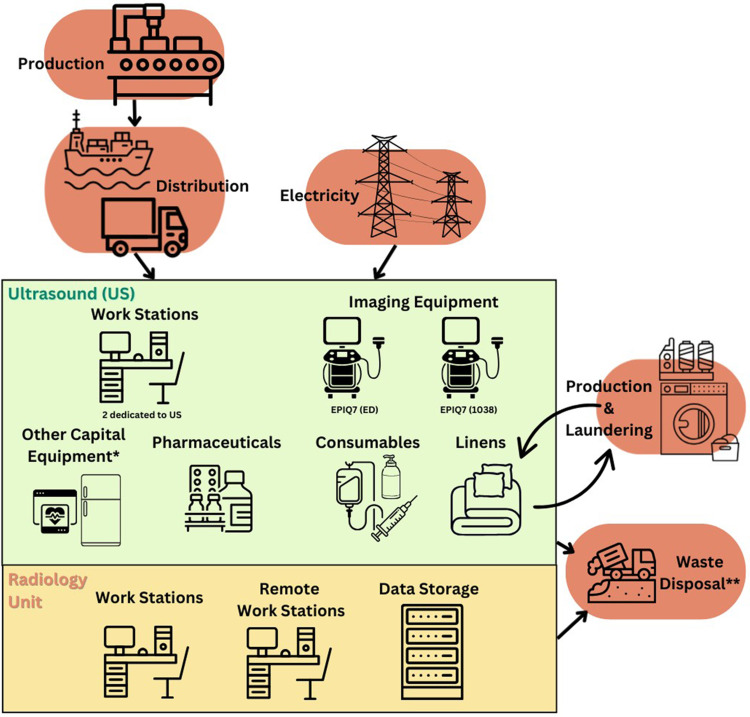
Fig. 1 Flow diagram of components included in the study. ∗This study could not account for the production of all additional capital equipment. See e-only supplemental files here and in the previous publication [9] for more information. ∗∗We assumed waste from consumable supplies and pharmaceutical packaging was sent to a landfill; no other waste streams were assessed in this study.