November 2025
Friends,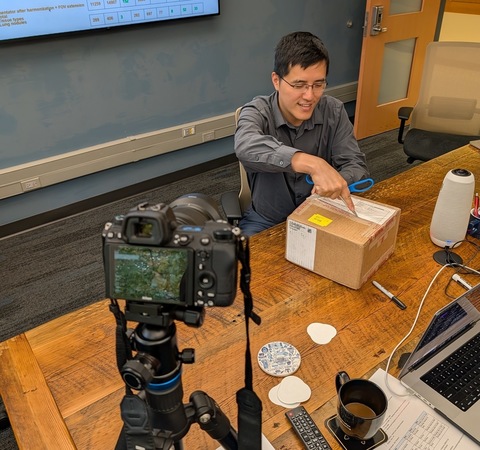
Thanksgiving gives us a chance to step back and appreciate not just the big wins, but the tiny, joyful surprises tucked into each week. So let me tell you a story that perfectly captures that spirit.Earlier this month, Professor Yuankai Huo earned an NVIDIA hardware grant for a new Spark PetaFLOP edge-compute device. HRBL has been a leader in making complex AI models feather-light through distillation. Their work powers tools in MONAI, which has been downloaded more than 6 million times. But on this particular day, the breakthrough wasn’t in the cloud – it was in a cardboard box.
Yuankai sprinted down the hall into my office, no Slack message, no email, just pure, infectious excitement. “It’s here!”… raising an unassuming brown box.
Naturally, we needed an unboxing video. I grabbed my camera, framed the shot, and caught the perfect moment… or so I thought. After the excitement settled, I looked down and realized: I had never pressed record.
So all that remains is a single still photo. But honestly? It’s perfect. It captures the anticipation, the curiosity, and the shared joy that make this work meaningful.
This week, I hope we all pause to notice moments like these… moments of anticipation, discovery, inspiration, renewal, and even accidents. I’m thankful to share so many of them with you.
Happy Thanksgiving.
Bennett
Learning by Doing: A VALIANT Scholar’s Crash Course in Computational Imaging
Three weeks. One draft paper. Countless terminal commands learned from scratch. For Chloe Scholten, a VALIANT Reach Scholar visiting from the University of Calgary, the exchange with Vanderbilt’s MASI Labbecame a lesson in the power of experiential learning.
“My background was in physiology and neuroscience—not engineering,” Scholten explained. “When I got here, I couldn’t even copy a file path in Linux. But every day, I learned something new.”
Under the mentorship of Dr. Bennett Landman, Scholten worked with Vanderbilt researchers to apply deep learning–based harmonization to de-identified pediatric MRI data from her home lab’s PEACH study, which examines the long-term effects of prenatal alcohol exposure on children’s brain and mental health. The goal: to reduce site-related differences that can cloud results in multi-center imaging studies.
“The models didn’t completely solve the site problem, but they showed promise—and gave us new hypotheses to test,” she said. “More importantly, I now understand how these AI tools actually work.”
The experience also offered a cultural exchange between disciplines. “In Calgary, most of us come from health sciences,” Scholten observed. “Here, everyone speaks code. Learning from engineers gave me a totally different lens for how to approach neuroscience.”
Outside the lab, she found Nashville itself just as inspiring. “The coffee shops, the music, the people—everyone was so welcoming,” she said. “I felt part of a community that’s curious and creative.”
Scholten returns to Canada with new skills, a conference submission, and a broader sense of what’s possible when scientists step outside their comfort zones. “I learned to be patient with myself and to keep asking questions,” she said. “It’s okay not to know everything—just start, and you’ll be amazed at how much you grow.”
The Long View of Health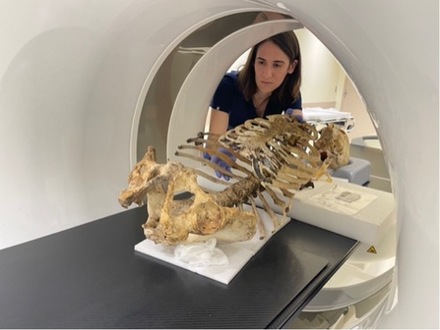
AI Fellow Dr. Katherine Van Schaik studies health over time—both across the arc of human history and within the span of an individual life. “Health over time describes two facets,” she explains. “It describes health from the earliest hominids to today, and also health over the lifetime of an individual—questions related to longevity and healthspan.”
Her work brings radiology, molecular biology, history, and archaeology together to understand disease as a lived experience. “I hope to change the world,” she says, “by studying the remains of people who lived in the past. I want to use that knowledge to gain greater insight into disease processes—how that knowledge can improve healthcare and therapeutics today—and what it can teach us about the lives people lived in the past.”
The bones themselves, she argues, speak volumes. “Knowing the genetics of someone can’t tell me about the bone fracture he or she sustained and healed from. Studying the bones themselves tells me something about that person’s life—the fact that person was healthy enough to survive that injury.” Through imaging, proteomics, and epigenetic analysis, her team seeks a fuller portrait of ancient health: not just ancestry, but experience.
Soon, Vanderbilt will open a new, state-of-the-art ancient DNA laboratory within the VINSE Institute for Nanoscale Science. “It’s remarkable that it’s on a medical school campus,” she notes. “Many ancient DNA labs are in anthropology departments, but here we can take advantage of cores and sophisticated medical technologies just steps away.” The lab will analyze DNA fragments so delicate that the risk is not infection of researchers—but contamination in reverse, namely that these historical fragments could be contaminated by researchers, if proper precautions are not taken.
Across millennia, Van Schaik finds continuity. “People are still getting sick; people still aspire to long life. What’s changed are the disease profiles, from more acute to more chronic.” By comparing historical remains with modern imaging resources like ImageVU and BioVU, her team explores how immune systems and chronic conditions evolve.
“We can give voice to those who aren’t reflected in the written record,” she says. “The bones remember.”
Interested in joining the effort? Students and collaborators can learn more at Health Over Time.
VALIANT Ventures
- AI Scholar Tianyuan Yao had a successful defense for his PhD in Computer Science with title “Unified Foundational Modeling for Diffusion-weighted Magnetic Resonance Imaging”
Immersion Meets Insight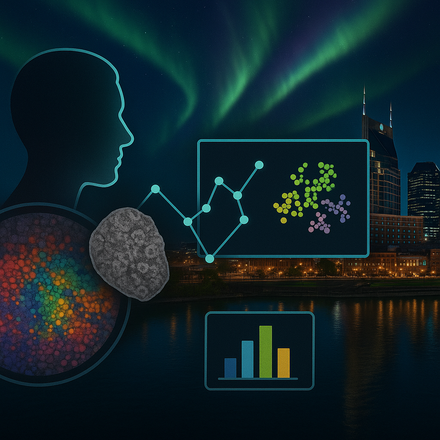
Linking Layers Intelligently
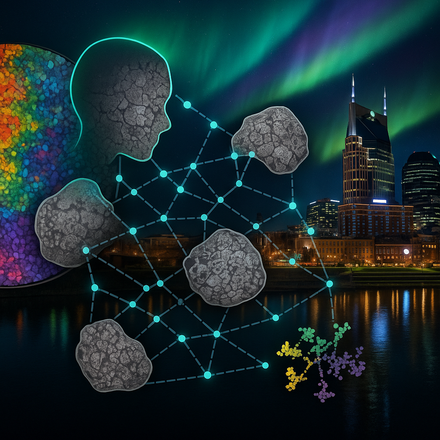 Prof. Maizie Zhou and her team introduce MaskGraphene, a breakthrough framework that weaves together multiple spatial transcriptomics slices into a single, interpretable map of biology. By forging “soft” and “hard” links across conditions, their approach preserves geometric structure while illuminating cell-type organization, trajectories, and molecular insights that were previously hidden.
Picture the Future!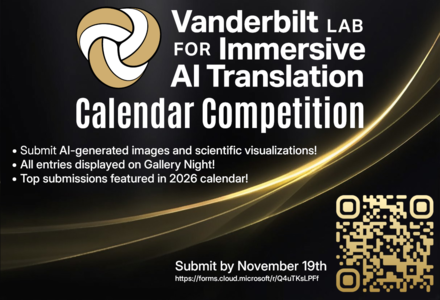
Resume Update
 AI Scholars, look for an e-mail asking if you would like to update your information. We are rolling out the 2026 resume book and piloting new ways to highlight your excellence for awards, fellowships, and more. Questions, suggestions? Drop us a line at valiant@vanderbilt.edu.
BrainHack Vanderbilt 2026: Build, Learn, Lead
Alchemists’ Corner
- MaskGraphene: an advanced framework for interpretable joint representation for multi-slice, multi-condition spatial transcriptomics
- Relaxation-compensated chemical exchange saturation transfer MRI in the cervical spinal cord at 3T: An application in multiple sclerosis
- Simultaneous EEG-PET-MRI identifies temporally coupled and spatially structured brain dynamics across wakefulness and NREM sleep
- Study protocol for the design, implementation, and evaluation of the STRATIFY clinical decision support tool for emergency department disposition of patients with heart failure
- Procedures for Constraining Robotic Fiber Positioning for Highly Multiplexed Spectroscopic Surveys: The Case of FPS for SDSS-V
- An African ancestry-specific nonsense variant in CD36 is associated with a higher risk of dilated cardiomyopathy
- Multipath cycleGAN for harmonization of paired and unpaired low-dose lung computed tomography reconstruction kernels
- Reward circuit local field potential modulations precede risk taking
- Longitudinal measures of monkey brain structure and activity through adolescence predict cognitive maturation
- Two warm Earth-sized exoplanets and an Earth-sized candidate in the M5V-M6V binary system TOI-2267
- Human-centered design of an artificial intelligence monitoring system: the Vanderbilt Algorithmovigilance Monitoring and Operations System
- Integration of elemental imaging and spatial transcriptomic profiling for proof-of-concept metals-based pathway analysis of colon tumor microenvironment
- Fine-grained multiclass nuclei segmentation with molecular empowered all-in-SAM model
- Soft-hard framework with exact four-momentum conservation for small systems
- The Financial and Environmental Benefits of Circular Business Models for MRI
- Wireless Resonators With Coupled Versus Decoupled Units: Which Enhances Local SNR of RF Receive Arrays Better?
- EcoRad: sustainable radiology and the ecology of economics
- Engineering Thermal Emission with Enhanced Emissivity and Quality Factor Using Bound States in the Continuum and Electromagnetically Induced Absorption
- Harmfulness Score: A Data-Driven Framework for Ranking Environmental Risks of Microplastics
- DeepAndes: A Self-Supervised Vision Foundation Model for Multispectral Remote Sensing Imagery of the Andes
valiant@vanderbilt.edu | https://vanderbilt.edu/valiant | @VandyValiant | LinkedIN