Salwei, Megan E., Davis, Sharon E., Reale, Carrie., Novak, Laurie Lovett., Walsh, Colin G., Beebe, Russ., Nelson, Scott D., Sundrani, Sameer., Rose, Susannah L., Wright, Adam T., Ripperger, Michael A., Shave, Peter., & Embi, Peter J. [2025]. Human-centered design of an artificial intelligence monitoring system: the Vanderbilt Algorithmovigilance Monitoring and Operations System. JAMIA Open, 8(5), ooaf136. https://doi.org/10.1093/jamiaopen/ooaf136
As artificial intelligence [AI] becomes more common in healthcare, there is growing awareness that these systems need continuous oversight after they are put into use—a process known as algorithmovigilance. However, few tools exist to help hospitals consistently monitor and manage the performance of AI across their entire organization. In this study, we worked to understand what end users need from such a system while designing a new monitoring platform called the Vanderbilt Algorithmovigilance Monitoring and Operations System [VAMOS]. To do this, we brought together a multidisciplinary team at Vanderbilt University Medical Center and held nine participatory design sessions with clinicians, leaders, and technical experts to create early prototypes. After developing a working version, we conducted eight additional interviews to gather feedback and used rapid qualitative analysis to refine the design. A multidisciplinary heuristic evaluation then helped identify more ways to improve the system. Through this human-centered, iterative process, we identified the key features an AI monitoring system must include, such as specific data displays, performance dashboards, expandable “accordion” summaries, and model-specific pages that meet the needs of a wide range of users. We also outlined general design principles for long-term AI monitoring, highlighting the challenge of supporting teams spread across the health system as they track performance issues and respond to signs of algorithm deterioration. Ultimately, VAMOS is intended to help healthcare organizations monitor AI tools in a systematic and proactive way, with the goal of improving care quality and ensuring patient safety.
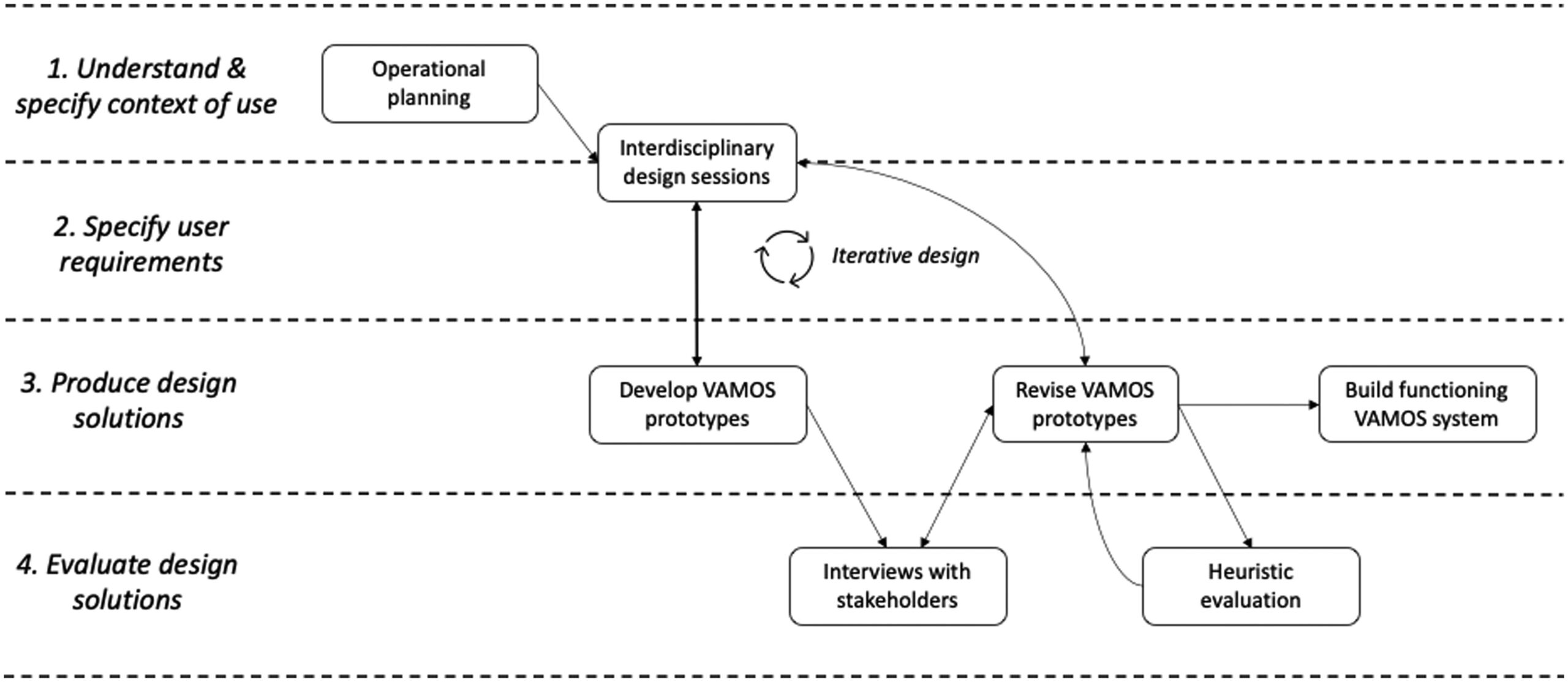
Figure 1.
Overview of human-centered design process to develop VAMOS.