Frey, Christopher S., Spears, Thomas M., Puczko, Daniel, Hymel, Alicia M., Mathews, Candler G., Luchini, Patrick M., van Schaik, Katherine D., Leschied, Jessica R., & Sullivan, Jaron P. (2025). “Indomethacin versus Ketorolac for the prevention of heterotopic ossification in hip arthroscopy patients.” Journal of Orthopaedics, 68, 283-286. https://doi.org/10.1016/j.jor.2025.07.032
Nonsteroidal anti-inflammatory drugs (NSAIDs) are often prescribed to reduce the risk of heterotopic ossification (HO), which is the abnormal growth of bone in soft tissue, after hip arthroscopy. However, it is still unclear which NSAID regimen works best.
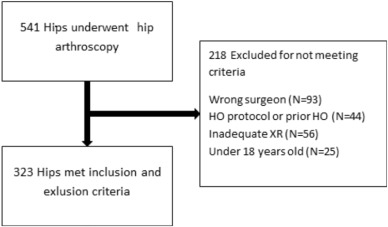
This study reviewed the medical records of 323 patients who underwent hip arthroscopy by a single surgeon at a specialized medical center. Each patient received a two-part NSAID regimen, starting with four days of either Ketorolac or Indomethacin, followed by one of four other NSAIDs: Celecoxib, Meloxicam, Diclofenac, or Naproxen. Two independent reviewers checked X-rays after surgery to see if HO had developed.
The results showed that 48 patients (15%) developed HO after surgery. Patients who had labral repair and those who had larger corrections in hip angle measurements were more likely to develop HO. The analysis also showed that patients who took Meloxicam as the second medication were at a significantly higher risk of developing HO compared to those who took Celecoxib. Additionally, being male was linked to a higher likelihood of HO formation.
In conclusion, although Meloxicam was associated with a higher rate of HO than Celecoxib, no NSAID regimen was clearly superior overall. Male patients were also found to be at higher risk of developing HO.
Fig. 1. Patient flowchart.