Martinez-Lincoln, Amanda, Leopold, Daniel R., Groff, Boman R., Yeo, Darren J., Willcutt, Erik G., Cutting, Laurie E., Banich, Marie T., & Price, Gavin R. (2025). “Individual differences in the activity of executive function brain regions during number comparison.” Behavioural Brain Research, 494, 115740. https://doi.org/10.1016/j.bbr.2025.115740
Math skills depend on a mix of math-specific abilities and more general thinking skills, known as executive functions (EF), which help with things like memory, focus, and self-control. Brain imaging studies have shown that a part of the brain called the intraparietal sulcus is consistently active during arithmetic tasks. However, activity in the frontal brain regions, which are linked to executive functions, has been less consistent across studies. These differences may be due to individual differences or the specific demands of math tasks.
This study looked at brain activity in adolescents while they worked on math tasks involving ratios and compared it with their measured math skills and executive functions. The researchers found that the brain responded differently depending on whether the numbers were shown as symbols (digits) or as nonsymbolic quantities (dot arrays).
For symbolic number tasks, greater activity in the left parietal and frontal brain regions was linked to higher calculation scores. For nonsymbolic tasks, greater activity in both sides of the parietal lobes was linked to better math fluency. Executive functions were also important: inhibitory control was linked to brain activity during nonsymbolic tasks, while working memory was linked to activity during symbolic tasks across several brain regions.
Overall, the findings suggest that the way numbers are presented (symbols versus quantities) changes how the brain processes them, and these patterns also depend on individual differences in math ability and executive functions.
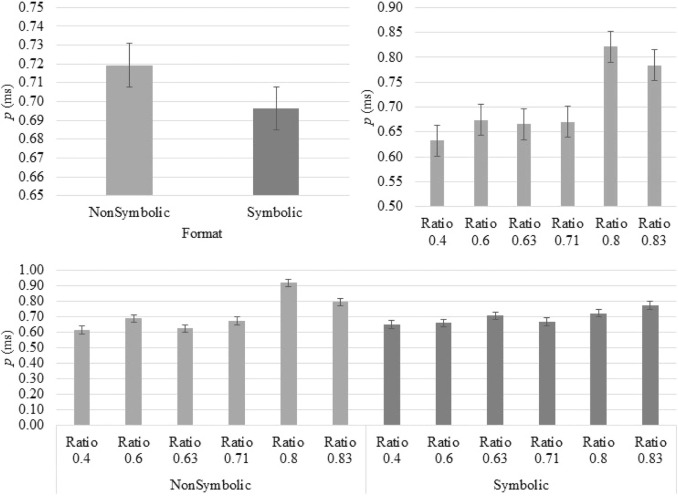
Fig. 1. In-scanner behavioral performance (p).