Riely, Gregory J., Wood, Douglas E., Loo, Billy W., Aisner, Dara L., Akerley, Wallace, Bauman, Jessica R., Bharat, Ankit, Chang, Joe Y., Chirieac, Lucian R., DeCamp, Malcolm, Desai, Aakash, Dilling, Thomas J., Dowell, Jonathan, Durm, Gregory A., Gettinger, Scott, Grotz, Travis E., Gubens, Matthew A., Juloori, Aditya, Lackner, Rudy P., Lanuti, Michael, Lin, Jules, Lovly, Christine M., Maldonado, Fabien, Morgensztern, Daniel, Mullikin, Trey C., Ng, Thomas, Owen, Dawn, Owen, Dwight H., Patel, Sandip P., Patil, Tejas, Polanco, Patricio M., Riess, Jonathan, Shapiro, Theresa A., Singh, Aditi P., Stevenson, James, Tam, Alda, Tanvetyanon, Tawee, Yanagawa, Jane, Yang, Stephen C., Yau, Edwin, Gregory, Kristina, & Hang, Lisa. (2025). Thymomas and thymic carcinomas, version 2.2025. *JNCCN Journal of the National Comprehensive Cancer Network, 23*(6), 255-269. https://doi.org/10.6004/jnccn.2025.0027
Thymoma and thymic carcinoma are rare cancers that start in the cells of the thymus, a small organ in the chest. Among the unusual tumors that can grow in the front part of the chest (called the anterior mediastinum), thymomas are the most common, with about 2 cases per million people each year in the U.S. Thymic carcinomas are even rarer, with about 0.48 cases per million annually. Thymomas usually stay in the area where they start, although they can sometimes spread. Thymic carcinomas, on the other hand, are more aggressive and are often found at a more advanced stage, sometimes already spread to other parts of the body at the time of diagnosis.The outlook for these cancers differs: about 90% of people with thymoma are still alive five years after diagnosis, while about 60% of people with thymic carcinoma survive that long. These NCCN Clinical Practice Guidelines in Oncology give doctors expert recommendations for how to evaluate and treat people with thymoma or thymic carcinoma. First published in 2007, these guidelines are updated every year by a team of experts, including members from the NCCN Guidelines Panel for Non–Small Cell Lung Cancer.
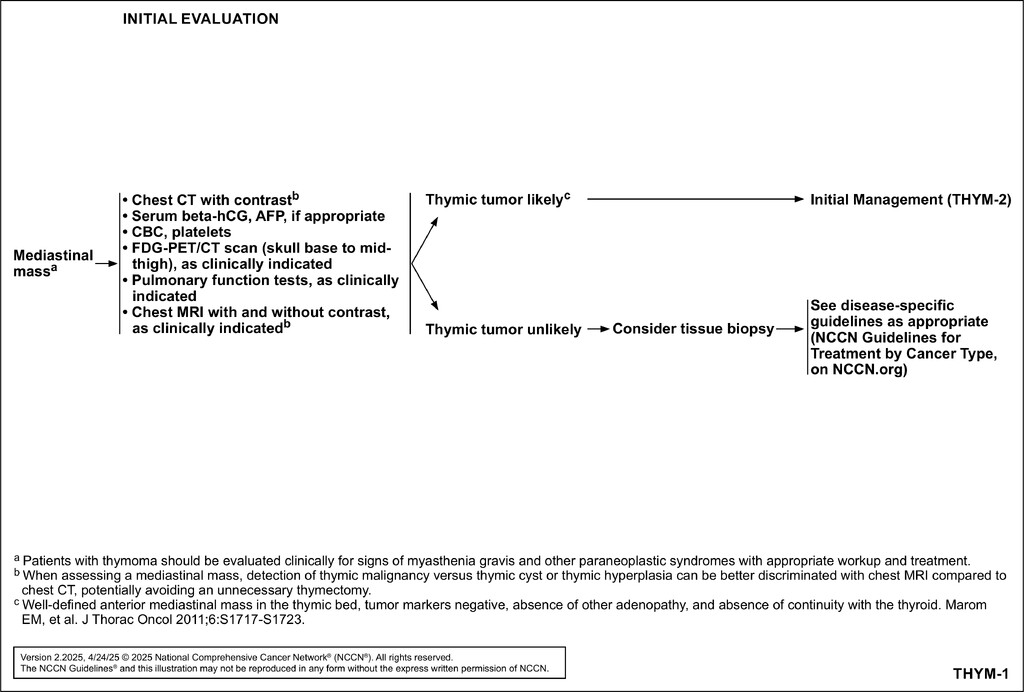
Figure 1.
THYM-1. NCCN Clinical Practice Guidelines in Oncology for Thymomas and Thymic Carcinomas, Version 2.2025.
Citation: Journal of the National Comprehensive Cancer Network 23, 6; 10.6004/jnccn.2025.0027