Long, Yufei; Novak, Laurie; Walsh, Colin G. “Searching for Value Sensitive Design in Applied Health AI: A Narrative Review.” Yearbook of Medical Informatics 33, no. 1 (2025): 75–82. https://doi.org/10.1055/s-0044-1800723.
As artificial intelligence (AI) becomes more common in healthcare, it’s important to design these technologies in ways that fit into real-world medical environments and respect the values of the people involved. While many designers focus on human-centered design—which looks at users’ needs—another approach called Value Sensitive Design (VSD) goes a step further. VSD aims to include human values like trust, fairness, and well-being right from the beginning of the design process.
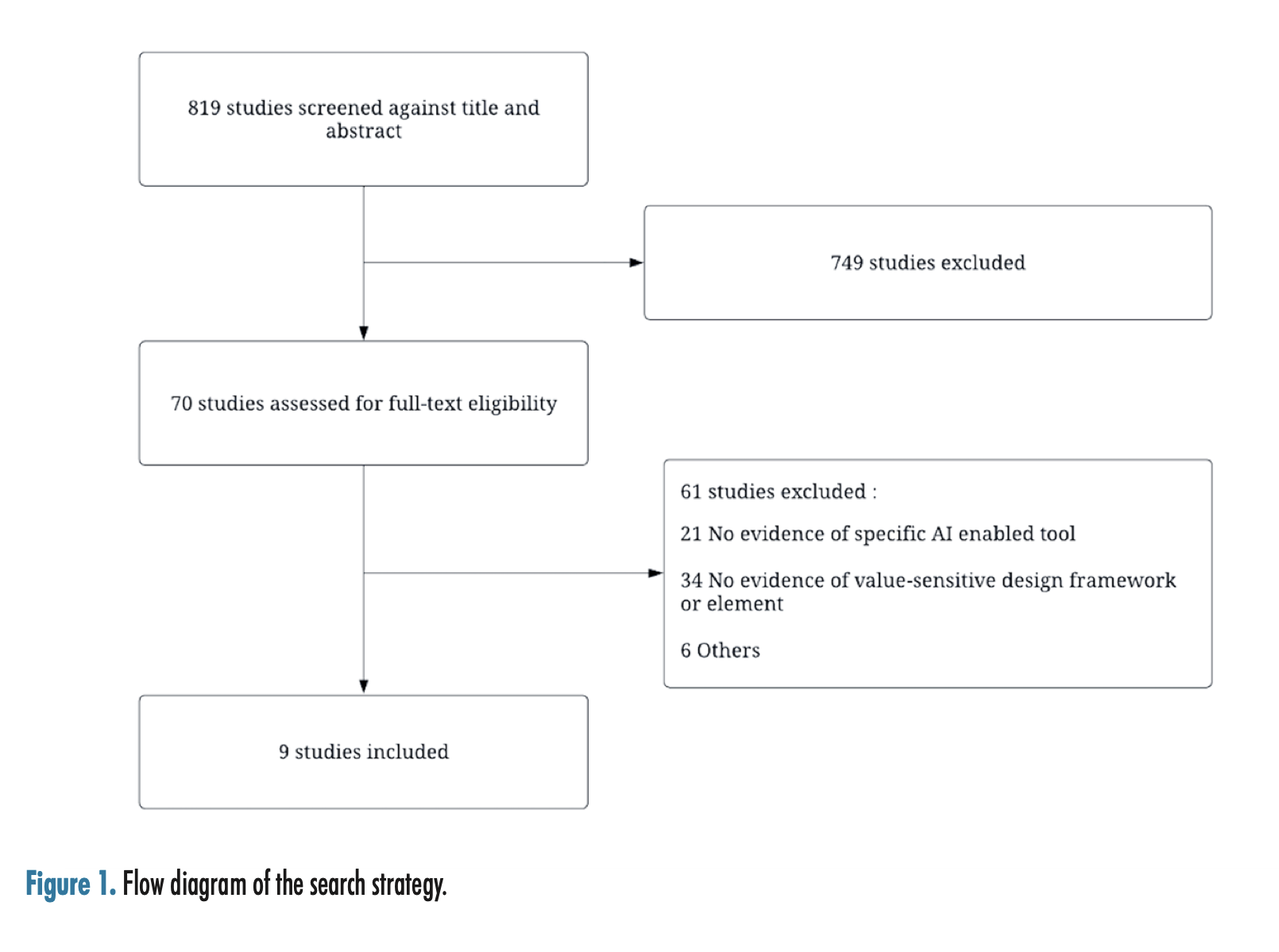
In this study, researchers looked at how VSD is being used in healthcare AI. They reviewed existing research using a version of the VSD framework adapted specifically for AI. Out of 819 articles they reviewed, only nine met the criteria for a full in-depth look.
Most of these studies focused on values related to individual users, like trust and autonomy. However, there was much less attention given to values at the organizational level (such as employee well-being) or societal level (like equity and justice). Most of the studies were from the U.S. and Western Europe.
The researchers concluded that future healthcare AI design should take a broader approach by also considering organizational and societal values, not just those of individual users. Since so few studies have applied VSD in this way, there’s a clear need for more research to better guide how AI can be responsibly used in healthcare.