
Friends,
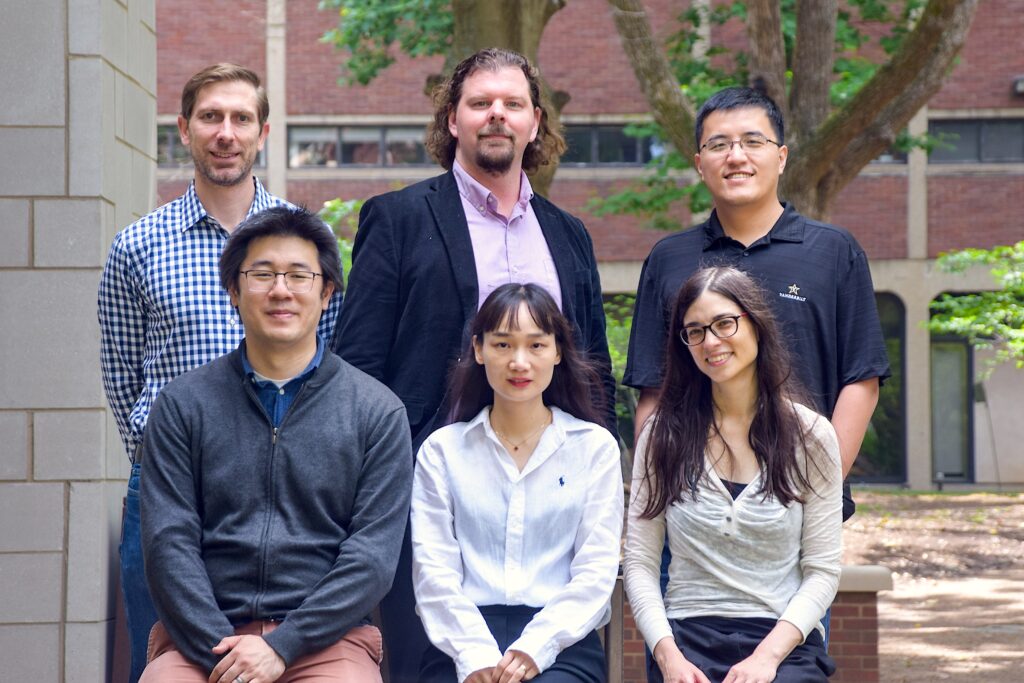 On behalf of the VALIANT Steering Committee, it is my pleasure to introduce the first issue of a VALIANT Effort, our monthly newsletter. Since our May launch, I have had the immense pleasure of meeting with many passionate members of our community – the energy and excitement are palpable for the potential of AI. Toward this end, I am thrilled to announce sixteen new partnerships with centers, institutes, and departments across VU and VUMC. These partnerships will streamline collaboration, and we have already received our first grant in partnership with VUMC’s ADVANCE (AI Discovery and Vigilance to Accelerate Innovation and Clinical Excellence). I look forward to continuing to expand synergies with our regional and industrial partners.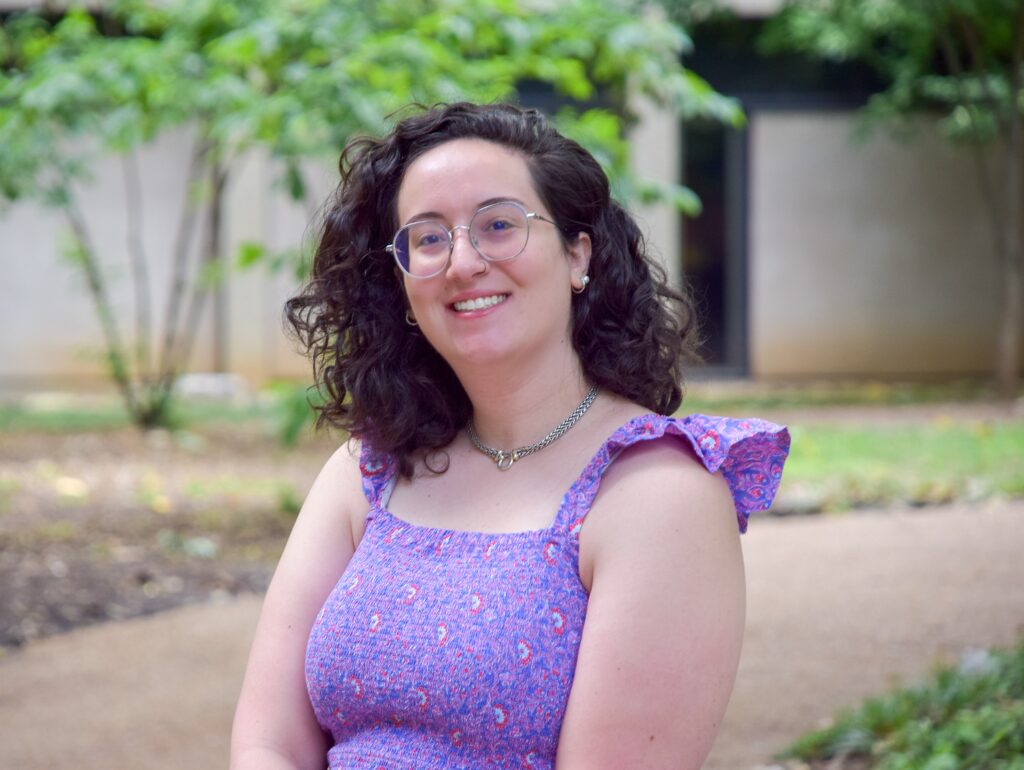
Alumni Lookout
 This story from the field is brought to us by Dr. Vishwesh Nath (PhD’20, Vanderbilt Computer Science), Sr. Research Scientist at NVIDIA. His work focuses on medical imaging, including AI-assisted annotation, self-supervised learning, vision language models, neural architecture search, and federated learning.
 These methods can be extremely useful in double-checking clinicians notes, searching for missed visual features for prevention and improving diagnostic reports overall. VALIANT is positioned in a unique way where they have access to clinical setting data and a team of exceptionally capable scientists, which when combined can unleash these type of multi-modal models.
“Something I learnt at Vanderbilt was to not compete in the red ocean but to drift towards the blue ocean. The Multi-modal models can be applied to create tsunami like waves of the blue ocean.”
VALIANT Ventures
- Novel approach to safeguard patient data, National Artificial Intelligence Research Resource (NAIRR) Pilot (PI: Yuankai Huo)
- Diagnosis of Mild TBI Spectrum via Assessment Battery and Machine Learning, Congressionally Directed Medical Research Programs (CDMRP) (PI: Tonia Rex)
- Brain Structure & Function Best Paper in Neuroimaging 2024: Superficial white matter across development, young adulthood, and aging: volume, thickness, and relationship with cortical features(Kurt Schilling et al.)
Save The Date
 VALIANT,
 New Studio in AI

Celebrating Invention

Alchemists’ Corner
- Image Segmentation
- All-in-SAM: From Weak Annotation to Pixel-wise Nuclei Segmentation with Prompt-based Finetuning
- FNPC-SAM: Uncertainty-Guided False Negative/Positive Control for SAM on Noisy Medical Images
- Eosinophils Instance Object Segmentation on Whole Slide Imaging Using Multi-label Circle Representation
- Evaluation Kidney Layer Segmentation on Whole Slide Imaging using Convolutional Neural Networks and Transformers
- Evaluation of U-Nets for Object Segmentation in Ultrasound Images
- Multi-Method and Multi-Atlas Segmentation Fusion for Delineation of Thigh Muscle Groups in 3D Water-Fat Separated MRI
- Multi-scale Multi-site Renal Microvascular Structures Segmentation for Whole Slide Imaging in Renal Pathology
- Spatial Pathomics Toolkit for Quantitative Analysis of Podocyte Nuclei with Histology and Spatial Transcriptomics Data in Renal Pathology
- Harmonization
- Deep conditional generative model for longitudinal single-slice abdominal computed tomography harmonization
- Empirical assessment of the assumptions of ComBat with diffusion tensor imaging
- Evaluation of Mean Shift, ComBat, and CycleGAN for Harmonizing Brain Connectivity Matrices Across Sites
- Inter-vendor harmonization of CT reconstruction kernels using unpaired image translation
- MidRISH: Unbiased harmonization of rotationally invariant harmonics of the diffusion signal
- Machine Learning & Deep Learning
- Deep Learning-Based Open Source Toolkit for Eosinophil Detection in Pediatric Eosinophilic Esophagitis
- Learning-based Free-Water Correction using Single-shell Diffusion MRI
- Leverage Weakly Annotation to Pixel-wise Annotation via Zero-shot Segment Anything Model for Molecular-empowered Learning
- Meta-optic accelerators for object classification
- Using Domain Adaptive Deep Neural Networks to Improve Transthoracic Echocardiography
- MRI & Diffusion Imaging
- Assessment of Subject Head Motion in Diffusion MRI
- Nonlinear Gradient Field Estimation in Diffusion MRI Tensor Simulation
- Predicting Age from White Matter Diffusivity with Residual Learning
- Tractography with T1-weighted MRI and associated anatomical constraints on clinical quality diffusion MRI
- Identification of functional white matter networks in BOLD fMRI
- Pathology & Histology
- Neuroscience
- Image Processing & Analysis
- Expanding gCNR into a clinically relevant measure of lesion detectability by considering size and spatial resolution
- Spatiospectral image processing workflow considerations for advanced MR spectroscopy of the brain
- SpecReFlow: an algorithm for specular reflection restoration using flow-guided video completion
- Tools & Software

valiant@vanderbilt.edu | https://vanderbilt.edu/valiant | @VandyValiant | LinkedIN
“Vanderbilt” and the Vanderbilt logo are registered trademarks and service marks of Vanderbilt University.