What is Hazing?
-
Definition of Hazing
The federal definition of hazing can be found here. The University expands its definition of hazing to include any act by an individual or an organization that may produce, or is intended to produce, mental or physical discomfort, embarrassment, harassment, or ridicule, or any acts that are humiliating, intimidating, or demeaning, or that endanger the health and safety of an individual or group of individuals regardless of their affiliation for the purposes of, but not limited to, recruiting, joining, pledging, initiating, admitting, affiliating, or retaining membership in an organization.
The University makes no distinction as to whether the acts occurred on or off campus. Willful or voluntary participation in hazing activities by a victim does not absolve the person or organization engaging in hazing from responsibility. Both organizations and individuals within organizations may be charged with hazing for actions stemming out of the same event or incident. The extent to which the form of hazing presents a significant threat to health and safety, including, but not limited to, forced alcohol or drug consumption, physical abuse that causes or could cause bodily harm, sexual misconduct, or deprivation of sleep, food, or water, will be taken into account in assigning sanctions and accountability action plans. Acts of aggravated hazing will likely result in suspension or expulsion on the first occurrence of such behavior.
Hazing may still occur regardless of whether a person is considered initiated or otherwise admitted as a full member of the organizations.
-
Types of Hazing
Hazing includes—but is not limited to—the following:
- forced alcohol or drug consumption
- physical abuse that causes or could cause bodily harm, sexual misconduct or deprivation of sleep, food, or water,
- violation of federal, state, provincial, local law, or organizational policy;
- consumption of any food, liquid, or other substance in any non-customary manner;
- forced or encouraged consumption of alcohol or other drugs;
- physical contact, including but not limited to, beating, paddling, branding, dangerous physical activity, or exposure to elements, or threats of such conduct;
- exercise inconsistent with the mission of the organization;
- adversely affecting the mental health or dignity of the individual through acts such as sleep deprivation, exclusion from social contact or conduct that could result in embarrassment, or threats of such conduct;
- disruption of academic performance or class attendance, including early morning or late night work sessions,
- designated driving programs;
- personal or financial servitude;
- publicly wearing apparel which is conspicuous and not normally in good taste;
- engaging in public stunts,
- morally degrading or humiliating games and activities; or
- scavenger hunts.
Any concerns of hazing as described above should be reported by using the Hazing Incident Reporting Form. Reporters are asked to provide as much detail as is known about the incident including the organization/persons involved, the nature of the hazing alleged to have occurred, specific dates/times/locations, and include any supporting evidence (pictures, videos, messages) to substantiate the allegations.
Reports of hazing are investigated by Student Accountability, Community Standards & Academic Integrity.
-
Common Misconceptions
Misconception: If someone agrees to participate in an activity, it can't be considered hazing.
Fact: Consent to participate in a hazing activity is not a valid defense. The pressures of peer influence and the desire to belong within a student organization can create an environment where genuine, voluntary consent is not possible.
Misconception: Hazing only exists in fraternities and sororities.
Fact: Hazing can occur within a wide range of student groups and organizations, such as athletic teams, military-affiliated programs, performing arts ensembles, faith-based communities, and student leadership bodies.
Misconception: Hazing is only an issue if it causes physical harm.
Fact: Hazing is harmful not only because it can lead to physical injury, but also because it can cause serious mental and emotional distress for both those who are hazed and those who engage in or witness hazing.
-
Impacts of Hazing on Individuals & Communities
Hazing can have lasting impacts on both individuals and communities. It can lead to physical injuries, emotional trauma, and long-term mental health challenges. Beyond personal harm, hazing erodes trust, damages relationships, and weakens the sense of safety and belonging that healthy communities strive to build.
University Policies & State Laws
-
Vanderbilt University Hazing Policy
-
Student Handbook
Educational Modules and Trainings
-
Hazing Prevention Student Module
This module is for all Vanderbilt students:
-
Faculty and Staff Education
This module is for all Vanderbilt faculty and staff:
Hazing Education for Faculty and Staff
This module is required of all Campus Security Authorities (CSAs) and includes Clery Act education:
-
National Hazing Prevention Week 2025
During National Hazing Prevention Week (NHPW) 2025, Vanderbilt will host the following events for the community.
Take the Pledge
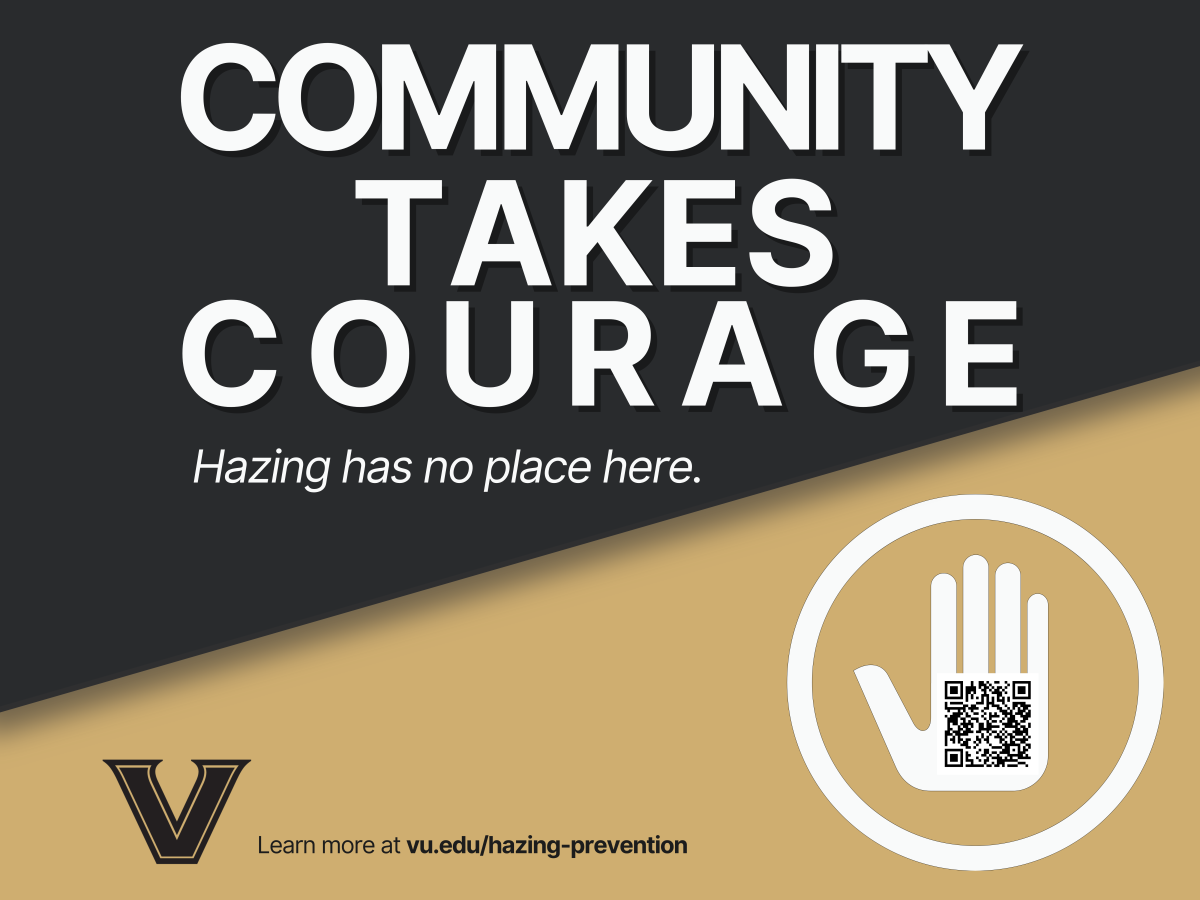
Stop by Sarratt Promenade to "Take the Pledge" by signing the Community Takes Courage banner. Every signature counts, be a part of the movement!
- Date: Tuesday, September 23
- Time: 11:00 a.m. - 2:00 p.m.
- Location: Sarratt Promenade
Staff & Faculty Lunch and Learn
Enjoy lunch while learning how to support a campus community that stands against hazing.
- Date: Wednesday, September 24
- Time: 12:00 p.m. - 1:00 p.m.
- Location: Sarratt 325/327