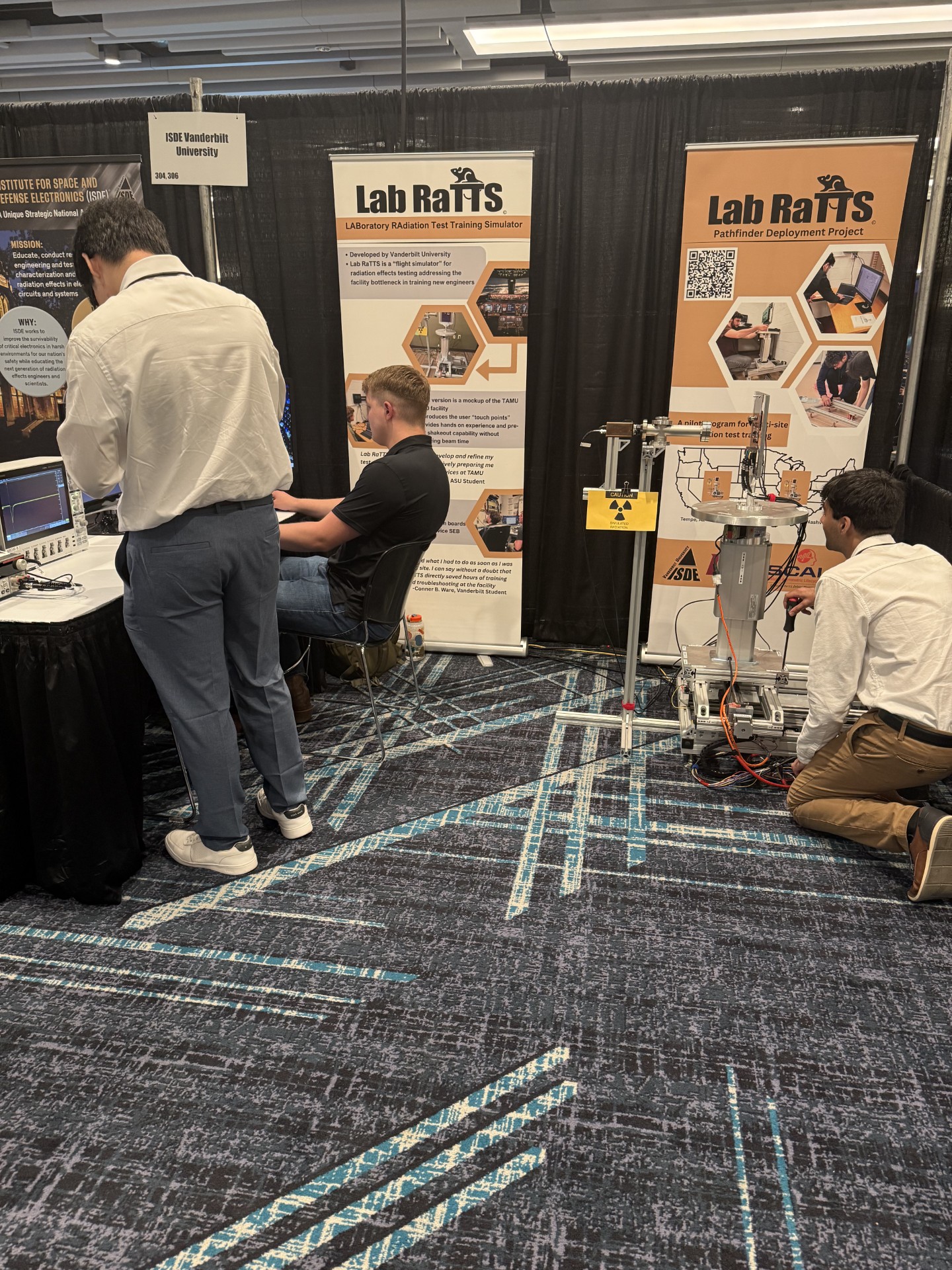
LabRaTTs (Laboratory Radiation Test Training Simulator) is a hands-on training platform designed to address critical workforce development needs in the field of radiation effects testing. Modeled after flight simulators used to train pilots, LabRaTTs prepares engineers to navigate complex testing procedures without requiring access to large, expensive radiation facilities. By simulating key aspects of radiation testing campaigns, it provides valuable experience for students and working professionals alike.
Why LabRaTTs?
Radiation effects testing is a vital step in qualifying electronics for use in defense, space, and other high-reliability applications. However, the limited availability and high cost of beam time present significant barriers to training new engineers. LabRaTTs mitigates these challenges by reproducing essential facility interactions and providing a controlled environment in which users can learn to plan, execute, and troubleshoot radiation tests. Engineers supporting space programs can use LabRaTTs to build confidence and competence before stepping into real test campaigns.
Learning Objectives
Through a structured curriculum and realistic simulations, LabRaTTs will teach users how to apply range-energy calculations to select appropriate tests, measure and interpret single event characteristics, and classify different types of single event behaviors. Trainees will learn to prioritize statistical accuracy under varying test conditions and to assess the implications of changes in beam energy, test part selection, and orientation. The system also emphasizes situational awareness, requiring users to recognize failures in test setup, revise test plans in real time, and determine when sufficient data has been collected to conclude a test. Users are expected to summarize their observations and generate metrics consistent with standard single event effects reporting practices.
Features
At the core of LabRaTTs is a specially designed device under test that incorporates configurable effectors to simulate the physical manifestations of radiation-induced errors. This device responds dynamically to simulated beam conditions such as flux, angle of incidence, and electrical bias. Two modules are currently available: one focused on single event transients and another, developed jointly with Arizona State University, that simulates single event burnout.
Rat Traps
To enhance realism, the system includes a series of problem scenarios known as “Rat Traps.” These challenges are inspired by real testing mishaps and are designed to teach users how to detect, diagnose, and respond to unexpected conditions. For example, a user might encounter a situation where no events are observed and must determine whether this result is due to a hardened device or a test configuration issue. These scenarios draw on interviews and experiences from seasoned test engineers and underscore the importance of critical thinking and situational analysis during test campaigns.
Benefits
LabRaTTs makes radiation testing education more accessible and affordable. It reaches a wide audience, from post-secondary students to industry professionals, and requires only a trained instructor to operate—eliminating the need for beamtime or specialized facility personnel. In addition to test training, the platform also reinforces fundamental electrical measurement skills, giving trainees a stronger foundation for future hands-on work.
By providing a realistic and repeatable training experience, LabRaTTs will help engineers make better use of facility time, reduce the likelihood of costly test errors, and improve the overall quality and reliability of radiation effects data.
Get Started with LabRaTTs Training
To learn more about LabRaTTs or to inquire about scheduling a training session for your organization, please contact us. We offer instructor-led sessions tailored for academic, government, and industry teams. Training is available by arrangement and may include associated costs based on the scope and delivery method. Let us help you design a training experience that meets your goals and fits within your program’s resources.