What is Long COVID?
While most people with COVID-19 recover within 10-14 days, some individuals, even those with mild initial symptoms or asymptomatic cases, may experience lingering health issues for weeks, months or even years after their initial diagnosis. Long COVID, also known as post-COVID-19 conditions, long-haul COVID, chronic COVID, and post-acute sequelae of SARS-CoV-2 (PASC), is the term most commonly used to describe the persistence or development of symptoms and conditions beyond the acute phase of a COVID-19 infection.
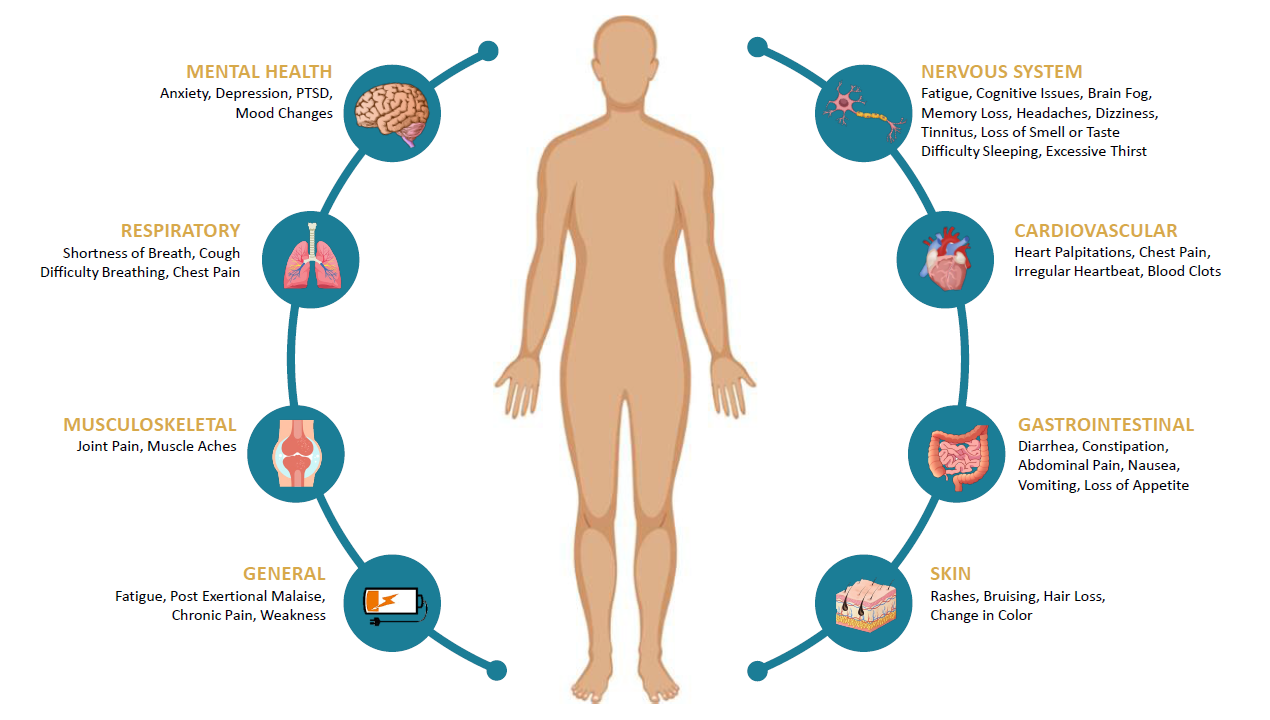
People with Long COVID may experience health problems from different types and combinations of symptoms, including respiratory, neurological, cardiac and psychological problems. These symptoms vary widely from person to person and can be:
- Persistent, meaning they developed during the initial COVID-19 infection and never went away
- Recurrent, meaning they were present during the initial infection, resolved, and then returned
- New, meaning they were not present during the initial COVID-19 infection
Symptoms of Long COVID can range in severity from mild to debilitating and may significantly impact a person’s quality of life. Some of the most commonly reported symptoms include:
While symptoms can be unpredictable and become worse after a period of improvement, it’s important to remember there is a light at the end of the tunnel and more resources than ever before to help navigate you through.