Begonia Labs
Gallery Visitor Hours:
Gallery will be open Thursdays and Fridays 4:00 -7:00 p.m. and Saturdays 1:00 – 4:00 p.m. from August 21 – December 5, 2025.
Prefabricating Solidarity: IMS-Žeželj Between Yugoslavia, Cuba, and Angola
On view: August 21, 2025 – November 15, 2025
Opening reception: Thursday, August 21, 2025 from 6:00 – 8:00 p.m.
Begonia Labs: 2805 West End Avenue, Nashville, TN.
The Fall 2025 Public Programs for the Engine for Art, Democracy & Justice (EADJ) at Vanderbilt University is organized around the thematic exhibition — Prefabricating Solidarity: IMS-Žeželj Between Yugoslavia, Cuba, and Angola.
Prefabricating Solidarity was conceived and organized by a collaborative curatorial and authorial team, including Vladimir Kulić, Vesna Pavlović, Jelica Jovanović, Fredo Rivera, Ana Knežević, Emilia Epštajn.
Exhibition and Graphic Design by Antun Sevšek and Damir Gamulin. The technical implementation by Ivan Vukdragović (Belgrade installation) and Taylor Raboin (Nashville Installation).
Exhibition Description:
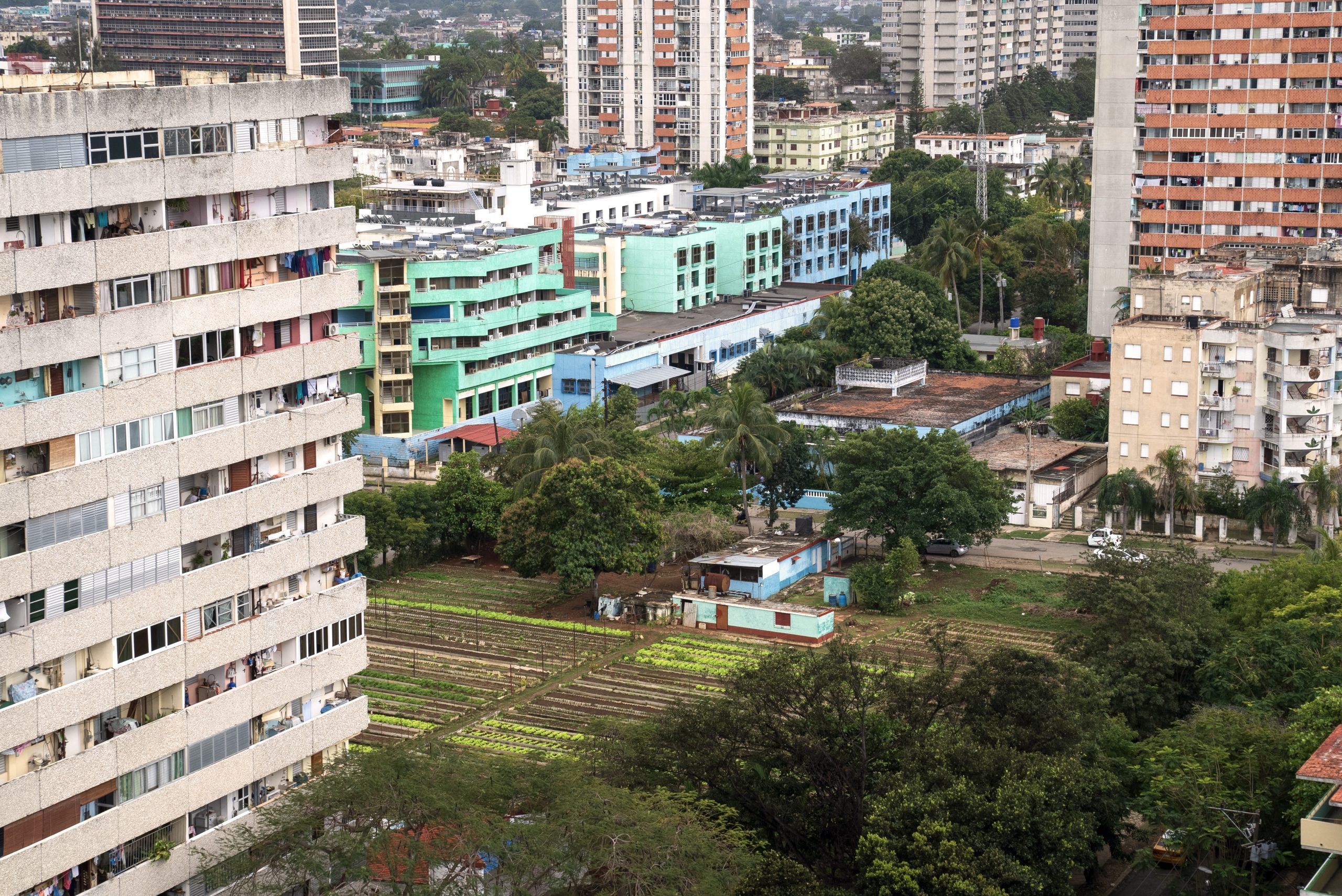
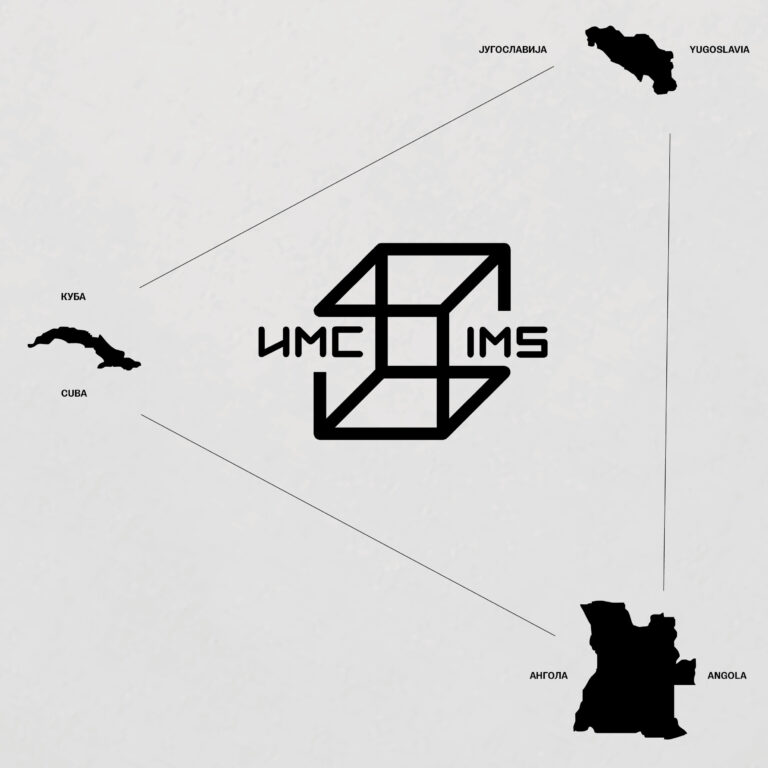
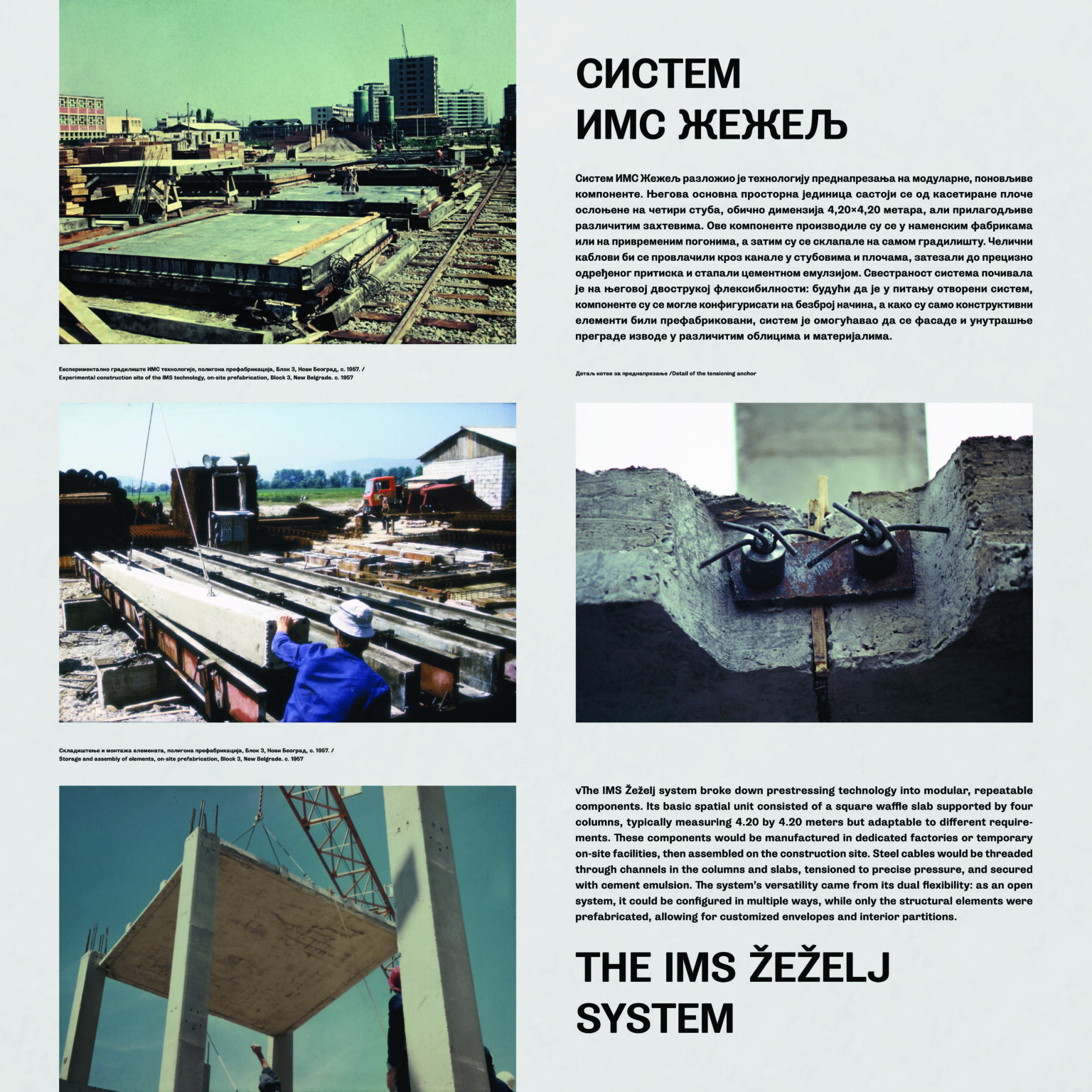
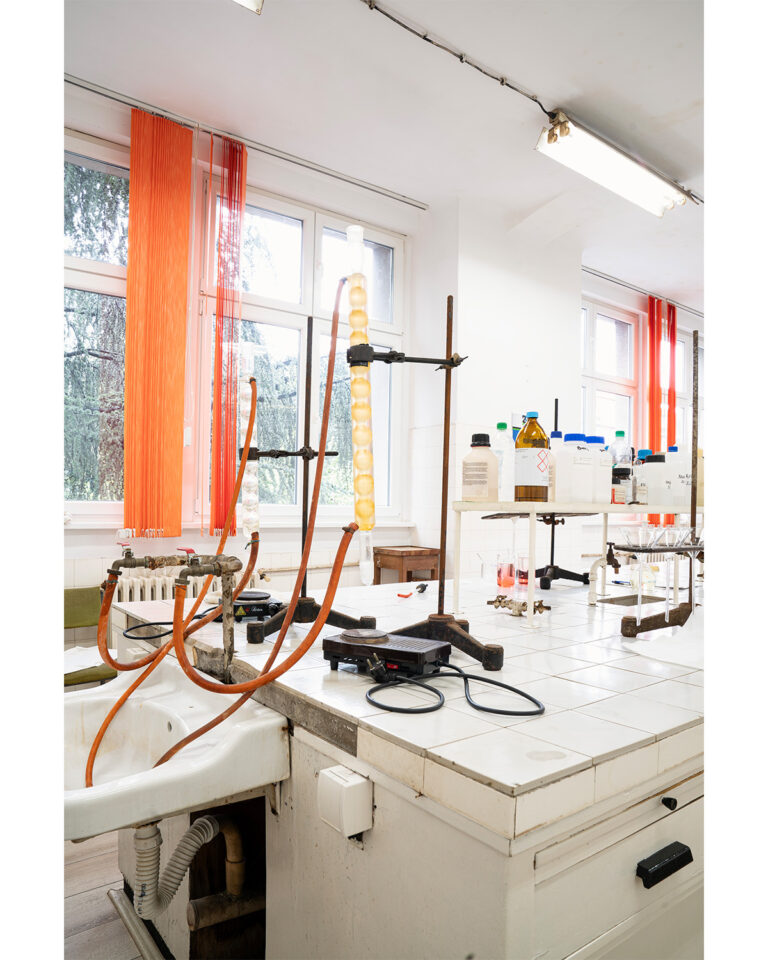
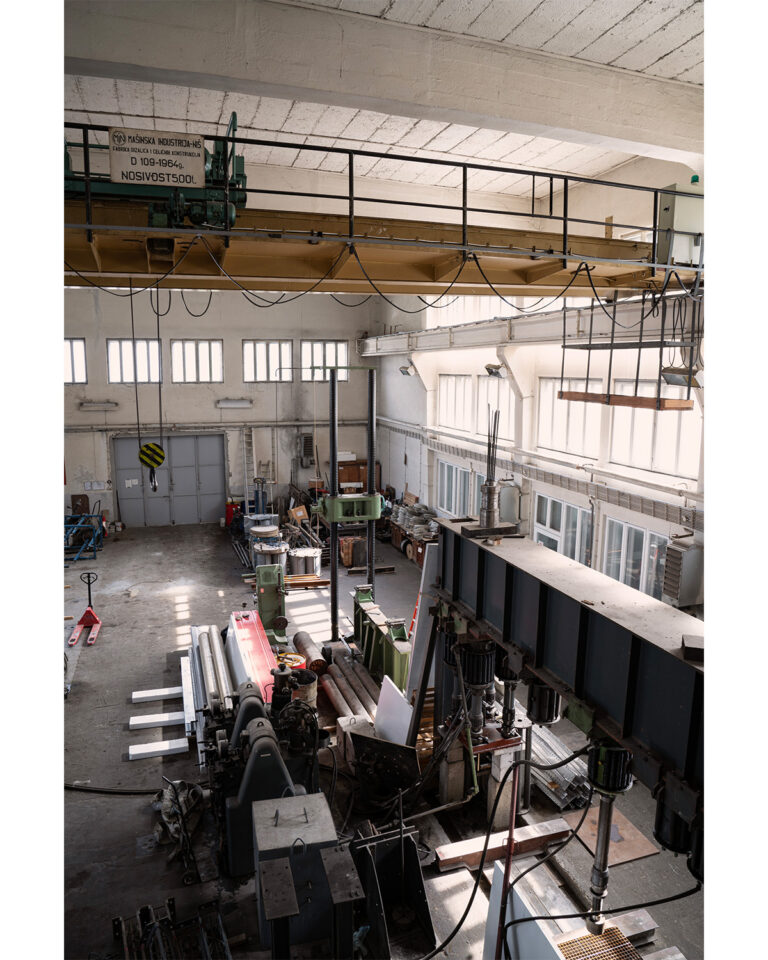
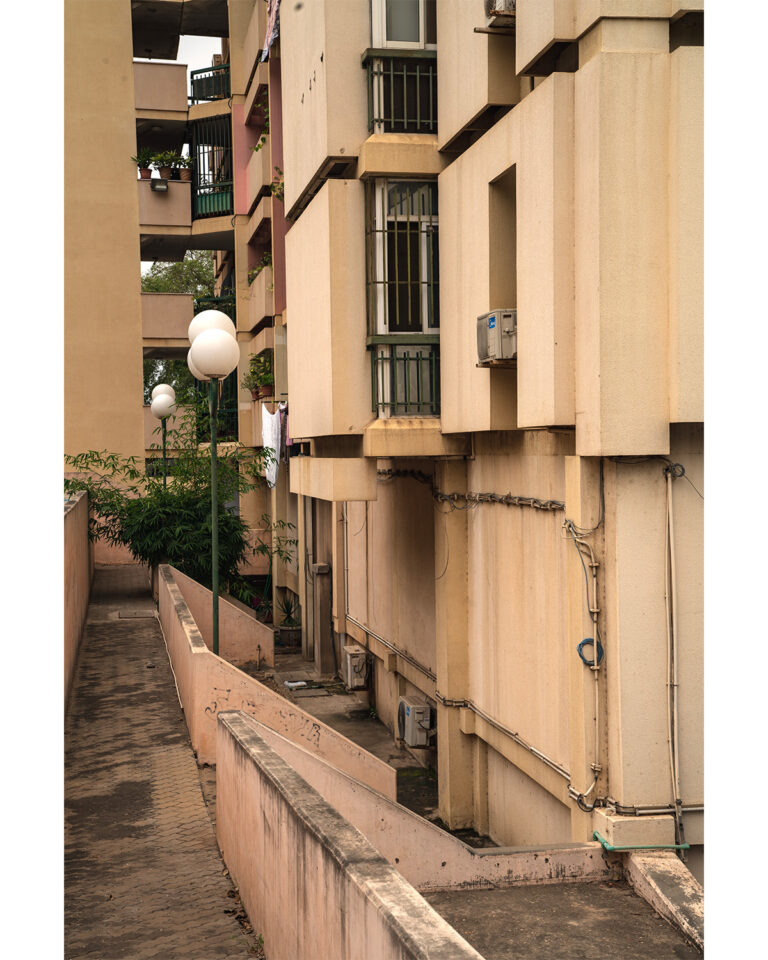
In the 1970s, Yugoslavia, Cuba, and Angola were connected through an unusual circulation of prefabricated building technology. As members of the Non-Aligned Movement seeking development paths outside the Cold War binary, their geopolitical alignment acquired physical dimension through the IMS Žeželj system—a sophisticated skeletal structure of concrete columns and floor slabs held together by steel cables, developed in 1957 by engineer Branko Žeželj at Belgrade’s IMS Institute.
The circulation of IMS technology among Yugoslavia, Cuba, and Angola reorganized this colonial “geometry of power.” Rather than following the traditional unidirectional flows from imperial centers to peripheries, these exchanges created an entangled triangle of technological solidarity. The system wasn’t simply exported but co-produced, with engineers adapting it to local conditions and needs. Through these transformations, a technology with colonial origins became a tool for post-colonial development.
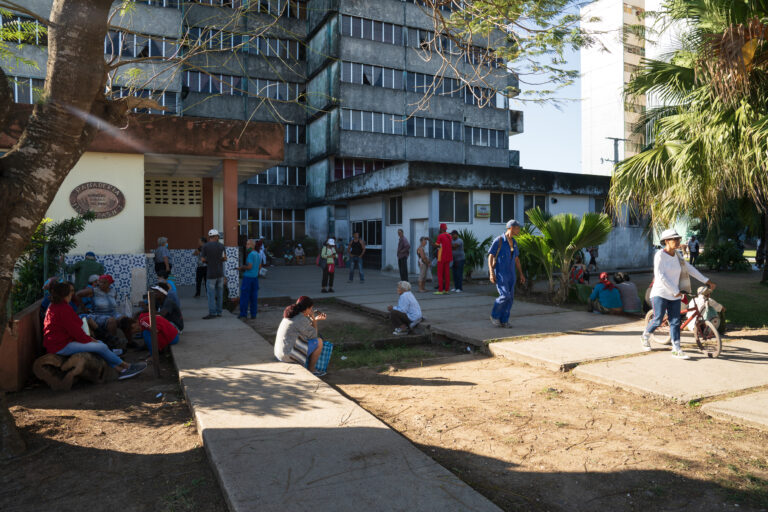
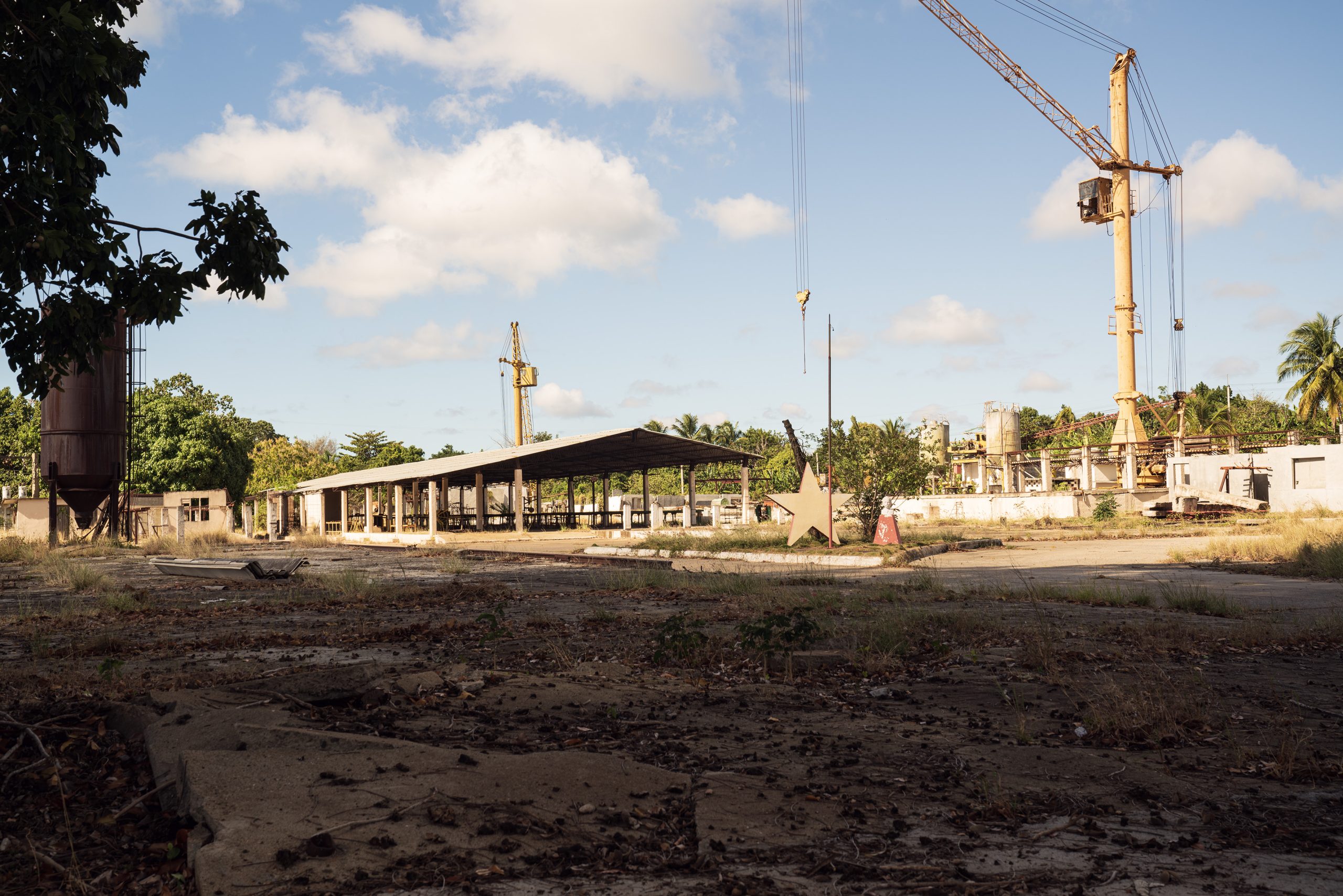
Between 2023 and 2024, the research team traveled to Cuba and Angola to document these buildings and interview participants in these exchanges. Through photographs, archival materials, and video interviews with architects and engineers from all three countries, this exhibition explores how “triangular solidarity” created lasting connections across continents. Though the ambitious vision of an alternative world order would ultimately falter in the 1990s, the concrete structures endure, housing thousands of families and standing as testament to a moment when technological exchange could serve liberation rather than domination.
The exhibition premiered at the Museum of African Art, Belgrade (MAU) in May 2025.
Acknowledgements:
The research and curatorial team would like to express their heartfelt gratitude to all those who contributed to the successful realization of the project. The project received generous support from the following sources:
Center for Latin American, Caribbean, and Latinx Studies (CLACXS), Vanderbilt University; Committee on Support of Faculty Scholarship (CSFS), Department of Art History, Grinnell College; Curb Center for Art, Enterprise, and Public Policy, Vanderbilt University; David Lingle Faculty Fellowship in Architecture, Department of Architecture, Iowa State University; Department of History of Art and Architecture, Vanderbilt University; Vanderbilt University College of Arts & Science; Vanderbilt University Global Engagement Travel Fund; Ministry of Culture of the Republic of Serbia; Embassy of the Republic of Cuba; Embassy of the Republic of Angola; Institute IMS; Yugoslav Film Archive.
The Engine for Art, Democracy & Justice is supported by The Andrew W. Mellon Foundation.
About the Research Team
Vladimir Kulić is an architectural historian, curator, and Professor of architectural history at Iowa State University. He co-curated the exhibitions “Toward a Concrete Utopia: Architecture in Yugoslavia, 1948-1980” at the Museum of Modern Art in New York (2018- 2019), and “Unfinished Modernisations: Between Utopia and Pragmatism” (2012-2014). He wrote numerous journal articles and co-authored and edited seven books, including “Second World Postmodernisms: Architecture and Society Under Late Socialism” (Bloomsbury, 2019) and “Modernism In-Between: The Mediatory Architectures of Socialist Yugoslavia” (Jovis, 2012). he is the winner of the Exhibition Catalog Award from the Society of Architectural Historians (2021), the Richard Schlagman Art Book Award (2019), and the Bruno Zevi Prize for a Historical/Critical Essay in Architecture (2010). He received fellowships from the American Academy in Berlin, Institute for Advanced Study in Princeton, and CASVA, as well as three Graham Foundation grants.
Vesna Pavlović is an artist and she is also the Paul E. Shwab Chair in Fine Arts and Professor of Art at Vanderbilt University. Pavlović has exhibited widely, including solo shows at the Phillips Collection in Washington DC, Frist Art Museum in Nashville, and the Museum of Yugoslavia in Belgrade. Group shows include the Untitled, 12th Istanbul Biennial, 2011, Turkey; The MAC – Metropolitan Arts Center, Belfast, Northern Ireland; Württembergischen Kunstverein, Düsseldorf, Germany; New Art Gallery Walsall, UK; and Museum of Contemporary Photography in Chicago, USA. Publications include “Vesna Pavlović, Stagecraft” (Vanderbilt University Press, 2021) and “Vesna Pavlović’s Lost Art: Photography, Display, and the Archive” (Hanes Art Gallery, Wake Forest University, 2018). She is the recipient of the 2020 Smithsonian Artist Research Fellowship, the Fulbright Scholar Award in 2018, and the George A. and Eliza Gardner Howard Foundation grant in 2017. Pavlović explores photographic representation of specific political and cultural histories to probe the relationship between memory and history.
Jelica Jovanović is an architect, architectural historian and PhD student of architectural preservation at the University of Technology in Vienna. She was a curatorial advisor for the exhibition “Toward a Concrete Utopia: Architecture in Yugoslavia, 1948-1980” at the Museum of Modern Art in New York (2018-2019), and she collaborated on the exhibitions “Unfinished Modernisations: Between Utopia and Pragmatism” (2010-2012) and “(In)appropriate monuments” (2015-2017). She authored the evaluation of New Belgrade’s Central Zone and Experimental Blocks 1 and 2. For Docomomo Serbia she edited the “Register of Modern Architecture and Urbanism in Serbia 1945-1990” (2018) and the “Typology Atlas: Housing. Residential Neighborhoods, Blocks, Conglomerates, Sites 1945-1990” (2020), coordinated and coauthored projects “Virtual Library” (from 2014) and “Arhiva modernizma” (from 2018). She organizes Architecture Summer Schools in Bač and Rogljevo, Serbia (from 2010). She coauthored the book “Bogdan Bogdanović Biblioteka Beograd: An Architect’s Library” (Fotohof, 2019).
Fredo Rivera is Associate Professor of Art History at Grinnell College, and their research and teaching focuses on art, architecture and urban visual culture, with a focus on the Caribbean. Their publications have focused on art and architecture in 1960s and 1970s Cuba, modern and contemporary Haitian art and visual culture, and urban visual culture in Miami. Rivera has worked on multiple curatorial and performative projects, including: “The Elusive Master: Emmanuel Merisier, from Haiti to beyond” (Little Haiti Cultural Complex, Miami, 2018- 2019), “Tidal Rage: Drag en la Frontera” (Perèz Art Museum-Miami with Creative Times, 2018), and “From Within and Without: the History of Haitian Photography” (NSU Museum of Art-Fort Lauderdale 2015). Rivera is the founder and co-leader of the Haitian Arts Digital Crossroads project, a collaboration between the Waterloo Center for the Arts and Grinnell College Libraries to build image database and digital resources for Haitian art and visual culture. They are currently working on a project theorizing queer space in the Caribbean and amongst its diasporas.
Ana Knežević is an art historian, PhD candidate of Museology and Heritology at the Faculty of Philosophy, Belgrade, and curator at The Museum of African Art in Belgrade. She co-curated “Unprotected Witness no.1: Afrodisiac” (2019), “Reflect – Namibia after 30 years of independence”, “Unprotected Witness no. 2: MMM” (2020), “Non-Aligned World”, “This is Not a War – The Liberation of Mind and Land, “In Action” (2021), “Reflect #2 – Fragments, Fragilities, Memories” (2022), and “Yugoslav Testimonies About the Algerian Revolution: Archival Omnibus” (2023). She launched the online heritage map nesvrstani.rs and on the editorial teams of digital art and heritage project bruspamti.rs and um.edu.rs. Her PhD thesis is dedicated to the problem of online cultural memory and the heritization of Internet Memes. She is a part of the curatorial teams of 60th October Salon (2024).
Emilia Epštajn obtained her BA in Anthropology and MA in Gender Studies at the University of Belgrade. She has developed as a curator primarily through her work at the Museum of African Art in Belgrade and is currently on the executive board of ICOM – Serbia. Recent projects and research-exhibitions dealt with feminist perspectives on archives, cultural heritage of the Non-Aligned Movement, decolonisation within the museum framework, as well as the history of African art collections, restitution and repatriation. Her writing has been published in exhibition catalogues and academic journals, and she also translates extensively in the field of museology, feminist and art theory. She was awarded the Reconstruction Women’s Fund “Žarana Papić”Stipend (2011) and is an alumna of the Robert Anderson Research Charitable Trust (2007, UK) and the Open World Leadership Program (U.S. Congress, 2022).
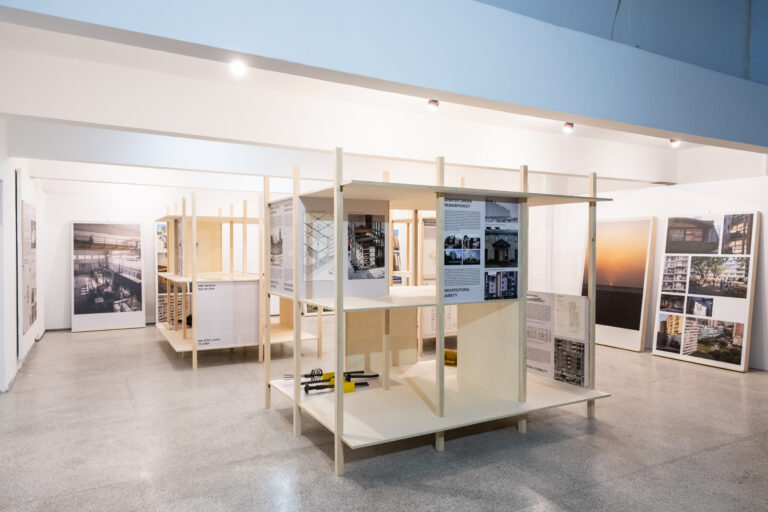
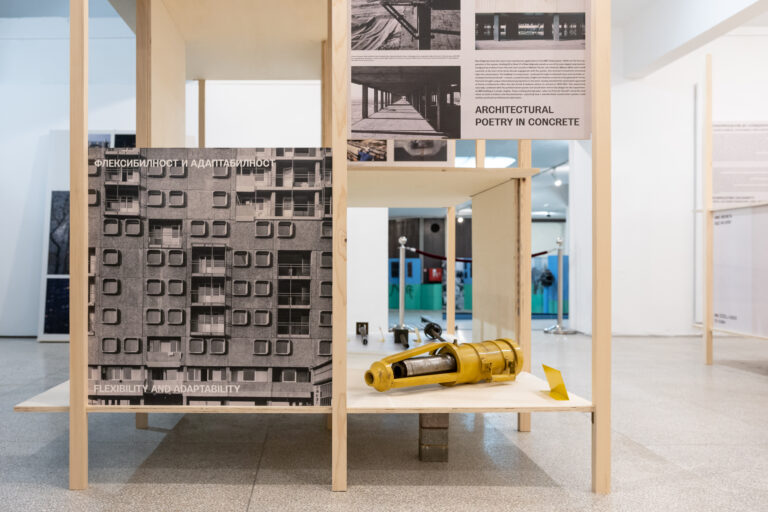
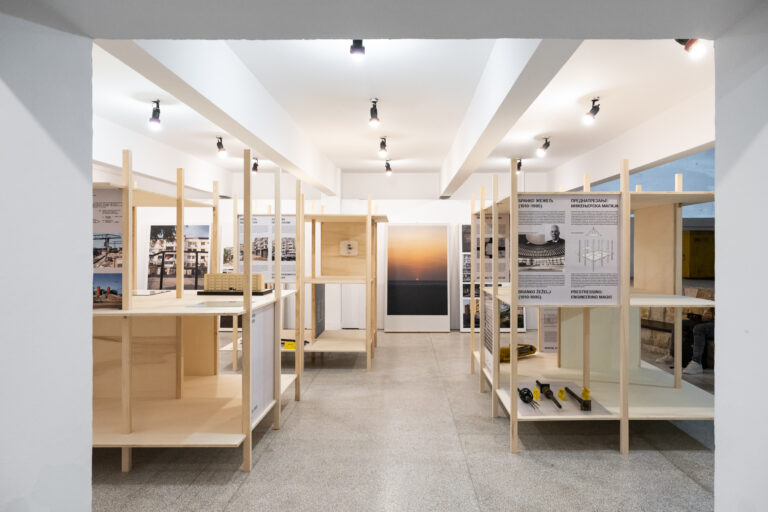
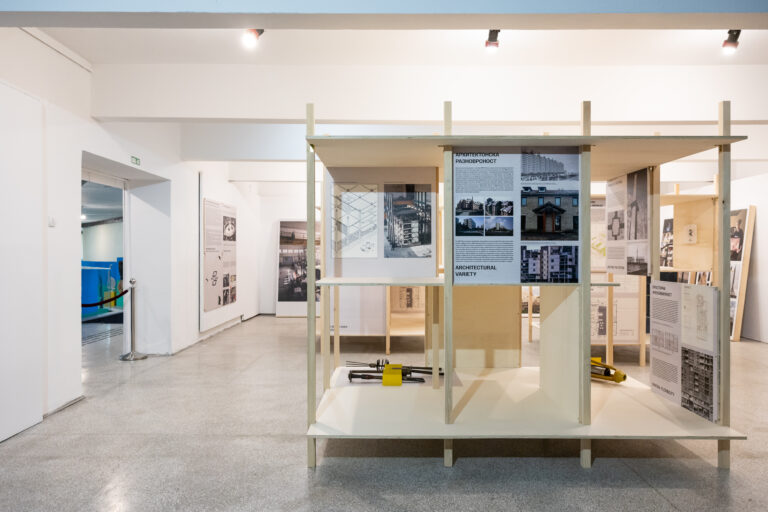
Exhibition install shots of Prefabricating Solidarity: IMS-Žeželj Between Yugoslavia, Cuba, and Angola, which premiered at the Museum of African Art, Belgrade (MAU) in May 2025. Installation photos by Marijana Janković.