Collaboration Core
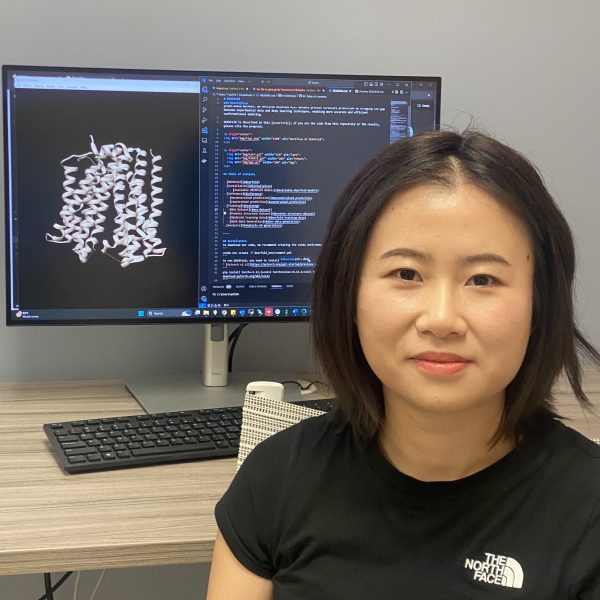
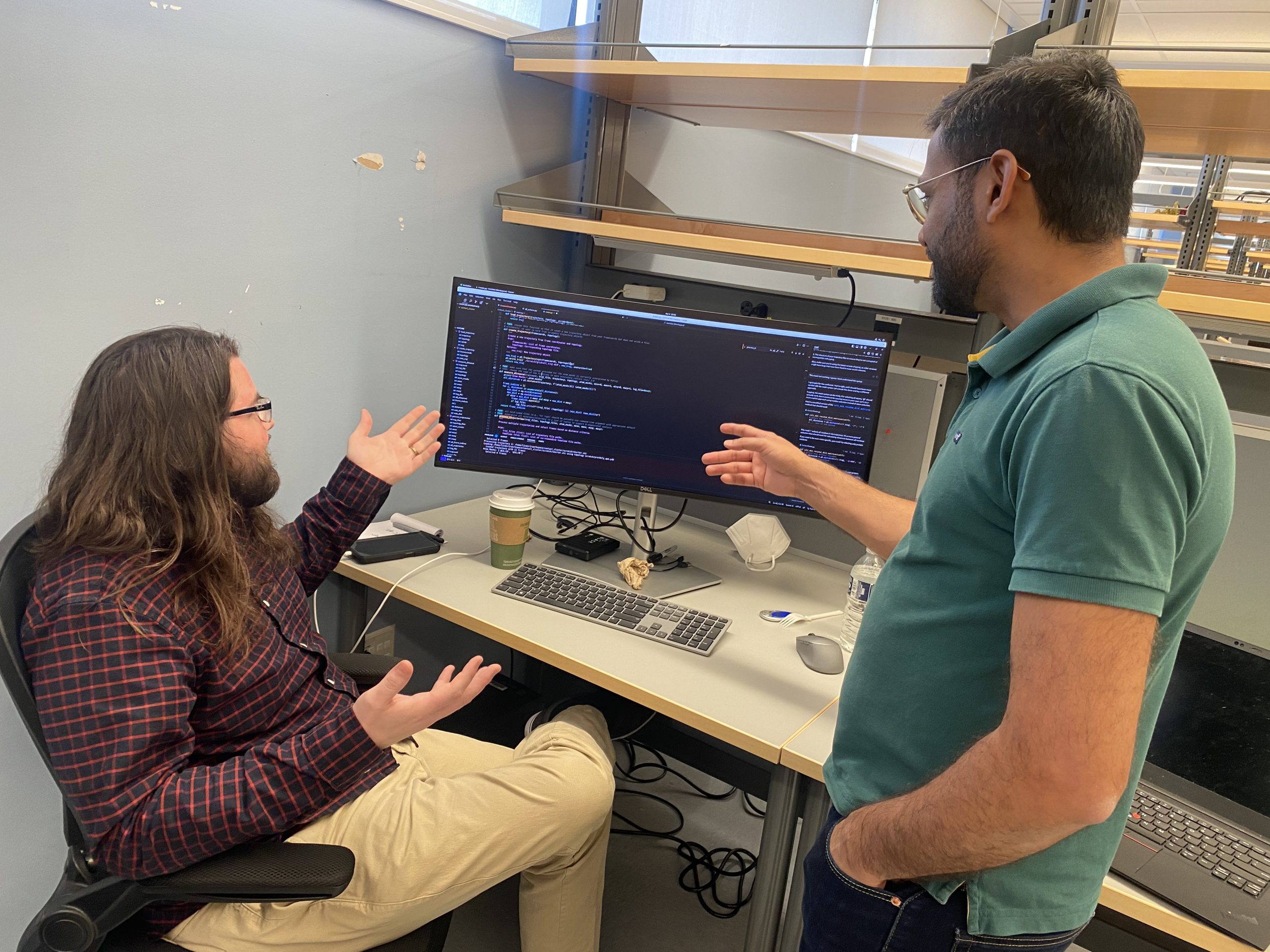
The collaborative core consists of expert research scientists and software engineers with multiple duties. They provide coding expertise for the Center investigators, establish infrastructure for the sustainable deployment of technologies developed by the Center, and act as the interactive arm with investigators on campus, thus enabling the application of methods to specific biomedical research problems. These interactions will highlight areas of development that the Center could consider depending on impact, relevance to the Center, and intellectual bandwidth.

UNICORNE
UNICORNEdb is a database of multi-conformation protein ensembles that captures how proteins change shape. It collects experimentally determined structures from the Protein Data Bank, maps them to their UniProt entries and aligns all structures of each protein into a single conformational ensemble, covering more than 54,000 proteins. Each ensemble is characterized by principal component analysis of its motions, pairwise structural similarity and structural coverage. Ensembles can be browsed by UniProt entry or by ECOD, CATH and InterPro fold and domain classifications. Building on these ensembles, UNICORNE provides a benchmark for generative structure-prediction models. Its leaderboard scores eight methods on how well 1,000 samples per protein recover the experimentally observed conformations across four benchmark datasets, with out-of-distribution evaluation based on each model's training cutoff. As a resource to the community, we provide interactive 3D visualization of every ensemble, a public REST API and bulk downloads.
UNICORNE may help reveal the conformational changes that underlie protein function, ligand binding and allosteric regulation, and support drug discovery that targets alternative protein states. By offering a common, experimentally grounded standard, it also fosters the development of models that predict protein dynamics rather than a single static structure.
UNICORNE Database
Portal to the searchable database of experimentally observed conformational ensembles for more than 54,000 proteins, with a leaderboard benchmarking AI models on predicting them.