Steven Wernke
Associate Professor of Anthropology, Vanderbilt University
Faculty Fellow, Robert Penn Warren Center for the Humanities (2020-2021)
Joe B. Wyatt Distinguished University Professor (2019-2020)
Chancellor Faculty Fellow (2016-2018)
Faculty Director, Vanderbilt Institute for Spatial Research
Director, Spatial Analysis Research Laboratory
I am an archaeologist and historical anthropologist of the Andean region of South America, with interests that center on the lived experiences of indigenous communities across the Spanish invasion of the Americas. My work decenters colonizer perspectives to explore how Andean peoples engaged serial invasion and occupation by the Inkas and the Spanish. To shed light on the many dimensions of these transformative and often traumatic encounters, my work often combines analyses of archaeological and documentary datasets within unifying spatial frameworks.
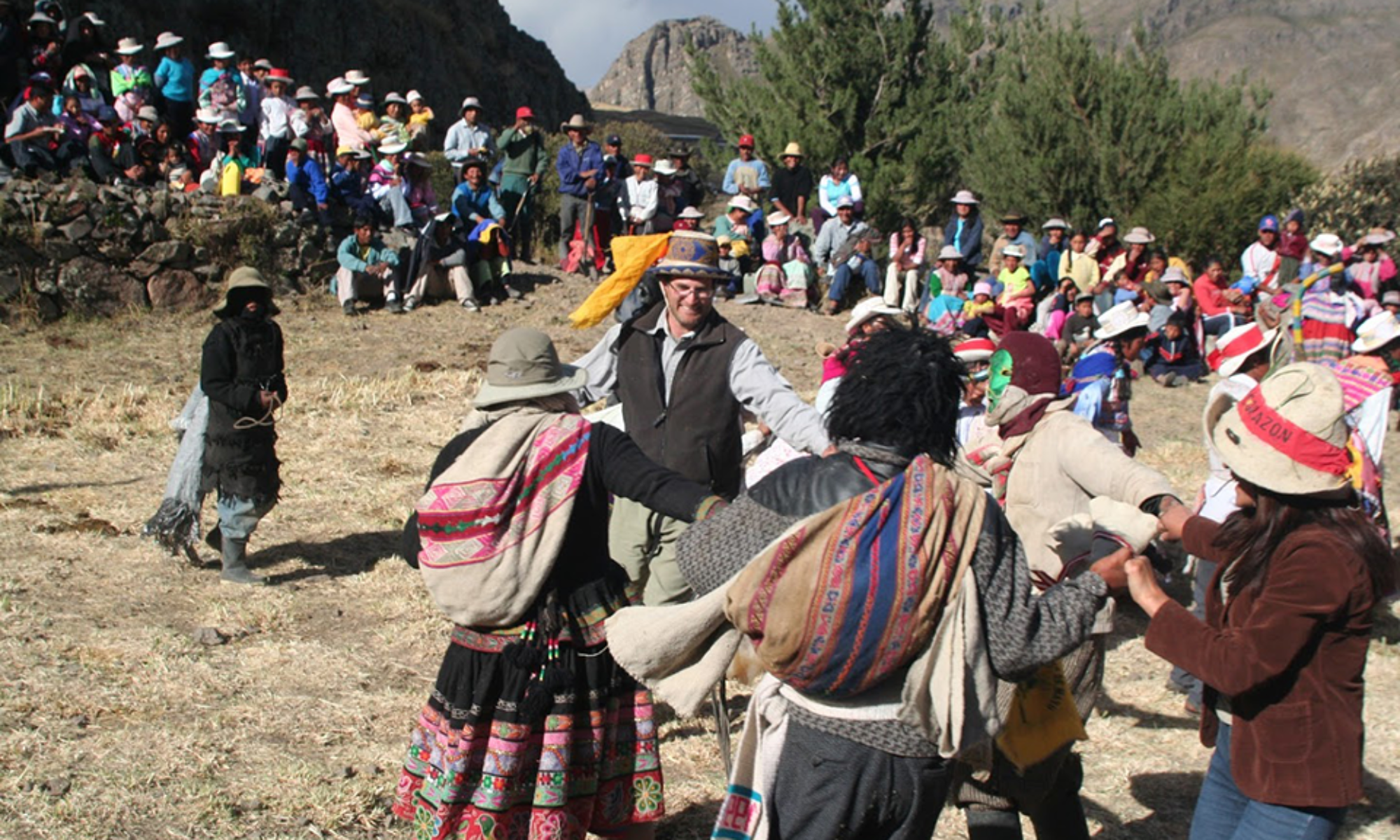
My current research focuses on one of the largest forced resettlement programs in world history: the Reducción General de Indios (General Resettlement of Indians) of the 1570s, when the Spanish Viceroy Francisco de Toledo enacted the displacement of some 1.4 million native Andeans from their ancestral places of residence into over a thousand planned colonial towns around the viceroyalty of Peru. I am pursuing both local and global perspectives on the implementation and effects of the Reducción. At a local scale, my current book project is framed as an archaeological microhistory of a particular reducción town. To gain a global perspective, I am directing collaborative interdisciplinary projects aimed at mapping out the settlement pattern of the reducción towns, and how it (dis)articulated local, regional, and inter-regional political, economic, and ecological arrangements of prehispanic origin. Most of my archaeological research has been carried out through long-term, community-oriented projects in the Colca Valley, located in the southern highlands of Peru.
The interdisciplinary, international digital projects I direct have built collaborative online platforms for collating archaeological, historical, and ethnographic data. Together with Akira Saito (National Museum of Ethnology, Japan) and Parker VanValkenburgh (Brown University), we have developed two platforms: the Linked Open Gazetteer for the Andean Region (LOGAR) and the Geospatial Platform for Andean Culture, History, and Archaeology (GeoPACHA). LOGAR is an online gazetteer that enables collation of archival and ethnographic information by place (whether or not located in geographic space). GeoPACHA is a browser-based GIS that integrates historical aerial imagery and high resolution satellite imagery to enable virtual archaeological survey over very large areas.
These projects have been made possible with the support of grants from the National Science Foundation, National Endowment for the Humanities, The American Council of Learned Societies, The Center for Advanced Spatial Technologies, The Vanderbilt Data Science Institute, the Vanderbilt Center for Digital Humanities, the Vanderbilt Center for Latin American, Caribbean, and Latinx Studies, the National Museum of Ethnology (Japan), and a Vanderbilt Chancellor’s Faculty Fellowship. Infrastructural and technical support for these and other projects are provided through the Spatial Analysis Research Laboratory and the Vanderbilt Institute for Spatial Research.