back to Seminars page

Bibliography page


Limits of the Past
The Human Sciences and the Turn to Memory
An Interdisciplinary Graduate Colloquium


19-20 April 2002

Wyatt Conference Center
Peabody College
Vanderbilt University
Nashville, Tennessee


2001-2002
Program Committee


Tommy Anderson
Jonathan Blake
Elizabeth Festa
Edward Harcourt, co-chair
David Karr, co-chair
Bérénice Le Marchand
Lisa Nevárez
Lori C. Patton
Stefan Pollan
Laurie Woods

Sponsors

Robert Penn Warren Center for the Humanities
The College of Arts and Science
The Graduate School
Department of History (Gertrude Casebier Endowment)
American and Southern Studies Program


Special Thanks

Mike Smeltzer,
Vanderbilt University Design and Publishing

Sherry S. Willis,
Robert Penn Warren Center for the Humanities


Welcome
to Vanderbilt University’s second annual graduate colloquium in the humanities and social sciences.

The focus of our colloquium this year concerns the interdisciplinary field of memory studies, which is one of the most exciting areas of humanistic inquiry to emerge over the past twenty years. In developing this program we invited submissions that explore both the theoretical and practical aspects of memory studies, but our overarching purpose was to convene a discussion of the implications of the turn to memory for scholarly praxis and interdisciplinarity.

In our call for papers we invited paper proponents to address a range of questions. What limitations compromise a memorial construction of the world? How do the dynamics of memory work vary within and among disciplines, their media and modes of discourse? What are the issues with which the turn to memory cannot necessarily engage? If memory is both a force for unity and collective action and a force for divisiveness and manipulation, what bearing does it have for the present? As our discussions evolve over the course of the colloquium, keep these questions in mind.

Over the next two days, fourteen thematic panels will feature the work of thirty-eight presenters from twenty-eight universities. We are excited by the scope and promise of this work and are particularly gratified that scholars from as far away as Montreal and Regina in Canada, Oxford, Barbados, and Linkoping, Sweden have been able to join us.

We wish to give a special welcome to our two keynote speakers, Lilianne Weissberg and Richard H. King. Lilianne Weissberg is a professor of German and chair of the comparative literature and literary theory program at the University of Pennsylvania. She is also the Joseph B. Glossberg Term Chair in the Humanities. Richard H. King is a professor of American intellectual history at the University of Nottingham in England. During 2001-2002 Professor King is the William S. Vaughn Visiting Fellow at Vanderbilt University's Robert Penn Warren Center for the Humanities, where he is leading a faculty seminar on memory, identity, and political action.

We also wish to welcome fourteen members of the Vanderbilt faculty (including many of this year’s Warren Center fellows) who have kindly given up their free time to read and comment on panel presentations and participate generally in the exchange.

Edward Harcourt and David Karr

Department of History
co-chairs, Limits of the Past


We are very pleased to welcome you to “Limits of the Past: The Human Sciences and the Turn to Memory,” sponsored by Vanderbilt University. This stimulating and timely program in part builds upon the 2001/2002 Fellows Program at the Robert Penn Warren Center for the Humanities on “Memory, Identity, and Political Action.” But the scale and scope of the program is largely the result of the creative vision and sustained labor of the co-chairs, Edward Harcourt and David Karr, together with that of their colleagues on the Program Committee. “Limits of the Past” brings together more than fifty scholars from a half dozen countries, representing fifteen different disciplines and over twenty-five institutions of higher learning.

We hope that this year’s program will contribute to the creation of a permanent link between the work of the Warren Center and the intellectual life of the graduate student community. The colloquium itself demonstrates a campus-wide commitment to interdisciplinary projects involving faculty members and graduate students. Clearly the conference has also attracted an enthusiastic response from our colleagues at institutions other than Vanderbilt University and suggests possible directions for future interdisciplinary conversations. Thanks to you all for your contribution to this collective endeavor. We look forward to hearing and learning from you, and to stimulating and vigorous interdisciplinary discussions over the next two days.

Mona Frederick
Executive Director, Warren Center

Larry J. Griffin
Professor of Sociology & History
Director, American & Southern Studies
Chair, Warren Center Executive Committee


Program Review

Friday, April 19

Registration: 8:00 – 8:30 a.m.
Wyatt Center Rotunda (3rd Floor)

Session 1: 8:40 - 10:00 a.m.

A. Creative Acts and Gestures (322)
B. (Dis)continuities: Identities and Disciplines (201)

Session 2: 10:10 – 11:50 a.m.

A. Problems of Memory Work in Post-War Germany (322)
B. Marking the Dead (223)

Plenary address and luncheon: 12:00 – 2:00 p.m.
Wyatt Center Rotunda (3rd Floor)
Professor Richard H. King

Session 3: 2:10 – 3:50 p.m.

A. Ways of Telling (322)
B. Memory and the Imagined Nation (201)

Reception: 6:00 – 8:00 p.m.
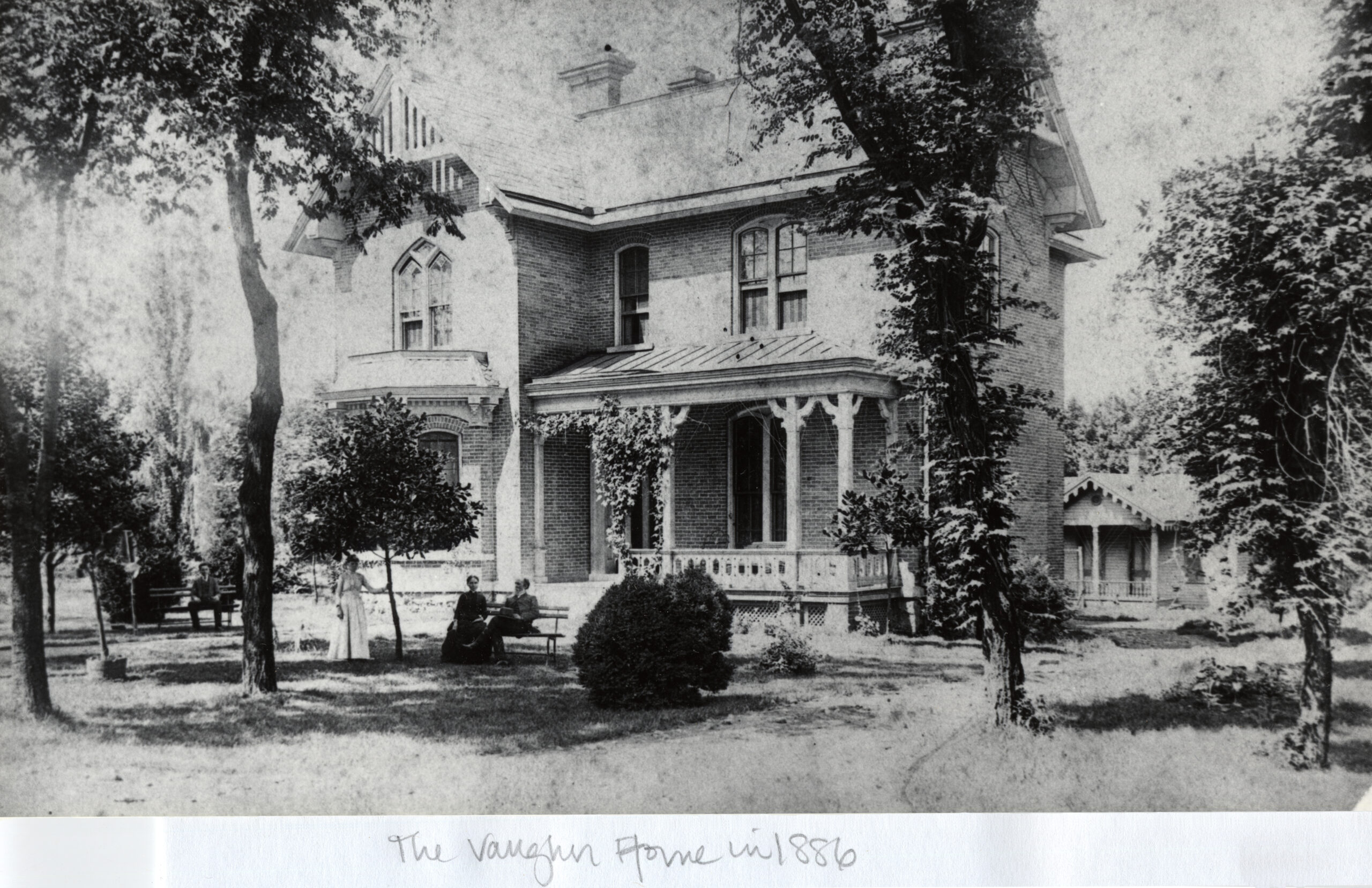
Vaughn House, Vanderbilt Campus

Saturday, April 20

Session 4: 8:20 – 10:00 a.m.

A. Mourning and Transformation in Modern America (102)
B. Fragments: Modern Poetics (121)

Session 5: 10:10 – 11:50 a.m.

A. Generational Considerations (102)
B. Memory and the Unbearable (121)

Plenary address and luncheon: 12:00 – 2:00 p.m.
Wyatt Center Rotunda (3rd Floor)
Professor Liliane Weissberg

Session 6: 2:10 – 3:50 p.m.

A. Trees, Time, and the Return of the Biologically
Repressed (102)
B. Inheritances—Nostalgia, Trauma, Race (121)

Session 7: 4:00 – 5:40 p.m.

A. Civic Memories and Collective Pasts in Early-Modern
England (102)
B. Modern Media, Postmodern Memory (121)


Program

Friday, 19 April

Registration: 8:00–8:30 a.m.
Wyatt Center Rotunda (3rd Floor)

Session 1: 8:40–10:00 a.m.

A. Creative Acts and Gestures
Wyatt Center 322
Chair: Laurie Woods

Memory as Muse: Pushing the Limits of
“Writing What You Know”
Erika Dreifus, Queens College, North Carolina

“I Think about This Dream Often”: Mythopoetic Vision as a Memory Device in the Native American Community
Kelly E. Rowley, The University at Buffalo

Comment: Professor Cecelia Tichi
(English)


B. (Dis)continuities: Identities and Disciplines
Wyatt Center 201
Chair: Tommy Anderson

The Difficult Work of Remembering
Rad Borislavov, Syracuse University

The Limits of Memory: The Question of Memory and Identity
Sherry Asgill, University of the West Indies (Barbados)

Comment: Professor W. James Booth
(Political Science)

Session 2: 10:10–11:50 a.m.

A. Problems of Memory Work
in Post-War Germany
Wyatt Center 322
Chair: Jonathan Blake

Buchenwald
Jill Grinager, Georgetown University

Reconciling Methodological Choices in the Study of Memory: An Analysis of the German Case
Eric Langenbacher, Georgetown University

The “Memorial to the Murdered Jews of Europe” and the Problem of Memory in a New Berlin
Joel McKim, Concordia University
(Montreal)

Comment: Professor Liliane Weissberg
(German Studies & Comparative Literature)


B. Marking the Dead
Wyatt Center 223
Chair: David Karr

Making a Mark in History: Landmark Designation in Chicago
Jessica Thurk, Northwestern University

France and the Memory of the Algerian War: The Ambiguous Commemoration of October 17, 1961
Brigitte Jelen, University of California, Irvine

Unveiling the Epidemic: Visual AIDS and the “Day Without Art”
Deborah Barkun,
Bryn Mawr College

Comment: Professor James Epstein (History)


Plenary address and luncheon: 12:00–2:00 p.m..

sponsored by the Department of History
Wyatt Center Rotunda

WelcomeRichard McCarty, dean, College of Arts and Science

IntroductionEdward Harcourt, co-chair

Memory as Self-Criticism
Professor Richard H. King, University of Nottingham (United Kingdom)


Session 3: 2:10–3:50 p.m.

A. Ways of Telling
Wyatt Center 322
Chair: Lori C. Patton

Storytelling and the World Market: Anxious Memory-Making in Post-Apartheid South Africa
Christopher J. Colvin, University of Virginia

Gens du Caste: Identity and the Professional Work of Memory in Postcolonial Mali
Molly Roth, University of Pennsylvania

Show Me the Way to Go Home: Pintupi Painting, Memory, and the Return to the Western Desert Homelands
Margaret Smith, University of Virginia

Comment: Professor Richard H. King (History)

B. Memory and the Imagined Nation
Wyatt Center 201
Chair: Laurie Woods

Remembering History on Stage: Appropriations, Ritualizations, and Visions of Baroque Tradition in Republican and Francoist Spain
Elena Garcia-Martin, University of Texas, Austin

Remembering the Fragmented Self: Dewey and Marcuse on Critical Anamnesis and Reification
Matt Fitzsimmons, Vanderbilt University

Viking Town, German City?: Nationalism, Nazism, and the Archaeology of Haithabu, 1897–1939
John Laurance Hare, Jr., University of North Carolina, Chapel Hill

Comment: Professor Michael D. Bess (History)


Reception: 6:00–8:00 p.m.

Vaughn House, Vanderbilt campus
Robert Penn Warren Center for the Humanities
Host: Mona Frederick, Executive Director


Saturday, 20 April

Session 4: 8:20–10:00 a.m.

A. Mourning and Transformation
in Modern America

Wyatt Center 102
Chair: Stefan Pollan

Japanese Internment Redress: Changing Social Remembrance and Revising Cultural Identity
Ryan Lee Teten, Vanderbilt University

Mourning and the Making of a Nation: The Gold Star Mothers’ Pilgrimages, 1930–1933
Lisa M. Budreau, St. Antony’s College,
Oxford University

Comment: Professor Rebecca J. Plant (History)


B. Fragments: Modern Poetics
Wyatt Center 121
Chair: Lisa Nevárez

A Fragmented Universe of Contradictions: Rene Char’s
Pulverized Poem
Julie Ann Huntington, Vanderbilt University

A Voice from the Edge of History
Robert S. Hubbard, Vanderbilt University

Comment: Professor Kalliopi Nikolopoulou (Comparative Literature)

Session 5: 10:10–11:50 a.m.

A. Generational Considerations
Wyatt Center 102
Chair: Edward Harcourt

Nostalgia for Futures Past: The Politics of Generational Memory
Sverker Hyltén-Cavallius, Linkoping University (Sweden)

The Theory and Practice of Memory: Perspectives in the Early American Republic
Keith Tony Buetler, Washington University,
St. Louis

American Liberal Pacifists and the Memory of Abolitionism, 1914–1933
Kip Kosek, Yale University

Comment: Professor Don H. Doyle (History)

B. Memory and the Unbearable
Wyatt Center 121
Chair: Elizabeth Festa

Literary Imagination and Memory in Jamaica Kincaid’s Narrative, My Brother
Priti Kohli, York University (Toronto)

Responsibility in the Face of Traumatic Memory of Sexual Violence
Kim Phillips, York University (Toronto)

[Un]comfortable Obscurity: The Displacement of “Comfort Women” in the Collective Memorization of WWII
Hyeyurn Chung, Vanderbilt University

Comment: Professor Michael Kreyling (English)

Plenary address and luncheon: 12:00–2:00 p.m.

sponsored by the Center for European Studies and the Robert Penn Warren Center for the Humanities
Wyatt Center Rotunda

Welcome – William P. Smith, dean,
Graduate School

Introduction – David Karr, co-chair

Past Imperfect
Professor Liliane Weissberg,
University of Pennsylvania


Session 6: 2:10–3:50 p.m.

A. Trees, Time, and the Return of the Biologically Repressed
Wyatt Center 102
Chair: Tommy Anderson

Deleuze and Guattari’s “Rhizome-Tree”: Re-thinking Dualisms between the Old and the New
Robin Ambrose, Vanderbilt University

“We must remember that progress is no invariable rule”: Darwin, Reversion, and the Gothic Mode
Jason H. Lindquist, Indiana University

“... because these futures continue to continue on the next page”
Kyle Schlesinger, SUNY Buffalo

Comment: Professor Lucius Outlaw (Philosophy)

B. Inheritances—Nostalgia, Trauma, Race
Wyatt Center 121
Chair: Jonathan Blake

The Terror of Lynching and Cultural Memory in Richard Wright
Dolen Perkins, George Washington University

The Usability of the Civil Rights Movement: Meanings of the Past in
the Minds of Individuals

Eleanor Bright Fleming, Vanderbilt University

“Look Away, Look Away, Dixie Land”: The Function of Modernist Nostalgia in the Poetry of the Postmodern South
Daniel C. Turner, Vanderbilt University

Comment: Professor David L. Carlton (History)

Session 7: 4:00–5:40 p.m.

A. Civic Memories and Collective Pasts in Early-Modern England
Wyatt Center 102
Chair: David Karr

The Memory Life of the Dead:
Funeral Sermons of the Nobility in Restoration England
Lisa Marie Toland, Miami University (Ohio)

Urban Identity and the English Provincial Town: Antiquarianism and Collective Memory in Tudor Chester
Neil R. Birch, University of Regina (Saskatchewan)

Constructing a Juridical Memory: An Antiquarian Response to the Union of Kingdoms
Brett F. Parker, University of Alabama

Comment: Professor Leah S. Marcus (English)


B. Modern Media, Postmodern Memory
Wyatt Center 121
Chair: Lori C. Patton

The Limits of Postmodern Memory: Kundera’s The Book of Laughter and Forgetting and Spiegelman’s Maus
Eric L. Berlatsky, University of Maryland, College Park

Into the Dustbin of History: Memory “Work” in “Julius Knipl, Real Estate Photographer”
Mark B. Feldman, University of California, Berkeley

The Labyrinths of Memory:
Film, Photography, and Text in Memento
Gyde Shepherd, Concordia University (Montreal)

Comment: Dr. Heidi Kenaga (Communication, University
of Memphis)


Graduate presenters and chairs

Robin Ambrose (Session 6-A) is a second-year graduate student in philosophy at Vanderbilt University. Previously, she studied philosophy at the University of Guelph and cultural studies at Trent University. She has begun to pay special attention to issues of gender and the ethical in contemporary French philosophy. robin.a.ambrose@vanderbilt.edu

Tommy Anderson (Sessions 1-B & 6-A) holds undergraduate degrees in English and history from Vanderbilt University and an M.A. in English from Pennsylvania State University. Currently, he is a Ph.D. candidate at Vanderbilt, writing a dissertation on historical crises, cultural memory, and aesthetic mediation in early modern British literature. thomas.p.anderson@vanderbilt.edu

Sherry Asgill (Session 1-B) is pursuing an M.Phil. in post-colonial literatures and philosophy at the University of the West Indies, Barbados. She is particularly interested in philosophy of mind and hopes to be able to combine both disciplines in a way that is fruitful in this aspect of philosophy. furball@caribsurf.com

Deborah Barkun (Session 2-B) holds a B.F.A. in multimedia studio art from Carnegie-Mellon University and an M.A. degree in history of art. Currently, she is a Ph.D. candidate in history of art at Bryn Mawr College, researching AIDS, memorialization, and visual culture. dbarkun@brynmawr.edu

Eric L. Berlatsky (Session 7-B) is a Ph.D. candidate at the University of Maryland. His dissertation engages the debate over poststructural historiography through the prism of contemporary fiction, which theorizes the idea of “history” and its relationship to narrative. Berlatsky also has an article forthcoming in the 2002 issue of Dickens Studies Annual.

Neil R. Birch (Session 7-A) is a graduate student in early modern English history at the University of Regina, specializing in collective identity construction in sixteenth-century English towns. With a background in archaeology and cultural anthropology, Neil is interested in transdisciplinary methods. nrbirch@hotmail.com

Jonathan Blake (Sessions 2-A & 6-B) holds a B.A. in English from Gettysburg College and is working toward the Ph.D. in English at Vanderbilt. His current research includes strategic cooperation in Medieval romance and religion and the author in Joyce. jonathan.blake@vanderbilt.edu

Rad Borislavov (Session 1-B) is a first-year Ph.D. student at Syracuse University. He received a B.A. in English from Sofia University in Sofia, Bulgaria. He is interested in critical theory and processes of cultural production—this includes but is not limited to aesthetics, memory, globalization. rad.rad@lycos.com

Lisa M. Budreau (Session 4-A) has extensive experience in museums and cultural heritage tourism. She is currently involved with numerous projects to make U.S. First World War history a visceral experience for wider audiences. Her Ph.D. research at Oxford examines American commemoration during the inter-war period. lisa.budreau@st-antonys.oxford.ac.uk

Keith Tony Buetler (Session 5-A) is a Ph.D. candidate in history at Washington University in St. Louis, researching how memory of the Revolution and Founding informed generational transition in the early American republic. kbeutler@artsci.wustl.edu

Hyeyurn Chung (Session 5-B) holds a B.A. in English literature. She received an M.A. in American literature from Korea University and Vanderbilt University. Currently, she is a Ph.D. candidate in English at Vanderbilt University, researching the intersections between African-American literature and Asian-American literature. chunghyeyurn@hotmail.com

Christopher J. Colvin (Session 3-A) is a graduate student in sociocultural anthropology at the University of Virginia, and his research is based on two years of fieldwork in Cape Town with a victim support group. Chris’s dissertation examines storytelling about apartheid within an emerging political economy of storytelling.
cjc5r@virginia.edu

Erika Dreifus (Session 1-A) holds a Ph.D. in history from Harvard University and is presently an M.F.A. candidate at Queens College in Charlotte, North Carolina. She teaches creative and expository writing in Cambridge, Massachusetts. She has published in the Harvard Writing Project, the Boston Globe, and the Oregon English Journal. erikadr@post.harvard.edu

Mark B. Feldman (Session 7-B) is working on a Ph.D. in the Rhetoric Department at University of California, Berkeley. His dissertation deals with ideas and metaphors surrounding the animal and the primitive as they surface in divergent ways in the naturalist writings of Frank Norris and Jack London and American zoos. mfeldman@uclink.berkeley.edu

Elizabeth Festa (Sessions 1-A & 5-B) graduated from the University of Notre Dame in 1995 with a degree in English literature. She is currently a Ph.D. student in the English Department, studying late-nineteenth-century American literature. Her research interests include detective fiction and narratives of conspiracy. elizabeth.a.festa@vanderbilt.edu

Matt Fitzsimmons (Session 3-B) received undergraduate degrees in philosophy and history and is presently a Ph.D. candidate in philosophy at Vanderbilt University. Currently, he is researching the radical nature of John Dewey’s political philosophy and its relationship to Frankfurt School Critical Theory. mjfitzsim@hotmail.com

Eleanor Bright Fleming (Session 6-B) is a second-year doctoral student in the Department of Political Science at Vanderbilt University. Combining work from American politics and political theory, her research interests include questions of race, identity, and democracy. Her current research focuses on U.S. slave reparations.
eleanor.b.fleming@vanderbilt.edu

Elena Garcia-Martin (Session 3-B) is a Ph.D. candidate in comparative literature at the University of Texas at Austin. She holds a master’s in English from University of South Florida and a B.A. in English (Filologia Inglesa) from Universidad de Sevilla. As an Erasmus scholar in England she concentrated on Elizabethan drama, an interest which was later complemented by comparative studies in Baroque Spanish drama. egarciam@mail.utexas.edu

Jill Grinager (Session 2-A) took a B.A. in 2000 from American University in German and international studies. In 2000-2001, she was a Fulbright Scholar in Berlin, Germany. Currently at Georgetown University, she is completing a master’s in German and European studies. jsg2@georgetown.edu

Edward Harcourt (co-chair & Session 5-A) is a Ph.D candidate in American history at Vanderbilt University. He holds a master’s degree from the University of Richmond and took his bachelor’s at Lancaster University (UK). Ed writes about the U.S. Civil War era and has a forthcoming article in the Journal of Social History. edward.j.harcourt@vanderbilt.edu

John Laurance Hare, Jr. (Session 3-B) holds undergraduate degrees in history and anthropology from the University of Tennessee at Chattanooga. He is currently finishing an M.A. thesis in history at the University of North Carolina, Chapel Hill, examining archaeology and national identity in twentieth-century Germany and Denmark. hare@email.unc.edu

Robert S. Hubbard (Session 4-B) graduated from the University of Tennessee in classics and philosophy. He currently teaches humanities classes at Vanderbilt and will defend his doctoral dissertation on Hegel and Greek tragedy in April 2002.
robert.s.hubbard@vanderbilt.edu

Julie Ann Huntington (Session 4-B) holds undergraduate degrees in French and anthropology and an M.A. in French. Currently, she is a Ph.D. candidate in French at Vanderbilt University, researching the function of rhythm and music in West African and Caribbean Francophone novels.
julie.a.huntington@vanderbilt.edu

Sverker Hyltén-Cavallius (Session 5-A) has a B.A. in ethnology and musicology from Stockholm University. He is currently working on a Ph.D. thesis on music-making and the politics of collective memory in Swedish pensioners’ organizations at the Institute for the Study of Aging and Later Life at Linköping University.
sverker.hyltén-cavallius@ituf.liu.se

Brigitte Jelen (Session 2-B) is a graduate student in history at the University of California, Irvine. Her dissertation focuses on the evolution of discourses on immigration and multiculturalism in postwar France, in particular on the increasing visibility of immigrants in the political sphere and how this is represented in the French press. bjelen@uci.edu

David Karr (co-chair, Sessions 2-B & 7-A) is a Ph.D. candidate in modern European history. His dissertation studies the performance of British radicalism in the 1790s. “‘Thoughts that Flash like Lightning’: Radical Theater and the Production of Meaning in 1790s London” appeared in the July 2001 issue of the Journal of British Studies. david.karr@vanderbilt.edu

Priti Kohli (Session 5-B) is a second-year Ph.D. student in the social and political thought graduate program at York University, Toronto. Her main area of interest is with the work of narrative in thinking through questions about knowledge, learning, memory, and sociality. kohlip@idirect.ca

Joseph Kip Kosek (Session 5-A) is a Ph.D. candidate in American studies at Yale University. His dissertation focuses on Christian pacifists and socialists and their relationship to the development of twentieth-century American liberalism. He has published “Objects of Faith: Rethinking Kitsch, Christianity, and Material Culture,” American Studies (Fall 1999). joseph.kosek@yale.edu

Eric Langenbacher (Session 2-A) is a Ph.D. candidate in government at Georgetown University. He will defend his dissertation “Memory, Values and Power: The Impact of the Past on Contemporary German Political Culture” in May 2002. In 2002-2003 he will be a Visiting Assistant Professor at Georgetown. langenbe@hotmail.com

Bérénice Virginie Le Marchand holds undergraduate degrees in English and American studies, as well as M.A. degrees in French and English. Currently, she is a Ph.D. candidate in the French and Italian Department at Vanderbilt University, researching twins, mirrors, and doubles in Early Modern French literature. berenice.v.le.marchand@vanderbilt.edu

Jason H. Lindquist (Session 6-A) is currently a Ph.D. candidate at Indiana University with concentrations in Victorian studies and science and literature. Among Jason’s interests are scientific travel narratives (including Charles Darwin and Alexander von Humboldt) and the persistence and function of Gothic tropes in Victorian culture. jhlindqu@indiana.edu

Joel McKim (Session 2-A) is a student in the media studies program at Concordia University, Montreal. He is interested in exploring conjunctures of landscape, architecture, and memory, particularly as they impact the formation of national identities. His work has appeared in antiTHESIS and the Canadian Journal of Communication.
joelmckim@hotmail.com

Lisa Nevárez (Session 4-B) is a Ph.D. candidate in comparative literature at Vanderbilt University. In 2002-2003 she will be Visiting Minority Scholar-in-Residence at Coe College. Her interests include comparative Romanticisms, Latino/a literature, and postcolonial and gender studies. She holds a B.A. in English from the University of San Francisco (1995). lisa.a.nevarez@vanderbilt.edu

Brett F. Parker (Session 7-A) is a Ph.D. candidate and part-time instructor at the University of Alabama and is primarily a student of British political thought and early modern European intellectual history. His dissertation, “Performing Englishness: The Construction of Identity in Renaissance England,” examines the various discourses and contexts that went into the articulation of national memory and identity. parke014@bama.ua.edu

Lori C. Patton (Sessions 3-A & 7-B) holds undergraduate degrees in history and English and an M.Div. from Princeton Seminary. She is a minister in the Presbyterian Church (U.S.A.), a Ph.D. candidate in religion and personality at Vanderbilt, and a teaching assistant in anthropology, doing research in pastoral theology and popular culture. lori.c.patton@vanderbilt.edu

Dolen Perkins (Session 6-B) is a Ph.D. candidate in the English Department at George Washington University in Washington, D.C. She received her undergraduate degree from Harvard College and her M.F.A. in creative writing from the University of Memphis. She has an article forthcoming in the Fall 2002 issue of North Carolina Literary Review. dolen@gwu.edu

Kim Phillips (Session 5-B) is currently in the second year of a master’s in the Women’s Studies Program at York University in Toronto. Her work is concerned lately with the ethical and its relation to the political, feminist disciplinarity and interdisciplinarity, deconstruction and psychoanalysis, identity and intersubjectivity. kimp@yorku.ca

Stefan Pollan (Session 4-A) holds a B.A. in history from UC San Diego. He is finishing a D.Phil. at Oxford University in German literature. He is also a graduate student in philosophy at Vanderbilt where his main interests are social and political philosophy, especially the Frankfurt School, psychoanalysis, and Heidegger.
stefan.e.pollan@vanderbilt.edu

Molly Roth (Session 3-A) is currently finishing her dissertation in anthropology at the University of Pennsylvania on the economics of jeliya (‘griotism’) in Mali. Among her recent publications is “The ‘Secret’ in Malian Historical Consciousness: Re-narrating the West,” published in The Journal of Mande Studies, Volume 2 (2000). mroth@sas.upenn.edu

Kelly E. Rowley (Session 1-A), a member of the Blackfoot Nation, holds a B.A. in political science and M.A.s in English and American studies. Currently, he is a Ph.D. candidate in American studies at the Center for the Americas at the University at Buffalo, researching mnemonic devices and Native American oral presentation conventions. rowley@cayuga-cc.edu

Kyle Schlesinger (Session 6-A) is from Providence, Rhode Island, and currently resides in Buffalo, New York, where he is working on his doctoral degree in the Poetics Program. He is the proprietor of Cuneiform Press and co-editor of Kiosk: A Journal of Poetry, Poetics, & Experimental Prose. ks46@acsu.buffalo.edu

Gyde Shepherd (Session 7-B) is an M.A. student in media studies (communications) at Concordia University, Montreal. His present research involves an investigation of the critical, historical, and philosophical role assigned to the photographic and filmic image by Walter Benjamin, Roland Barthes, and Gilles Deleuze.
gydeshepherd@hotmail.com

Margaret Smith (Session 3-A) is the curator of the Kluge-Ruhe Aboriginal Art Collection at the University of Virginia. She received her Ph.D. in anthropology from the University of Virginia in May 2001. She spent two years studying the significance of birthplace in a remote Aboriginal community in central Australia. mws2d@virginia.edu

Ryan Lee Teten (Session 4-A) holds B.A. degrees in English and in political science and master’s degrees in political science and social and political thought. He is completing his Ph.D. in political science at Vanderbilt University. His research includes political rhetoric, reparations, rights, memory, and political forgiveness. ryan.l.teten@vanderbilt.edu

Jessica Thurk (Session 2-B) is a Ph.D. candidate in sociology at Northwestern University. Her research interests include work, organizations, and culture. She is currently studying the work worlds of architecture and building construction in Chicago, focusing on issues of interorganizational coordination. j-thurk@northwestern.edu

Lisa Marie Toland (Session 7-A) received her bachelor’s degree in history and English literature from Indiana Wesleyan University. She is currently a first year master’s candidate at Miami University of Ohio. Lisa’s thesis proposes to examine the role of funeral sermons within the larger context of funerary rituals in Restoration England. lmtoland@hotmail.com

Daniel C. Turner (Session 6-B) is a doctoral candidate in English at Vanderbilt. He is currently writing his dissertation on Southern poetry in the U.S. from World War II until the present. His project considers poetic texts as ideologically charged acts of memory. daniel.c.turner@vanderbilt.edu

Laurie Woods (Session 1A & 3-B) has a B.A. in management and human relations, an M.S. in mass communication, a Master of Liberal Arts and Science degree, and is currently pursuing a doctorate in sociology at Vanderbilt University. Her areas of interest include crime and deviance, and crime and the media. laurie.woods@vanderbilt.edu

A bibliography has been complied from the suggestions of conference participants, and can be viewed at bibliography.htm.


back to Seminars page

Bibliography page


[ RPW Center for the Humanities | About the Center | Visiting Fellowship Information | Howard Lecture Series | Programs since 1987 | Letters ]

[ Vanderbilt University | Site Index | Search Vanderbilt | Help ]


Created by Vanderbilt University Design & Publishing.

Copyright © 2002, Vanderbilt University
Last Modified: Friday, 23 August 2002
For more information: rpw.center@vanderbilt.edu