Physics Demo Number: 155
Approximate
Run Time: 5 min
Hertz Experiment
Demo Description
Use two shop-improved RLC breadboarded type units to generate and detect radio waves.
Scientific Principles
-
Mechanical making and breaking of the dc current in an RLC circuit (transmitter unit) gives rise to radio frequency radiation under appropriate tuning conditions for the parameters.
-
A similar circuit with a neon bulb as a detector can detect the radiated signal.
Equipment
-
Two breadboarded type circuit units, made much prettier by machine shop expertise.
Equipment Location
-
Kit (155) on [B-2-6].
Instructions
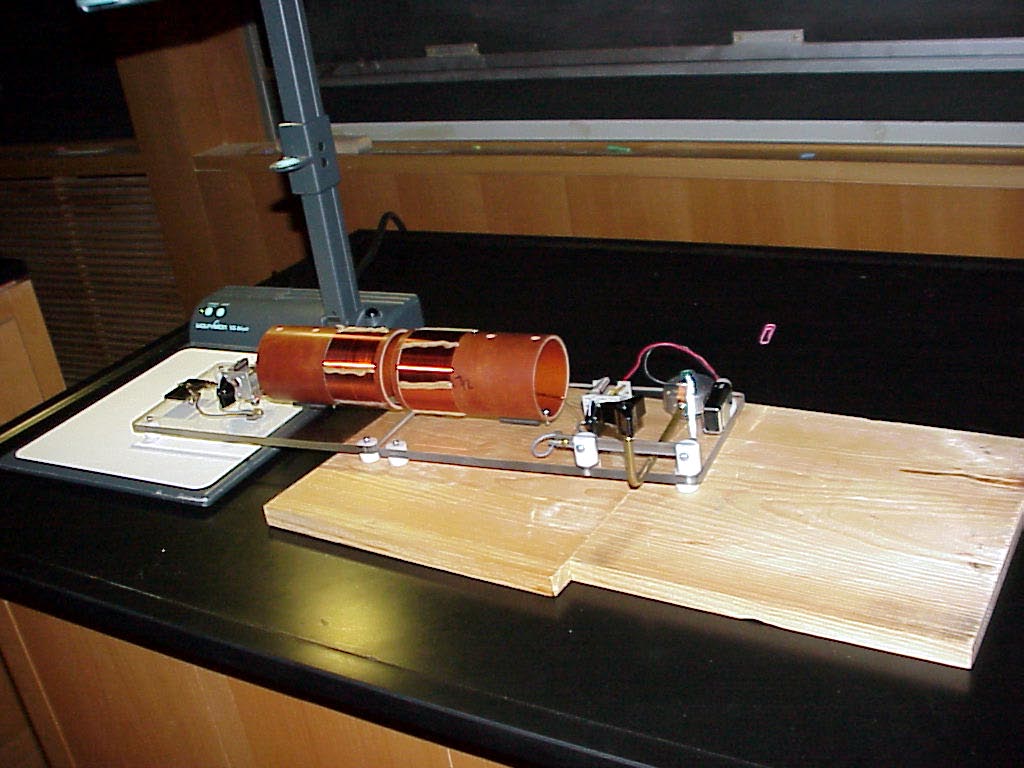
The
first picture shows the two units on the lecture table with the
receiver unit on the document camera.
Note that the DC current source is provided by a 9-volt alkaline battery.
This battery should be stored in the unconnected state .
Thus one must remember to connect the battery when preparing to show the demonstration!!
The black component at the far left end of the receiver unit is the detector bulb.
The bulb is about an inch long.
The next photo shows the image of the bulb (made by the document camera) on the lecture hall screen.
The image is a couple of feet wide.
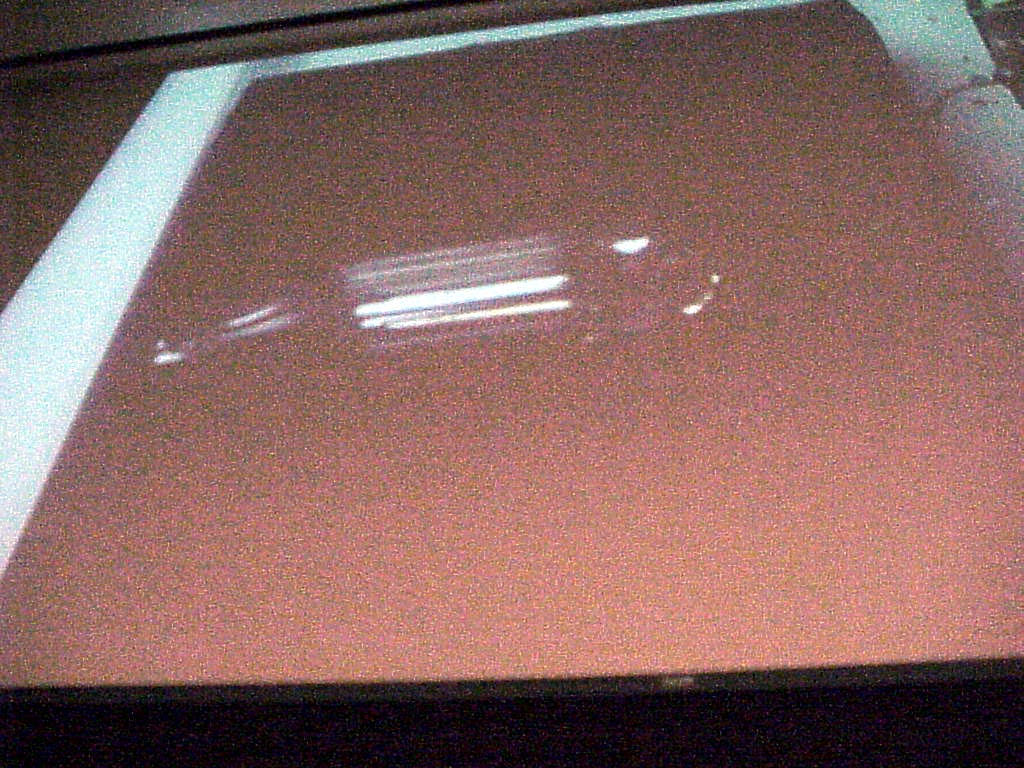
Turning all the room lights down after zooming in close on the bulb allows the detection flashes to be seen throughout the lecture hall.
To generate the signal simply raise the handheld bar (at the right end of the transmitter unit) and saw it back and forth along the toothed blade. (Remember to hook the battery up.)
The next photo shows the receiver and transmitter units with three plastic spacer-coupler units in the foreground.
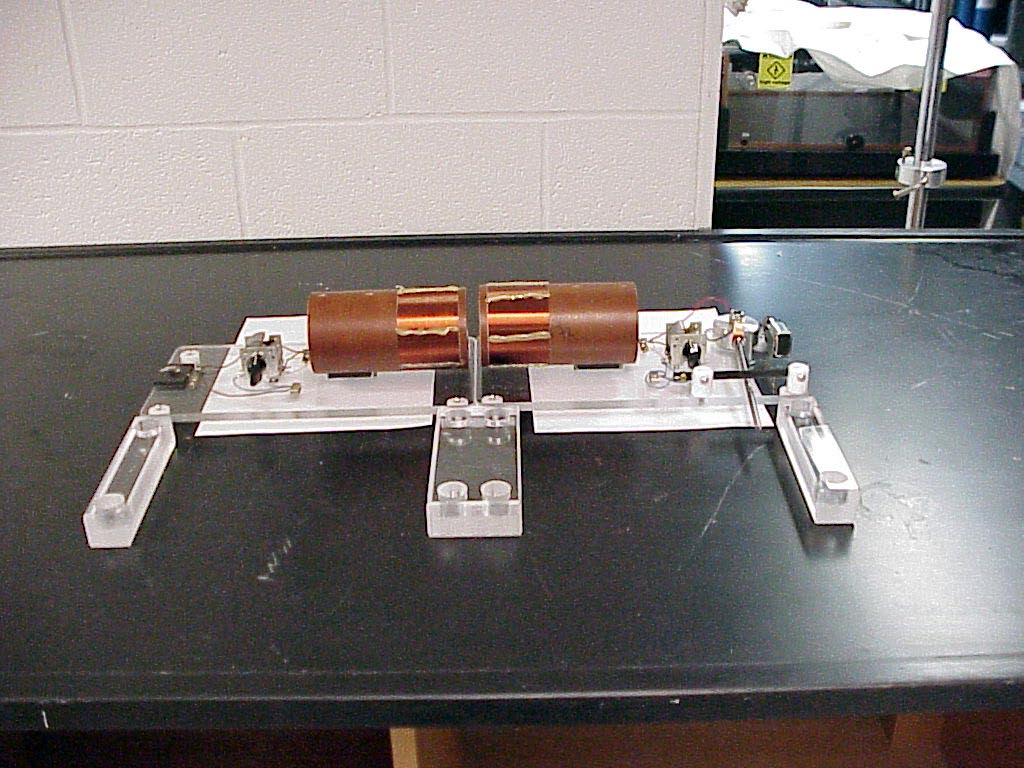
One
may use all three plastic spacer-couplers for free-standing use of
the apparatus, as shown in the next photo.
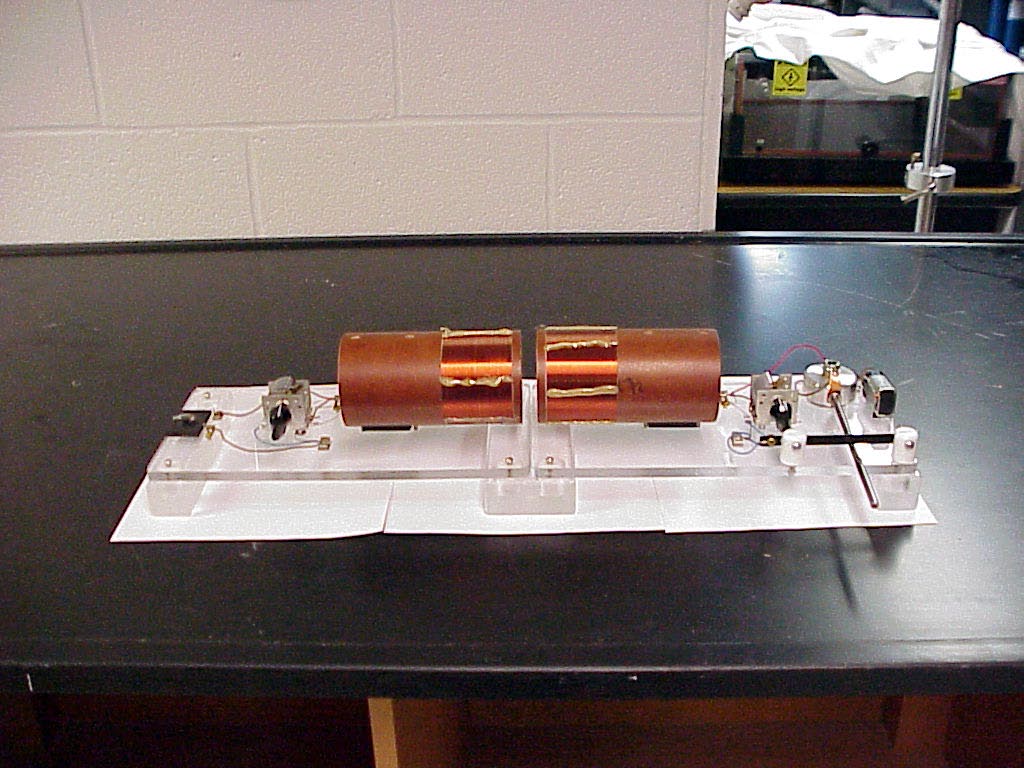
Or
one may remove the left spacer and let that end of the receiver
unit rest on the document camera, without the need for the awkward
boards in the first photo. The next two photos show close-ups of
the receiver and transmitter units.
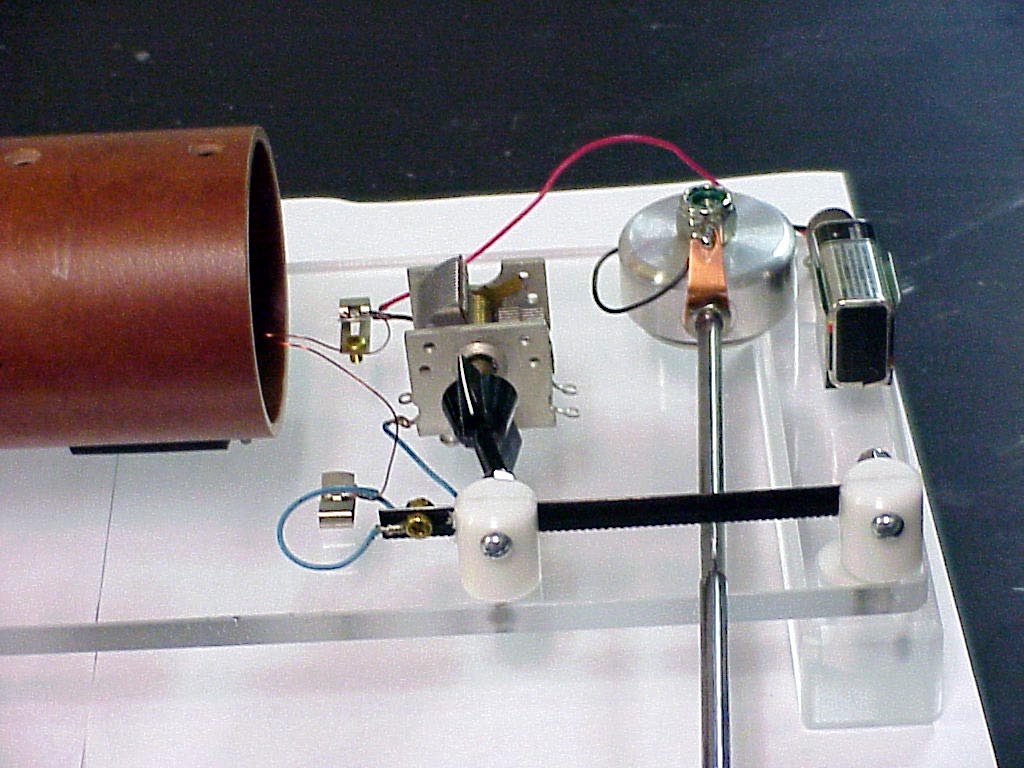
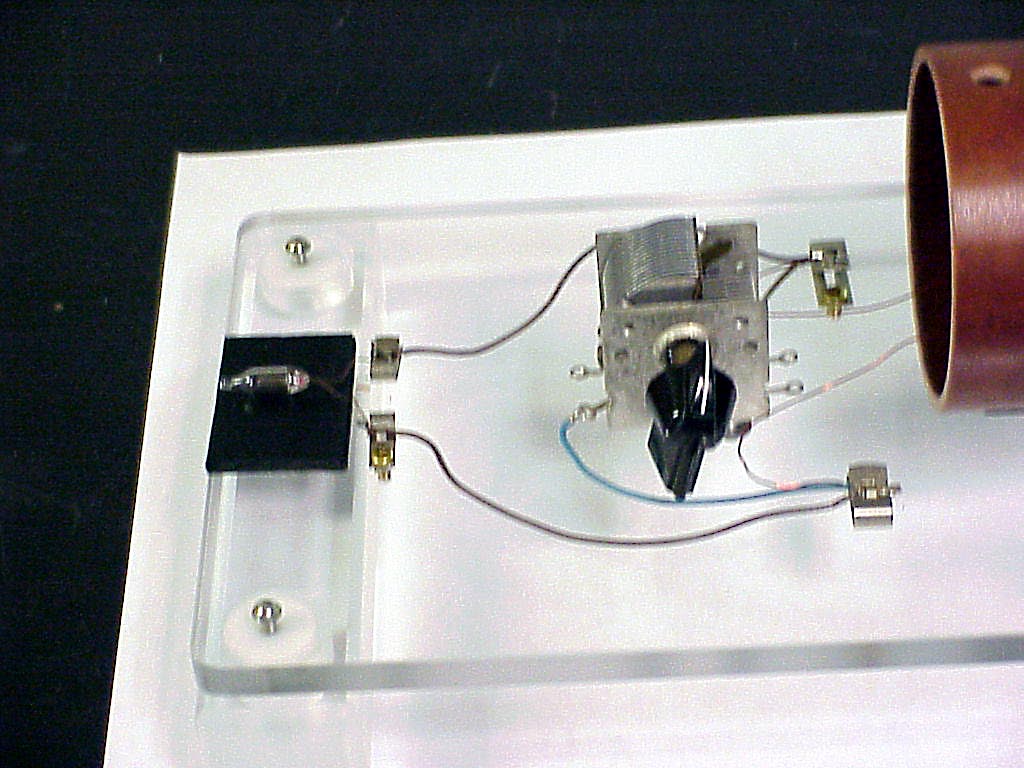
Note that the 9-volt battery voltage is not sufficient to fire the neon bulb.
So the mechanical making and breaking of the circuit in the transmitter end must be providing higher energies in the wave that is sent and detected at the receiver end.
Writeup created by David A. Burba
Copyright © 2013, Vanderbilt University. All Rights Reserved.