Physics Demo Number: 045A
|
Approximate Run Time: 10 min |
|
Judy Current Pendulum (Electromagnetic Brake)
|
||
Demo Description
Cleaver-shaped pieces of various
flat-stock materials are suspended on a horizontal rod. The rod suspension allows the cleavers to be
swung freely as physical pendula. When a given cleaver is made to swing
through the poles of a strong magnet, the resulting motion depends on the
construction material of the cleaver. The Aluminum cleaver is rapidly stopped in
its swing through the magnet, as is one copper cleaver. Both the plastic cleaver and a second
copper cleaver are not stopped. |
||
Scientific Principles
·
Eddy Currents ·
Magnetic braking systems ·
Motional Electromagnetic Fields ·
Surface Contact Resistance |
|
|
|
Equipment ·
Old Large Black Magnet (
Now resides around [H-6-2] if you want to still use it.)
·
Pliers, Attached to the Magnet Keeper
for Old Magnet ·
PVC stand with 4 cleaver-shaped masses (2
Copper, 1 Aluminum, 1 Plastic) |
||
|
Equipment Location · The apparatus lives in [B-4-1]. |
||
Instructions
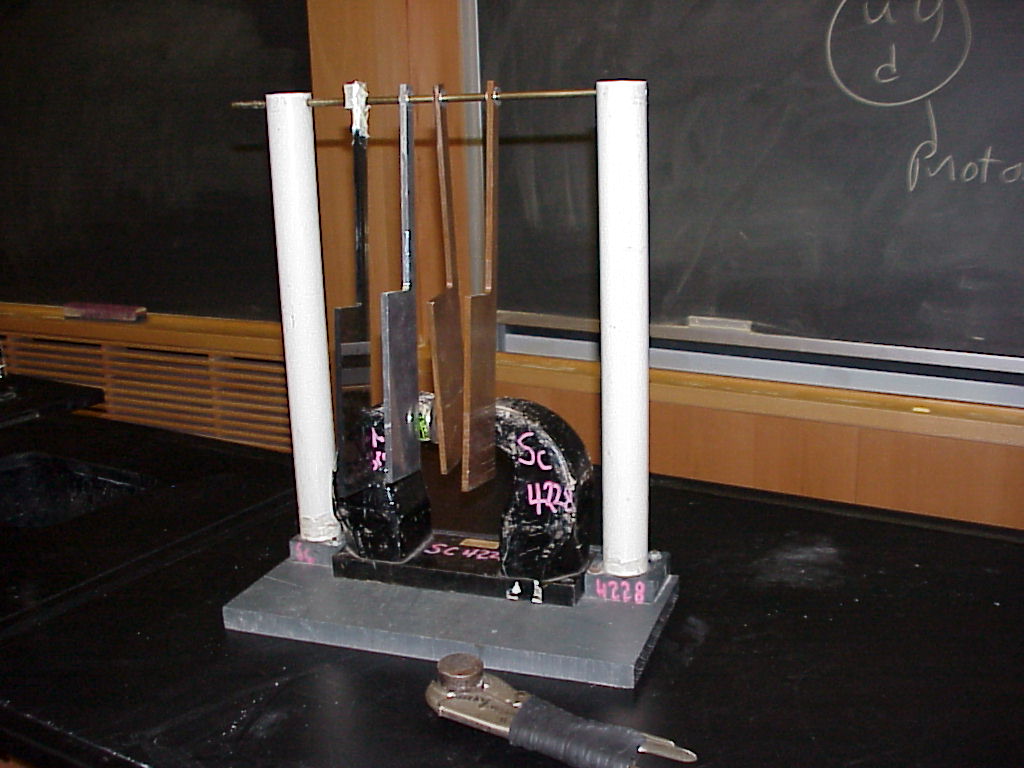
The photo shows the white and gray PVC
stand for supporting a dedicated horizontal rod and 4 cleaver- shaped masses
(2 Copper, 1 Aluminum, 1 Plastic) which are attached
to the rod by sleeve-bearing inserts. The masses may be pulled away from their
vertical equilibrium positions and allowed to swing as physical pendula. The old black magnet may be placed in the
support stand as shown after removing its cylindrical keeper ( seen in the dedicated pliers ). One should place the old magnet on the floor and put a foot in its frame
before pulling on the pliers to remove the keeper. It takes around 100 lb
to pull the keeper out. Holding the keeper only by the pliers while removing or inserting it helps minimize the safety hazard of mutilation or amputation of fingers. Do not attempt to lift the PVC framework by its white posts (unless the magnet is first removed) to avoid smashed toes. It is highly recommended that one not use the old magnet, but opt for the new one described below!!!!!! One finds that the Aluminum and one Copper
pendulum will each come to a rapid halt when released to swing through the
pole pieces of the magnet. The other two pendula
swing freely through the magnetic field. The copper cleaver that swings freely
through the magnetic field looks ( from a distance )
identical to the one that is rapidly damped. It was modified by cutting ten or so
quarter inch wide strips from its bottom, after having drilled two internal
holes in the cleaver perpendicular to its bottom
edge. The quarter inch strips were then reattached to the cleaver with two
long non-metallic screws tapped into the tops of the original drilled holes.
The surface contact resistance between the strips is enough to break up the
Eddy Currents in the cleaver. --------------------------------------------------------------------------------------------------------------------------------------------------
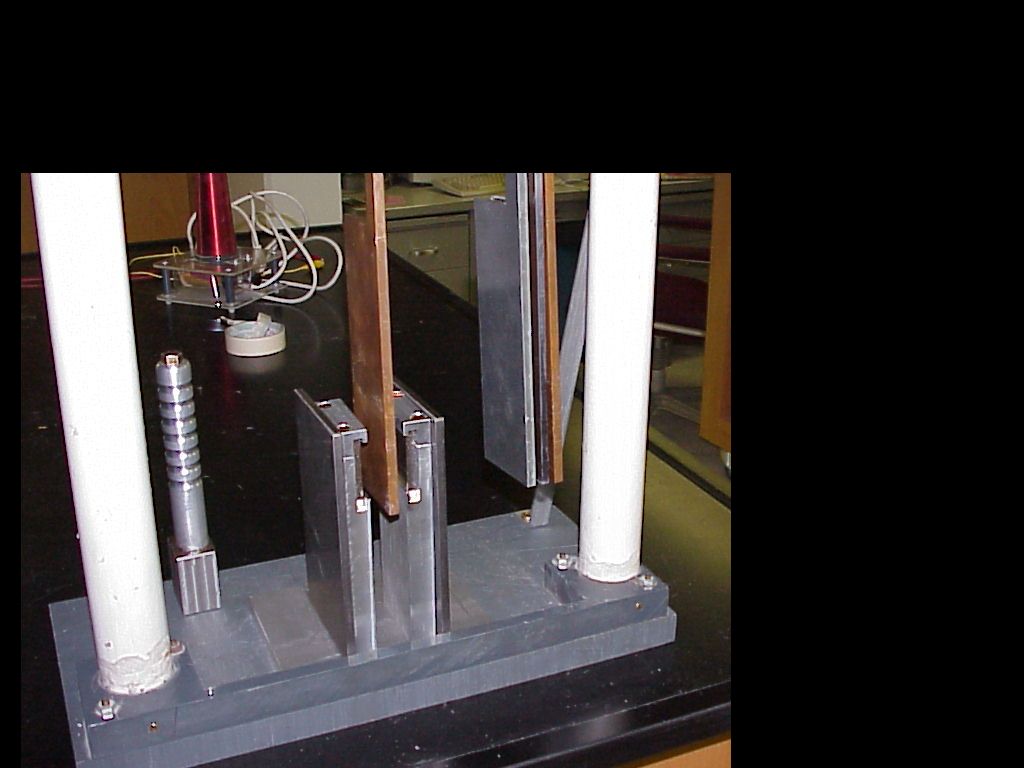
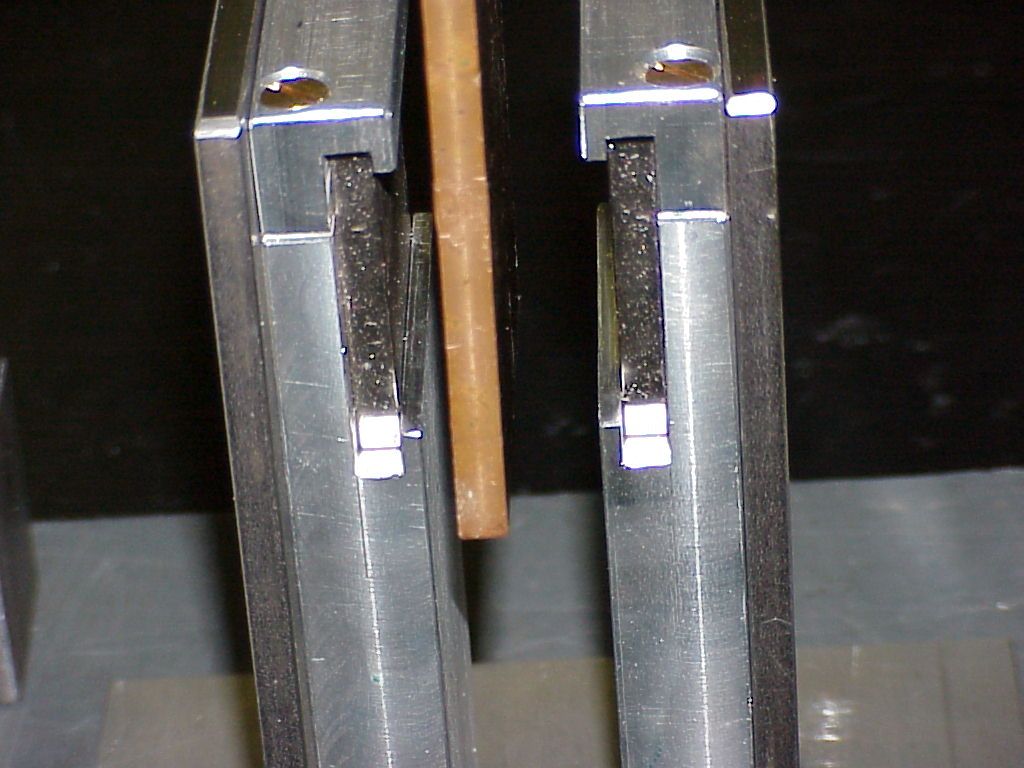
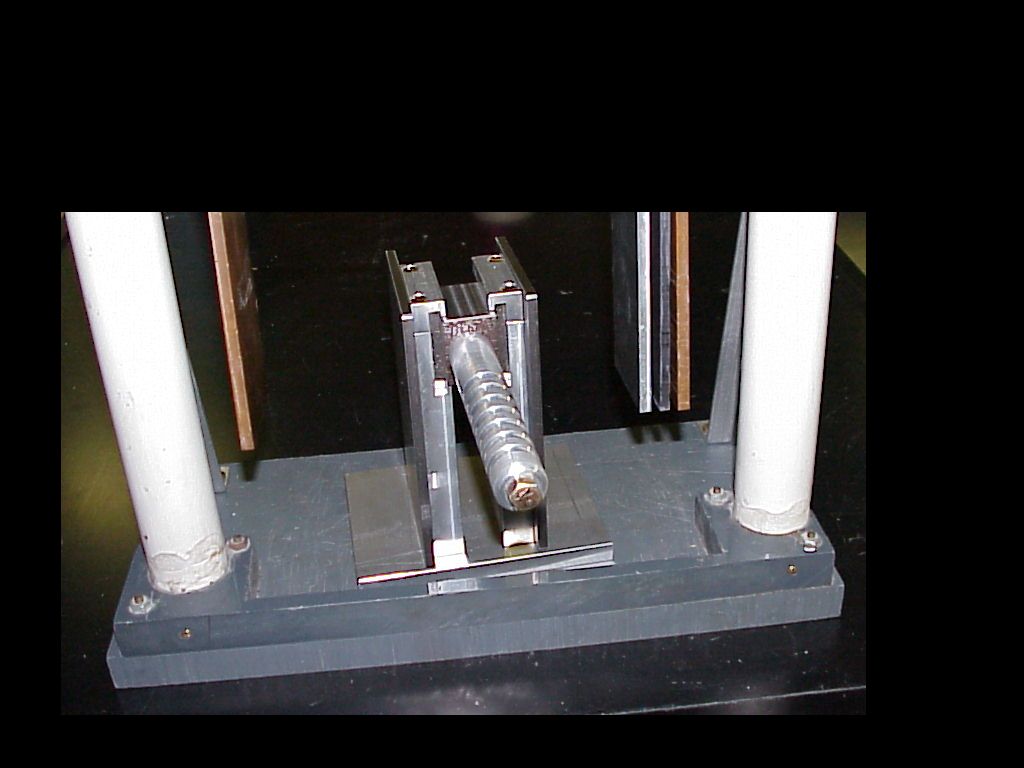
NEW COMPONENTS A new magnet, the reworked PVC stand, and
a new keeper are seen in the following photos:
One may more
easily pull the keeper (seen in operational horizontal position in the
final photo) from the new magnet. The free standing new keeper is on the
left side of the first of the three
photos above. The two flat steel plates on each side of the pole pieces of the new magnet serve to
intensify the field between the poles. |
||
|
Writeup created by David A. Burba
Copyright © 2013, Vanderbilt University. All Rights
Reserved.
|
||