Physics Demo Number: 009 |
Approximate Run Time: 15 min |
||||
Free Fall at Constant Acceleration |
|||||
Demo DescriptionFree fall at constant acceleration is illustrated by the following methods. |
|
|
|||
|
|
||||
Scientific Principles
|
|||||
Equipment
|
|||||
Equipment Location
|
|
|
|||
|
|
|||||
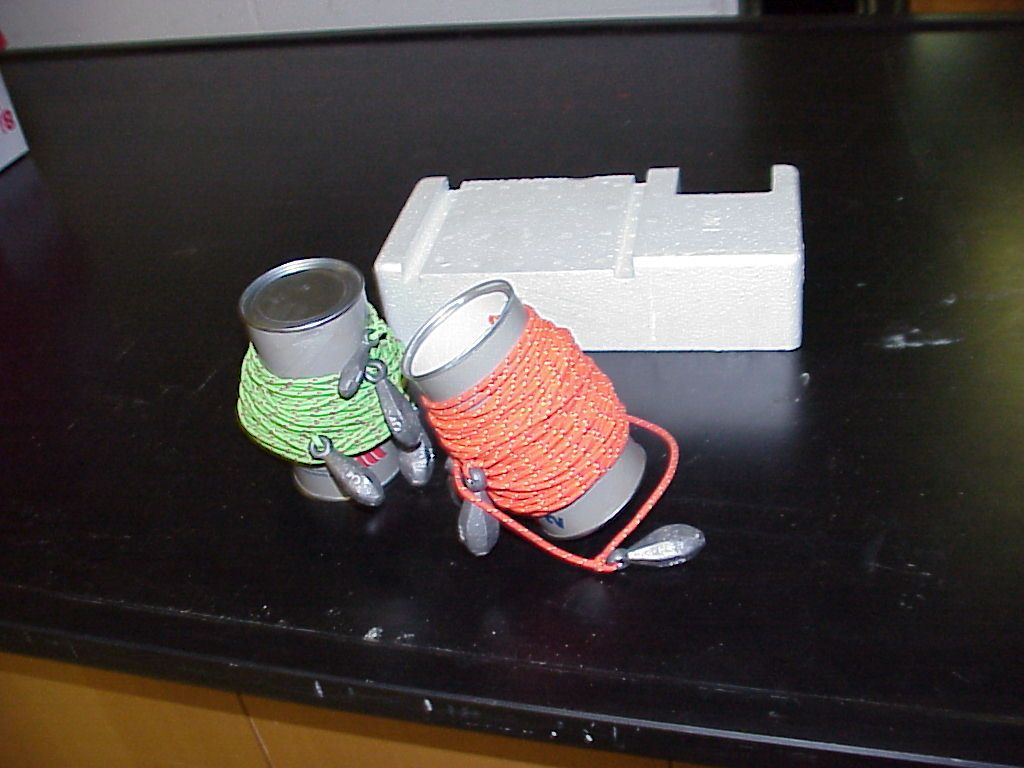
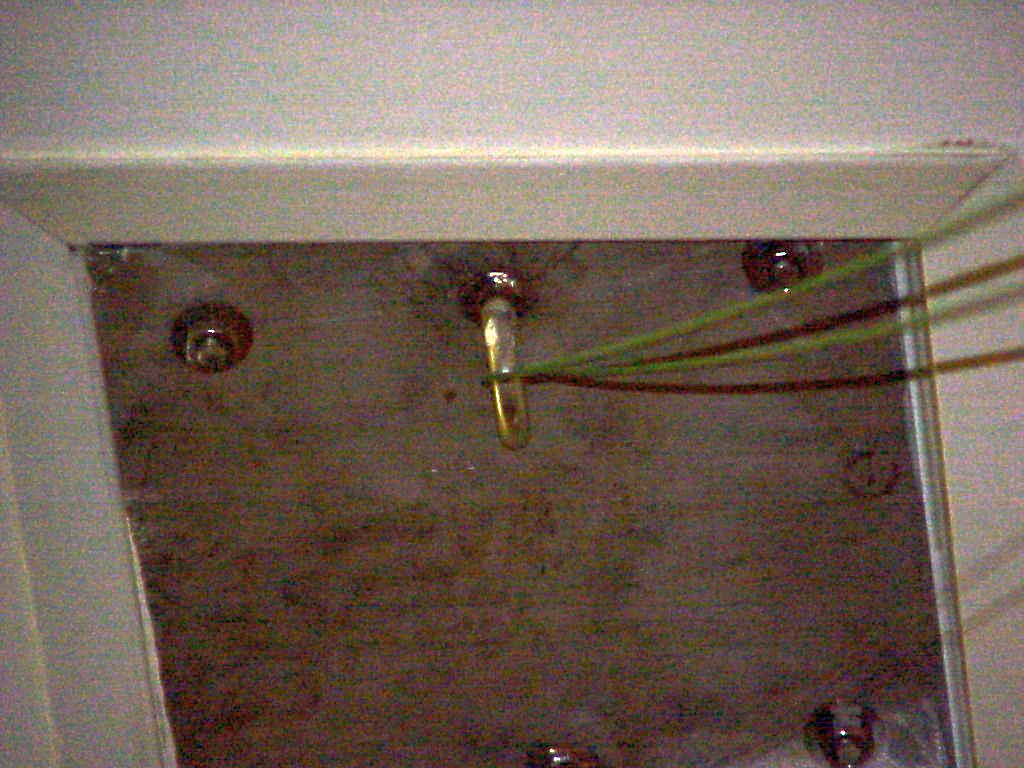
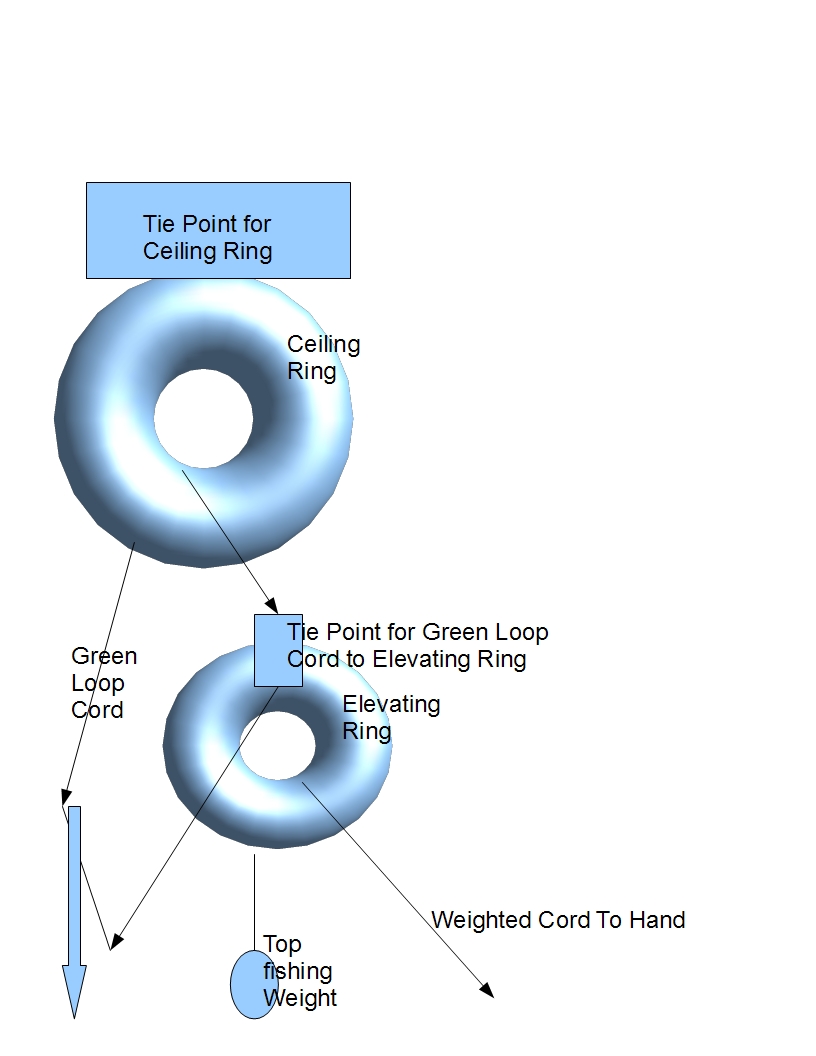
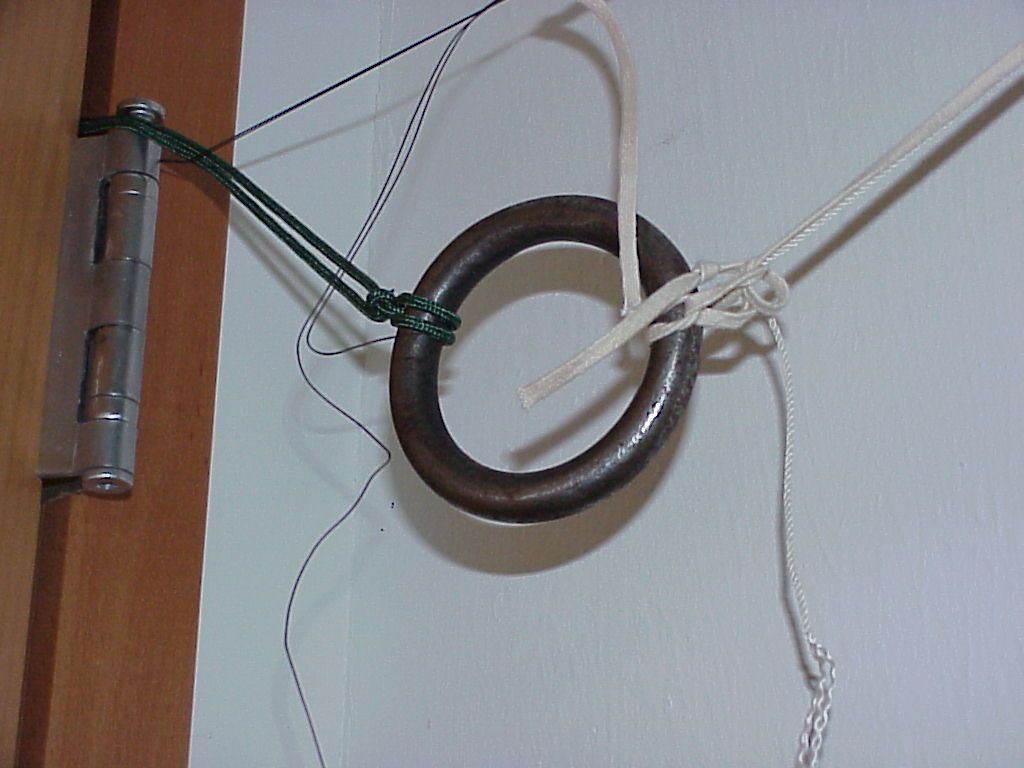
Instructions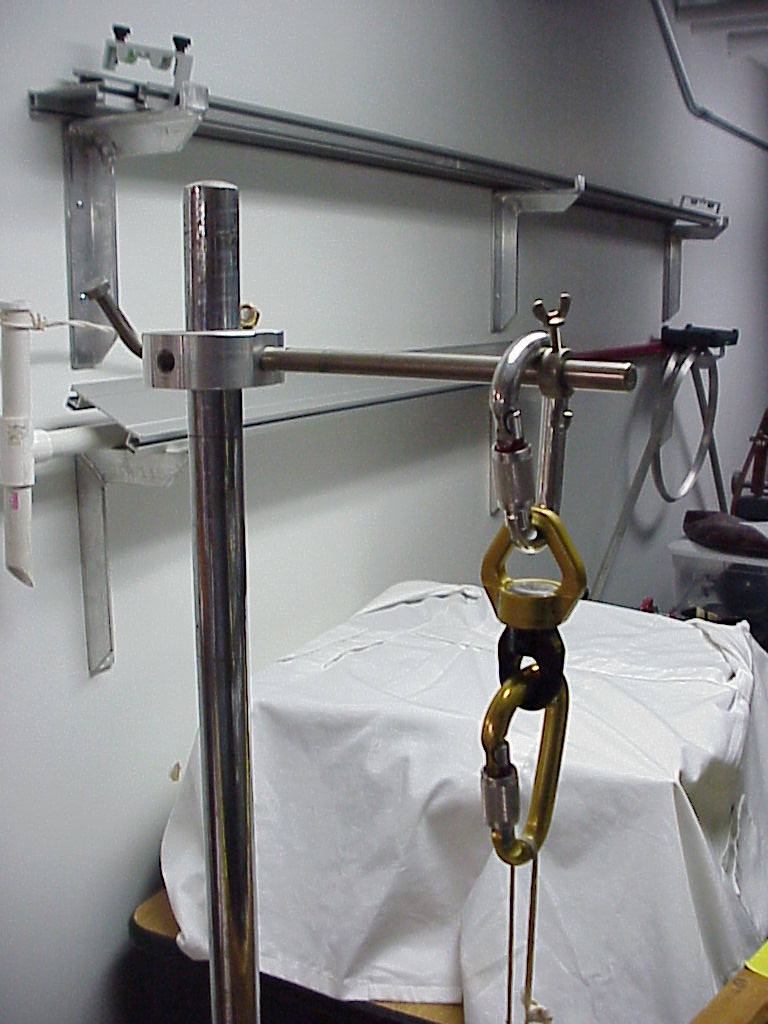 The photos show apparatus for illustrating free fall and constant acceleration. The fourth photo shows the biner variation of attachment point . Two long (35 or 40 feet) pieces of rock-climbing accessory cord that have five large and one small fishing weight attached to each are seen in the first photo. The light- green cord has the weights tied at linearly increasing multiples of the spacing of the first weight from the small -locating-weight end. The orange cord has its five large weights tied such that the second one is at 4 times the distance of the first, the third at 9 times ,…, the fifth at 25 times the distance of the first from the small-locating-weight end. The dark green cord( seen in photos 2 and 3) : 1) is permanently closed- looped through the ring in photo 2 (which is fastened to the lecture hall ceiling). (Please do not under any circumstances untie this closed loop!) When one of the fishing-weight- loaded cords seen in photo 1 is threaded through an elevation attachment point as shown schematically in the diagram below photos 1 and 2 for the ring elevator, then that loaded cord may be raised to ceiling level by rotating the cord tied to the ring to raise the ring while paying out loose line on the weighted line to keep its' appropriate weight ( i.e. the one which is 5 or 25 times the locating distance from the weighted end) at the level of the ring. When the fifth large weight on the light-green-cord is raised about 16 feet above the floor , one may release the end of the unweighted half of that cord to allow the weights to free fall onto a metal shelf on the floor. The careful listener will discern an increasing tempo of collision noises in this case. The orange cord produces an even tempo of collision noises (one about every fifth of a second). A pop bottle has a hole in its side and another in its lid, so that when filled with water and both holes opened a nice stream is emitted from the hole in the side. However, if the bottle is tossed up into the air, no water streams out during the entire free fall motion of the bottle, especially not at the top when the velocity is instantaneously zero.
|
|||||
Writeup created by David A. BurbaCopyright © 2013, Vanderbilt University. All Rights Reserved. |
|||||