|
|
Managing nuclear wastes for the millennia12/17/2007
10:34 am
Contact:
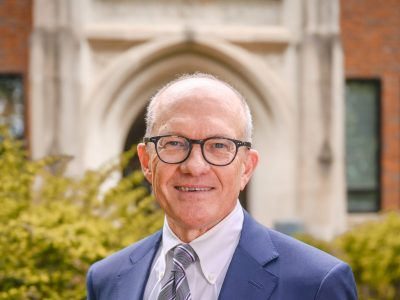
![]() Frank L. Parker U.S. Courts have decreed that the federal government must come up with a system for managing nuclear wastes that will ensure the safety of the public and environment for one million years, a period that is 200 times the length of recorded history. On Jan. 7-8, a symposium titled “Uncertainty in Long-Term Planning – Nuclear Waste Management, a Case Study” will bring experts together from government, industry, academia and the environmental community on the Vanderbilt campus in order to identify potential paths for accomplishing this unprecedented goal and to evaluate their associated risks and uncertainties. Speakers include E. William Colglazier, executive officer of the National Academy of Sciences; John Ahearne, former assistant secretary of defense, deputy assistant secretary of energy and chairman of the Nuclear Regulatory Commission (NRC); B. John Garrick, chairman of the U.S. Nuclear Waste Technical Review Board; Roger Kasperson of the EPA’s Science Advisory Board and the Committee on the Human Dimensions of Global Environmental Change of the U.S. National Research Council; Arthur C. Upton, former director of the National Cancer Institute; Tom Isaacs, director of planning and special studies at the Lawrence Livermore National Laboratory; Richard Meserve, president of the Carnegie Institution of Washington and former chairman of the NRC; Adam H. Levin, director of spent fuel and decommissioning for the Exelon Generation Company; Atsuyuki Suzuki, chairman of the Nuclear Safety Commission of Japan; Claes Thegerström, president of the Swedish nuclear waste management company Svensk Kärnbränslehantering AB, SKB; and Tom Cochran, nuclear program director of the Natural Resources Defense Council. The symposium, which is open to the public, is being held in honor of Frank L. Parker, Distinguished Professor of Environmental and Water Resources Engineering at Vanderbilt, who has been a pioneer in nuclear waste management and environmental protection. Over the past four decades he has led a number of major international studies of nuclear waste issues for the U.S. National Academy of Sciences, the International Atomic Energy Agency, the Royal Swedish Academy of Sciences and the International Institute for Applied Systems Analysis, among others. The workshop begins at 8 a.m. on Monday, Jan. 7, in the Jacobs Believed in Me Auditorium in Featheringill Hall on the Vanderbilt campus and runs through 5 p.m. on Jan. 8. Media Contact: David F. Salisbury, (615) 322-NEWS david.salisbury@vanderbilt.edu |
Vanderbilt In The NewsThe Bolivarian brain drainLung disease of soldier linked to burn pitsHow to build a better tree of lifeTricky snake hacks its prey's nervous system to catch a mealSmall changes to get healthierAround CampusBirthday quote for July 6VICC debuts new radiosurgery suiteThe Reporter: VMC's Weekly Newspaper W. Tennis. Macdonald blogging for NY TimesHamilton lets role mold to fit himSix Children's Hospital Specialties Ranked Among Nation's BestNews Releases from Vanderbilt Medical Center A water snake that predicts which way fish will turn when it attacks (June 18, 2009)The Path Ahead |
| Vanderbilt University | 2201 West End Avenue Nashville, TN 37235 | Phone: (615) 322-7311 | Vanderbilt Home | Public Affairs | Sitemason |